
I’ve been a die-hard Madonna fan forever — she’s been part of the soundtrack of my life and one of my greatest fashion influences. Always ahead of the curve for decades, in recent years she’s become almost unrecognizable, and I mean that almost literally. Her strength was never confined to one field, but rather in always knowing how to provoke.
Musically, the Queen of Pop has gone through many phases, but she has never forgotten the dance floor — her true kingdom. She has worked with legendary producers, but above all, she allowed DJs to shape her sound, and among them, none has ever reached the level of Stuart Price. Twenty-five years ago, he was Madonna’s partner of the moment, not only producing new music with her but also reworking and reimagining her classics with a fresh, modern touch. I missed him during her last four albums, and I couldn’t be happier with today’s announcement (which, to Madonna’s longtime followers, isn’t exactly news): in 2026, she and Price will release the continuation of their last great collaboration — Confessions on a Dance Floor.
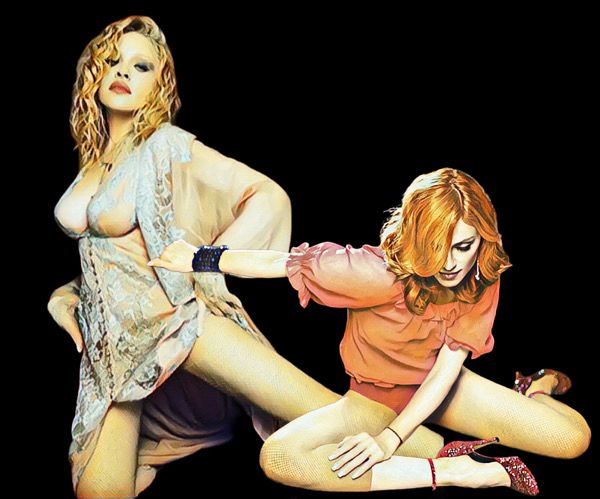
Few albums in pop music history manage to encapsulate a moment of reinvention as completely as Confessions on a Dance Floor. Released on November 11, 2005, it wasn’t just Madonna’s tenth studio album – it was a kind of answer to the world. After the political, dense, and confrontational tone of American Life, which put her on a collision course with the Bush administration and a portion of the American audience, Madonna decided it was time to turn off her mind and surrender her body to the dance floor. “I was tired of politics, I wanted something to relax me and put me in a good mood,” she said at the time. The result was a record that drew from the disco of the 1970s, the electropop of the 1980s, and the pulse of early-2000s clubs, stitched together like a seamless DJ set, almost hypnotic in its flow. It’s impossible to listen to it without imagining strobe lights and the collective euphoria of a night out.
The production of Confessions was a chapter of its own. Madonna initially started working again with Mirwais Ahmadzaï, her collaborator on Music and American Life, but soon realized she needed a radical shift. Enter Stuart Price, her tour musical director, DJ, and producer, who completely understood what she was aiming for. Price helped shape an album that feels like a single breath — each track blending into the next like a one-hour celebration. It’s a record that pays tribute to the past but never sounds nostalgic: Madonna modernized disco, added contemporary electronic beats, and reclaimed her crown as queen of the dance floor.

The singles from Confessions became landmarks in her career. Hung Up, with its bold sample of ABBA’s “Gimme! Gimme! Gimme! (A Man After Midnight),” was a worldwide explosion, topping charts in 41 countries and becoming one of Madonna’s biggest hits ever. Sorry kept the disco mood alive and dominated European charts, while Jump and Get Together became dance-floor favorites, even if they didn’t match the commercial strength of Hung Up in the U.S. The album itself was a triumph: it debuted at number one on the Billboard 200 with around 350,000 copies sold in its first week, hit the top spot in more than 40 countries, and eventually sold over 10 million copies worldwide. It was Madonna reminding the world that she still knew — and wanted — to dominate the scene.
The accompanying tour, The Confessions Tour, was a sensory, theatrical spectacle, divided into thematic acts — from equestrian to full-on disco — with visuals and choreography that left critics breathless. It was a pagan mass of dance, complete with a mirrored crucifix, meticulously staged routines, and a setlist that balanced new hits with her classics. Madonna was at her physical, artistic, and creative peak. For many, this was the last time she reigned unchallenged, with critics, fans, and sales all aligned in reverence.

But Confessions was also a turning point. After it, Madonna continued releasing music — Hard Candy, MDNA, Rebel Heart, Madame X — but none had the same cultural or commercial impact. The industry was changing rapidly, streaming was fragmenting audiences, and new pop stars were dominating the charts. At the same time, Madonna began facing a form of resistance that few male artists encounter: ageism. In 2015, BBC Radio 1 was accused of excluding her single Living for Love from its playlist, claiming she was “too old” for its audience — a moment that sparked a global debate about sexism and age in the music industry. Madonna has been outspoken about this, pointing out that what is considered “dignified” when a man ages — staying active, daring, even sexual — is criticized when a woman does the same. She refuses to become invisible, deliberately provokes, and keeps herself in the cultural conversation even when it ruffles feathers.
And now, almost twenty years later, Madonna is ready to revisit the pinnacle of her dance-floor reign. She has announced her return to Warner Records, the label that launched her career and where she spent her first 25 years, with a brand-new dance album — Confessions on a Dance Floor Part 2 — slated for 2026. The project marks the return of Stuart Price, the mastermind behind the original, and promises to once again turn the dance floor into a confessional. “I am happy to be reunited with Warner and look forward to the future, making music, doing the unexpected while perhaps provoking a few needed conversations,” she said when sharing the news. On Instagram, Madonna posted photos with a typewriter and wrote: “Back to music, back to the dance floor, back to where it all began.” It’s both a promise and a manifesto.
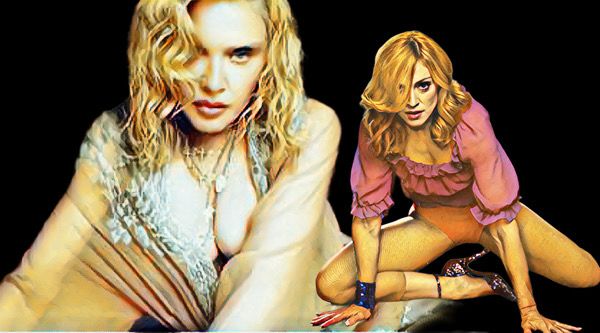
Confessions on a Dance Floor remains Madonna’s last undisputed triumph, a work that cemented her refusal to grow old quietly or to lose relevance without a fight. If Part 2 manages to capture even a fraction of that energy, it won’t just be a return to the dance floor — it will be a reunion between Madonna and the very best version of herself, and maybe with us as well. Madonna has never been about nostalgia, but about movement. And if she’s calling us back to the dance floor, the least we can do is put on our dancing shoes and show up.
Descubra mais sobre
Assine para receber nossas notícias mais recentes por e-mail.
 miscelana.com
Stoked for some new Madonna music too! I just hope this era’s styling is not the same as in these photos. It’s giving Courtney Love, not really a good look.
CurtirCurtido por 1 pessoa