
There are movies that you know are instant classics. Twenty-five years later, Almost Famous remains a love letter to rock, to journalism, and to the universal experience of growing up — feeling a little out of place, a little in love, and completely transformed by the people and stories that cross our path. It’s one of those films that endures not because it is perfect, but because it is honest.
Watching it today, Cameron Crowe’s film — autobiographical at its core — feels even more rare. It was made in an era when Hollywood still invested in personal, character-driven stories, moved by heart and by soundtracks that became part of our identity. William Miller, the 15-year-old kid sent to cover a rock tour for Rolling Stone, is Crowe’s alter ego, and through his eyes, we live a rite of passage that mixes awe, frustration, heartbreak, and a pure love for music.

A Portrait of an Era
Released in 2000, Almost Famous hit theaters in a year filled with heavyweights: Gladiator, Traffic, Erin Brockovich, X-Men, and Cast Away. It didn’t have the box-office muscle of the blockbusters or the obvious prestige of “Oscar bait” — and precisely because of that, it felt like a small, intimate film that grew through word of mouth, gaining cult status even before leaving theaters. It was a breath of fresh air: a story about real people, obsessed with music and with telling stories, at a time when Hollywood still dared to invest in narratives that didn’t fit the mold.
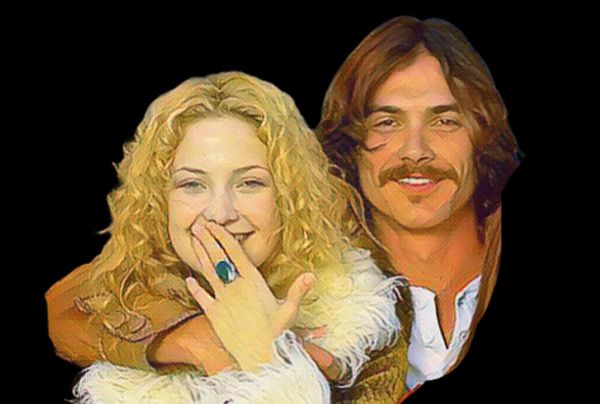
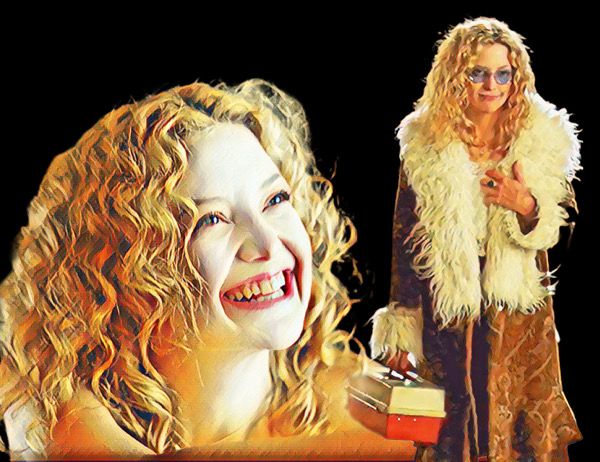
The film also launched Kate Hudson into stardom, in one of the most charismatic performances of the century. Penny Lane became an instant icon — the band aid who keeps the flame of music alive. Billy Crudup, in turn, became an unlikely guitar hero: he embodied the magnetism, ego, and vulnerability of a classic 70s guitarist — suddenly giving a face to all the contradictions of the era.
The Role That Almost Went to Brad Pitt
One delicious, lesser-known chapter in the making of Almost Famous is that Cameron Crowe spent four months developing Russell Hammond with Brad Pitt. He and casting director Gail Levin had Pitt as their first choice. When Patrick Fugit got to the screen test stage to play William Miller, Pitt was still attached to the project.
Fugit recalls their first meeting vividly: Brad Pitt sensed how nervous he was and broke the ice by talking about the PlayStation game Cool Boarders. “Hey, man, I’ve been playing this game. Do you play ‘Cool Boarders’?” Pitt asked. Fugit, who had been playing obsessively, jumped in: “Mr. Pitt, I can land these tricks…” The two compared notes on their favorite moves until Cameron returned to the room and they dove into scene work. Fugit later did a screen test with Kate Hudson — who was just being considered for Penny — and flew back to Utah with the feeling that something special was taking shape.
And then came the heartbreak. On the Origins: Almost Famous Turns Twenty podcast, Crowe admitted he “wept” when Pitt dropped out. “I knew that he had never fully fallen in love with the character. He had fallen in love with the idea of the character. But maybe there just wasn’t enough on the page,” he said. Rumors have circulated over the years, claiming financial disputes. Still, Crowe insists Pitt told him it wasn’t about money — he was also uncomfortable with the age gap between Russell and Penny. The rest is history: Crudup stepped in and delivered the mix of charm and weary mystique that made Russell Hammond unforgettable.

The Soundtrack That Became Ritual
Few films use music the way Almost Famous does. From Elton John to Led Zeppelin, from Simon & Garfunkel to the communal catharsis of “Tiny Dancer,” the soundtrack doesn’t just accompany the story — it participates in it. Each track is an emotional undercurrent, and that’s why the film quickly lived beyond itself, finding a home on our playlists.
Crowe was meticulous. He secured the near-impossible permission to use Led Zeppelin songs and brought in Peter Frampton as musical consultant to ensure every guitar riff, every microphone grab, every stage move rang true. The result is almost tactile — we can feel the sweat backstage, the echo of the arena, the intimacy of a 3 a.m. tour bus conversation.
Cameron Crowe’s Personal History
Before he was a filmmaker, Crowe was the youngest reporter ever hired by Rolling Stone. As a teenager, he carried a tape recorder and notebooks filled with questions, living on the road with Led Zeppelin, the Eagles, and David Bowie — to his mother’s understandable dismay. Out of those experiences came the mantras that define the film (“It’s all happening”), the tension between fascination and ethics, and the unromanticized portrait of music journalism.
“Life is the Best Screenwriter”: Crowe in His Own Words
Crowe describes himself as a collector of memories and says Almost Famous was written to capture the raw joy of a time when everything felt life-or-death emotionally, before we develop the protective layers that dull the intensity. He often recalls the phone call from Rolling Stone editor Jann Wenner after his Led Zeppelin cover story — praise followed by a stinging question: “But is it writing?” Wenner handed him Joan Didion’s Slouching Towards Bethlehem and challenged him to write like a real writer. “It hurt, but it lit a fire,” Crowe admits.
From the Thin White Duke era Bowie he profiled in Los Angeles, Crowe remembers the bittersweet revelation — decades later — that the glam euphoria he witnessed was also a time of desperation for the artist. His journalistic rule of gold came from moments like these: put the reader in the passenger seat, see things as they were, without glamour or anesthesia.
Lester Bangs — played by Philip Seymour Hoffman — is the moral compass of Almost Famous, and Crowe still holds to his advice: you can be friendly with the artist, even empathic, but don’t “join the band.”
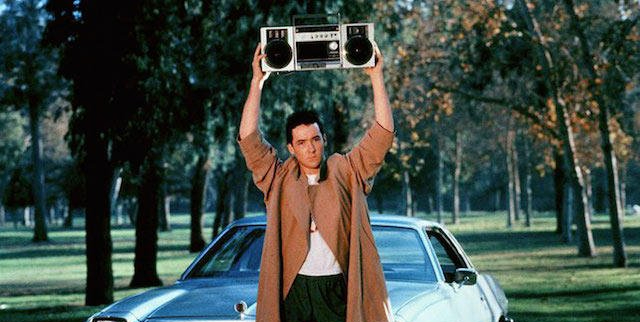
Crowe also loves recalling the directing moments that shaped his style: suggesting Tom Cruise do a pratfall during the iconic “Who’s coming with me?” scene in Jerry Maguire, or pushing John Cusack to finally hold up the boombox in Say Anything as the last light of day faded. “You knew when you saw the monitor — that was the emotion we’d been chasing.”

After Vanilla Sky, life took over: raising two kids, the creative and emotional partnership (and eventual breakup) with Heart guitarist Nancy Wilson, and the belief that sometimes you have to let life write the next chapters before you can write them yourself. Today, Crowe’s passion project is a Joni Mitchell biopic — “it has to feel like a Joni album,” he says after years of Sunday-night conversations with the artist herself.
The Cast and the Heart of the Film
The cast, now full of familiar faces, was a constellation of rising stars: Kate Hudson glowing as Penny Lane, Billy Crudup as the impossibly cool Russell Hammond, Frances McDormand as the fiercely protective mother, Jason Lee as the wounded frontman, Zooey Deschanel, Anna Paquin… Their chemistry gives the film its emotional weight — even in the silences, in the glances that say more than words.
Echoes in Daisy Jones & The Six
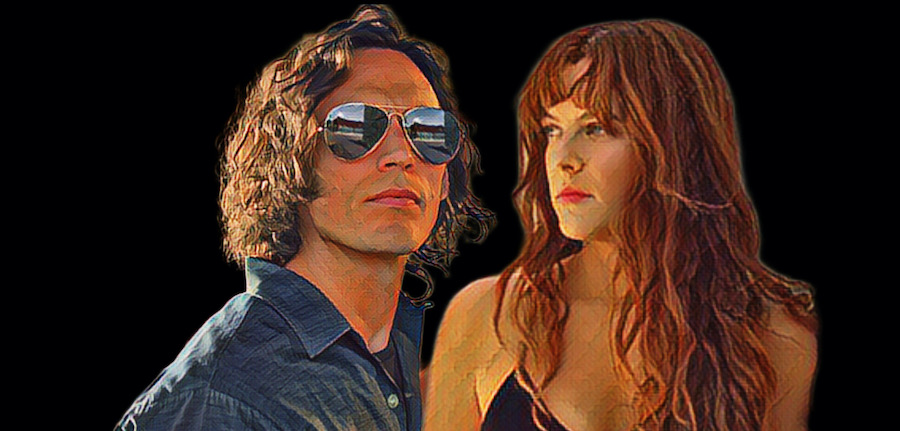
It’s no coincidence that Almost Famous is a clear ancestor to Daisy Jones & The Six, the Amazon series that reignited the mystique of 70s rock in 2023. If Daisy Jones is a rock melodrama — polished, focused on the explosive romance that breaks the band apart — Almost Famous is more intimate, filtered through the eyes of the outsider, the kid trying to stay honest in a world of egos and temptation. Both share the same hunger: to capture what it feels like when music becomes identity — and when identity exacts its price.
And on Stage: The Broadway Musical
The resonance of Almost Famous found a new life onstage. The musical adaptation opened on Broadway in 2022, with original songs by Tom Kitt, book and lyrics by Cameron Crowe (adapting his own script), and direction by Jeremy Herrin. Casey Likes played William Miller, Solea Pfeiffer gave us a magnetic Penny Lane, Chris Wood was Russell Hammond, and Anika Larsen embodied Elaine Miller with both ferocity and warmth. The show featured live guitars, a tour bus singalong that became a collective catharsis, and new numbers that reframed the story for the stage. Its run was short — Broadway is unforgiving — but the cast album and subsequent productions kept the myth alive.
Why It Still Matters
What’s most striking is how Almost Famous remains relevant. It’s about music, yes — but also about ethics, about growing up and learning that our heroes are human. William learns that being “objective” is almost impossible when your heart is involved. Penny Lane reminds us of the beauty and the pain of losing yourself for someone who will never truly be yours.
Twenty-five years later, the film still moves us because it’s about dreams — and how they shatter, but also how they shape us. It’s a reminder that no matter how much time passes, there’s always something “almost famous” in all of us: that feeling of standing on the edge of something big, living a story worth telling. And, as Crowe still says, with the same grin he had as a teenage fan: It’s all happening. It’s all happening.
Descubra mais sobre
Assine para receber nossas notícias mais recentes por e-mail.
 miscelana.com