
In just a few days, we’ll be back in the company of Slow Horses’ ragtag nags — and oh, how we’ve missed them! Under the command of the gloriously insufferable Jackson Lamb, these MI5 rejects spend their days trying to prove they’re still worth something, tripping over the same flaws that got them exiled in the first place. Their biggest challenge? Not clawing their way back to prestige — just getting as far away from Lamb as humanly possible.

At first glance, Jackson Lamb seems like nothing more than a foul-mouthed caricature of the washed-up spy: slovenly, rude, politically incorrect, surviving on cigarettes and questionable takeout, and with zero tolerance for sentimentality. But the truth – and truth is what Lamb knows better than anyone – is that he feels too much. His gruff exterior is an armor forged during the Cold War, a life shaped by betrayals, justified killings, and the kind of decisions that hollow out a person’s soul.
Lamb’s story is rooted in an original sin: the revelation that Charles Partner, Director-General of MI5 and Catherine Standish’s former boss, was a traitor working for the KGB. Together with David Cartwright, veteran spymaster and grandfather of River, Lamb fed Partner false information until the only solution left was permanent. Partner died – officially by suicide, but in truth, Lamb was his executioner. This truth ties Lamb, Cartwright, and Diana “Lady Di” Taverner into a conspiracy of silence that shapes everything about Slough House.

This is why Lamb’s relationship with Catherine Standish is so quietly heartbreaking. She once revered Partner, even loved him in her way. Lamb is the one who shatters that illusion, telling her bluntly that Partner was a traitor – but withholding his own role in the man’s death. He spares her that weight, perhaps to spare himself as well. And when Standish is kidnapped in London Rules, Lamb moves with a fury that feels personal. He is not just saving an employee; he is protecting the last witness to the most defining act of his life.
Diana Taverner, meanwhile, is Lamb’s perfect political foil: cold, ambitious, calculating. They loathe each other, yet they are bound by the same secret. Every scene between them is a chess match fought with mutual blackmail as the pieces. Lamb seems fearless because he knows something that keeps Diana in check, but there is also a grudging respect between them – a recognition that they are two sides of the same service: the dirty hands and the polished face of British intelligence.


And then there is River. David Cartwright’s grandson is a living reminder of the past Lamb can never outrun. His resentment toward David – who climbed the ladder while Lamb was left to rot in Slough House – coexists with a nearly paternal instinct to protect River. Lamb berates him, mocks him, calls him useless, but he is always the first to move heaven and earth to keep him alive. He has saved River more than once, not just out of duty, but as a way of redeeming the past failures and giving David’s legacy a second chance.
This duality is what makes Lamb one of the most fascinating antiheroes in modern spy fiction. He is cruel, sarcastic, abrasive – and yet he carries the weight of every ally he could not save. And there have been many. At the same time, he is always ahead of the game. His moral compass may be crooked, but his strategic instincts are razor-sharp. Lamb manipulates, threatens, and humiliates, but in the end, he saves not just his own skin, but his team’s – and occasionally the world’s. His war never really ended: he still plays as if he were in Berlin, always one step ahead of his enemies, and one step ahead of his allies.
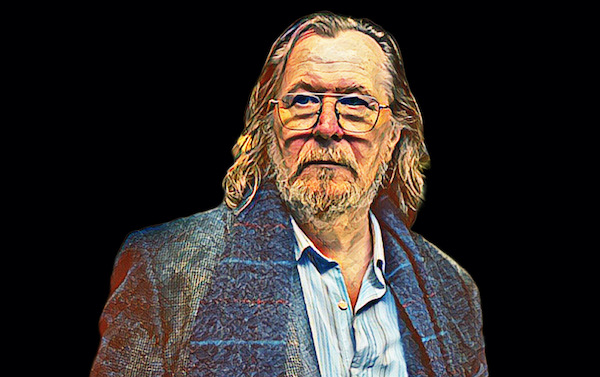
And then there is Gary Oldman. His performance in Apple TV+’s Slow Horses is nothing short of legendary. Oldman doesn’t just play Lamb – he inhabits him, mining the humor from the filth, the heart from the cruelty, the pain behind the sarcasm. It’s easy to forget that Lamb was born in Mick Herron’s books – so completely does Oldman feel like the definitive version of the character. But that’s the brilliance of the performance: he doesn’t reinvent Lamb, he simply reveals him, layer by layer, just as Herron wrote him.
Perhaps the most fascinating thing about Lamb is that he prefers the shadows. After everything he has done, everything he has lost, he chooses to remain “forgotten,” low profile, buried in the house of the slow horses with a band of disgraced spies. But it is from that place that he pulls the strings, rights what needs to be righted, and keeps British intelligence standing – even as MI5 pretends he doesn’t exist. Jackson Lamb is the man who saw too much, who carries every ghost, and who still gets up, lights a cigarette, swears at the world, and, in the end, saves the day.
Descubra mais sobre
Assine para receber nossas notícias mais recentes por e-mail.
 miscelana.com