
I’ve been a David Byrne fan for as long as I can remember, from the Talking Heads days to his solo career. His ability to turn quirks into something undeniably cool hooked me from the start. Byrne has always been more than just a vocalist or songwriter — he’s an artist who taught me that music can also be performance, theater, installation, and experiment. Across decades, I followed each of his phases, from CBGB’s art-rock scene to the more recent solo collaborations, even those with Latin influences that technically aren’t my style — but with him, they sound impossibly sophisticated.
His new album is a portrait of a man who never stopped moving forward. Who Is the Sky? is a mature work, built from emotional collages, twelve tracks that feel like open letters, with intricate arrangements from the Ghost Train Orchestra and guest appearances from artists like St. Vincent and Hayley Williams — collaborators who meet him at his creative wavelength. It’s an album about love — unexpected love, the kind that sweeps in and rearranges everything. On songs like What is the Reason For It?, we hear a Byrne rediscovering himself, almost adolescent in his vulnerability, but wise in the way he translates passion into art.
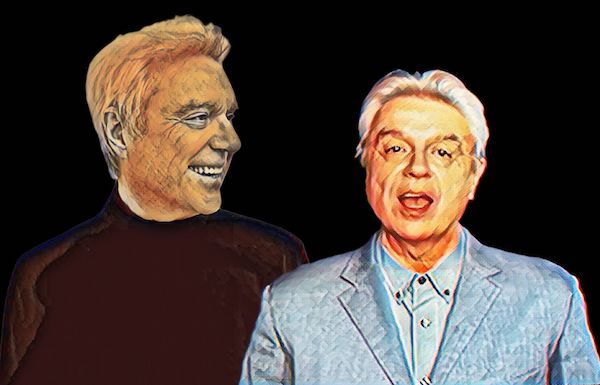
And yet, what truly shook me wasn’t just the new album or its lush staging — it was the news that Byrne had brought back Psycho Killer. The song that put Talking Heads on the map, that became his signature, that shaped the imagination of an entire generation of new wave and art-rock fans. He went nearly two decades without playing it live. And suddenly, there it was, back on the setlist, as if time had folded back on itself.
Being in the audience at that moment was surreal. I haven’t missed a single Byrne solo tour, and I feel lucky to have witnessed this reconciliation between artist and history. The crowd’s reaction was almost cathartic — not merely nostalgic, but reverent, as if watching Byrne sing Psycho Killer again was witnessing the man he is now in dialogue with the young man he once was. The song carried new weight, new meaning, a new voice layered over the old one.
An artist’s first hit is like a ghost that never leaves. It’s a blessing and a curse. The thing that made them famous can become a prison. Many artists try to fight this expectation — and Byrne seemed to have done just that for years, choosing not to perform Psycho Killer, perhaps to free himself from the shadow it cast. As if he were saying: “I am more than this.” And he is. Which is why this moment feels so powerful — because he chose to return to the song, not out of obligation, but out of desire. After all this time, he found a way to sing it without being trapped by it.

Madonna still has to sing Like a Virgin approaching 70 (although she did cut Material Girl), and Cyndi Lauper can’t escape Girls Just Wanna Have Fun and Time After Time even if she’d rather play something else. Audiences demand those rituals. But with Byrne, it was different: he had the freedom to leave Psycho Killer behind, and no one questioned it. Which is why its return feels so deliberate, so full of meaning. Maybe this is the phase of his life where he wants to tie the threads together — to show that the past can be carried gracefully, not as a weight but as a companion.
Seeing Psycho Killer back on the setlist is seeing an artist who knows his work is still alive. This is a moment of celebration — of love, of music, of connection. Who Is the Sky? Tour is more than a series of concerts; it’s a multimedia experience, with musicians, singers, dancers, choreographed lighting — a live piece of art, exactly as Byrne has always done. It’s a dive into his history, yes, but also a statement that he still has more to say.
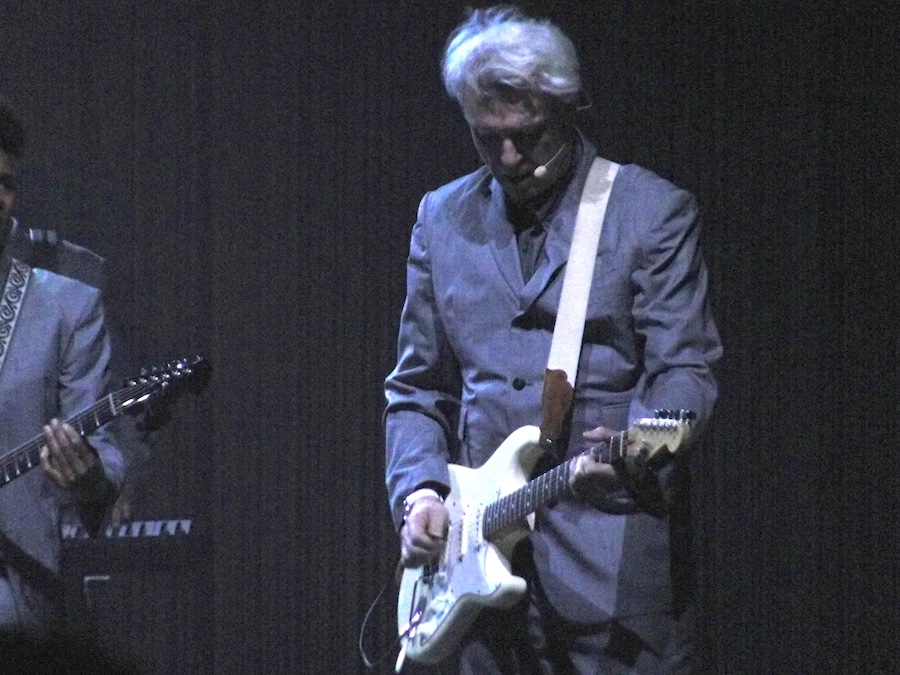

I imagine that performing Psycho Killer again must feel like revisiting a first love — a meeting filled with memories, gratitude, strangeness. The song was born from tension, from restlessness — from a young man trying to make sense of the chaos within. Today, singing it must feel different: less anger, more compassion; less rupture, more reconciliation. And maybe that’s why it could finally return.
And I was there to see it. To hear it. To feel it. And, in a way, to close that circle with him. Psycho Killer stopped being just a classic and became a gift. A gift to the fans who have been there from the start, a gift to the Byrne of 1977 who never imagined making it this far, and a gift to the Byrne of 2025 who now looks back without fear.
In the end, this comeback isn’t just about one song. It’s about the freedom of an artist who never repeated himself, who now allows himself to repeat — because it’s no longer repetition, it’s transformation. Sometimes, the boldest step forward is to go back to where it all began.
Descubra mais sobre
Assine para receber nossas notícias mais recentes por e-mail.
 miscelana.com