
When Seven premiered on September 22, 1995, no one was prepared for the impact it would have — not even the studios, who tried to change the bleak ending, nor the audiences, who left theaters shocked and silent. Thirty years later, the film remains a milestone of psychological suspense, one of the most influential thrillers in modern cinema, and a twisted love letter to classic noir.
1995: A Risky Release
David Fincher was coming off the traumatic failure of Alien³ and had sworn he would never direct again. Seven was his chance at redemption, and he went all in on Andrew Kevin Walker’s uncompromisingly dark script. The studio wanted a “marketable” police thriller, but what Fincher delivered was a grim meditation on sin, punishment, and inevitability. Brad Pitt, already a global star after Interview with the Vampire and Legends of the Fall, was the box office draw. Gwyneth Paltrow, then virtually unknown, got her first major break here — and her genuine chemistry with Pitt (with whom she began dating during filming) helped bring warmth to the story.
And then there was Kevin Spacey. The studio wanted the villain’s name in all marketing materials, but Fincher insisted his name be left out of the opening credits, turning his appearance into an absolute shock. Only months later, Spacey would win his first Oscar for The Usual Suspects — cementing Seven as part of a historic moment in his career. And today, canceled and forgotten, he is an uncomfortable footnote in this legacy, as his performance here was one of the best of his career.
A New Era of Noir
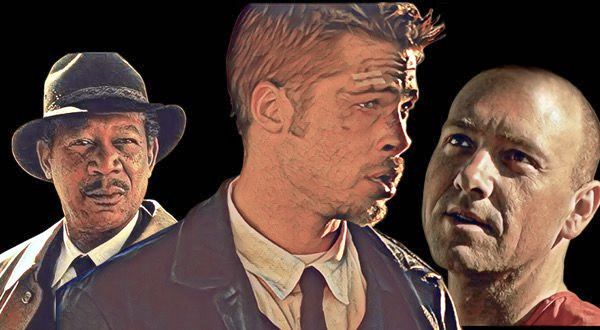
The film’s visual language is a homage to 1940s noir, but with the grimy, industrial aesthetic of the 1990s. The unnamed city, always drenched in rain, is practically another character — a decaying metropolis seemingly doomed from the start. Morgan Freeman plays Somerset as a weary detective, an echo of Chandler and Hammett’s disillusioned investigators. Pitt’s Mills, by contrast, is impulsive and naïve — the younger partner who still believes the world can be saved. Their moral and generational clash forms the backbone of the narrative.
The Deadly Sins Mystery
The structure of the film — each murder representing one of the seven deadly sins — became iconic and inspired countless imitators, from TV procedurals to second-rate thrillers. But none have matched its blend of intelligence, suggestion, and implied horror. Fincher avoids showing explicit violence: what terrifies is what the camera doesn’t show, what is left to the viewer’s imagination. The use of light and shadow, the sound of detectives entering crime scenes, the heavy silence — all build a sense of doom.
“What’s in the Box?” — The Ending That Defined an Era
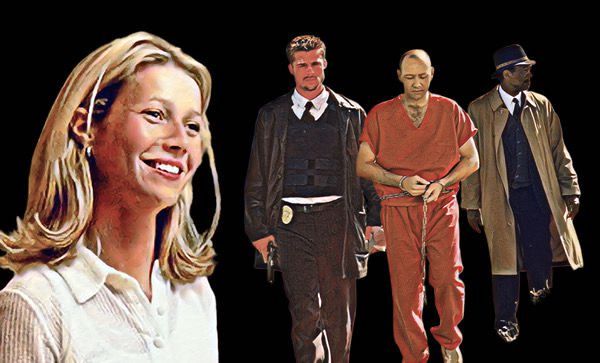
Seven’s ending remains one of the boldest in mainstream cinema history. New Line nearly blocked it from being filmed, demanding a “lighter” version. Fincher threatened to walk away from the project if the ending changed. The version we got — where the seventh sin is inevitably fulfilled — is a Shakespearean tragedy set against a backdrop of mid-’90s blockbusters.
Other options were on the table: one version suggested Mills wouldn’t shoot Doe, breaking the cycle. Another had Somerset shoot the killer to spare his young partner the burden. But Pitt was adamant: “Mills has to shoot him. Otherwise, the film makes no sense.” He was right. That final desert sequence, the stillness, and the line “What’s in the box?” — have all become part of pop culture, an eternal meme and metaphor for unexpected horror.
Behind the Scenes and Box Office
With a modest budget of about $33 million, Seven grossed over $327 million worldwide — a massive success for a film this dark. The opening credits sequence, with its stylized typography set to Nine Inch Nails’ Closer (remixed by Trent Reznor), redefined how thrillers could begin. This was one of the first collaborations between Fincher and Reznor, who would go on to become frequent creative partners on soundtracks.

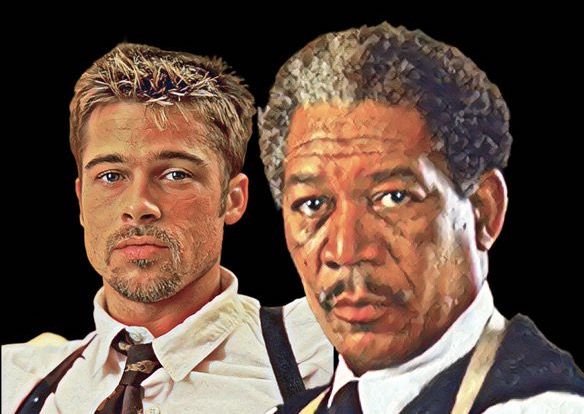
During filming, Pitt injured his arm in the rainy chase scene, and the accident was incorporated into the film, adding realism to his character. Paltrow later revealed she had hesitated to take the role but was convinced by Pitt himself — a career turning point.
Thirty Years Later: Seven’s Legacy
Seven not only holds up — it feels even more relevant. Its bleak tone, its disenchanted view of the world, and its central moral question — is justice even possible in a corrupt world? — still resonate. Many later thrillers tried to replicate its formula, from Saw to True Detective, but few captured its balance of tension, atmosphere, and intellect. Fincher cemented himself as one of Hollywood’s great auteurs, and Seven remains, for many critics, his masterpiece.

The film’s power lies in refusing to offer catharsis: it ends with a world worse than the one we entered, yet leaves a faint glimmer of hope in Somerset’s closing line, quoting Hemingway: “The world is a fine place and worth fighting for. I agree with the second part.” That ambiguity is what makes it unforgettable.
Descubra mais sobre
Assine para receber nossas notícias mais recentes por e-mail.
 miscelana.com