
Something is fascinating about watching Hollywood revisit its own myths, and Cliffhanger is one of them. The 2025 version arrives with Lily James in the lead role — yes, Lady Rose from Downton Abbey herself, now strapped into a harness and ropes to play a mountain guide forced to face criminals at high altitude. This new production feels like a legacy project: not just a remake, but a reimagining of an action classic that helped define the genre in the early 1990s. Lily reportedly did much of her own climbing, and the stunt team promised the same level of peril that made the original legendary. Sylvester Stallone, who played Gabe Walker in 1993, is on board as producer and consultant, ensuring that the essence of the story remains intact.
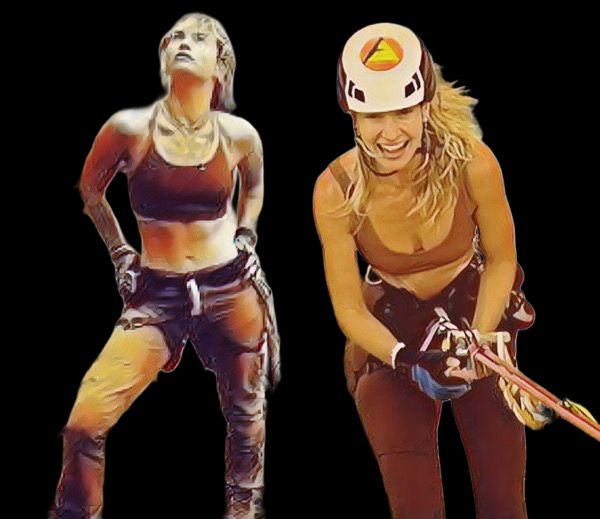
The first Cliffhanger, released in 1993, came from an era when action cinema thrived on adrenaline, muscle, and practical effects. Directed by Renny Harlin — the man behind Die Hard 2 — it had all the ingredients for a blockbuster: breathtaking landscapes, a traumatized hero, cartoonishly evil villains, and a perfect excuse for impossible set pieces. The plot was simple but effective: Gabe Walker (Stallone) is a veteran climber burdened by guilt after failing to save a colleague during a rescue. After months away, he is called back to the mountains for what appears to be a search-and-rescue mission — but it turns out to be a trap set by criminals trying to recover three cases of cash that fell from a U.S. Treasury plane. What follows is a desperate race across the Rocky Mountains, with chases, cliffside fights, gunfire, impossible climbs, and Stallone battered and bleeding his way toward survival and redemption.
The impact was immediate. Cliffhanger grossed over $250 million worldwide and received three Oscar nominations (Sound, Sound Effects Editing, and Visual Effects), ultimately losing to Jurassic Park. And it truly was a big-screen experience: the film was shot largely in the Italian Dolomites, using iconic mountains like Monte Cristallo and the Tofane range. The scenery felt so real and perilous that you forgot you were watching a movie.
But what turned Cliffhanger into a legend were the behind-the-scenes stories. The movie earned a Guinness World Record for the “most expensive aerial stunt ever performed,” thanks to the now-famous midair zipline between two planes. Stuntman Simon Crane was paid roughly $1 million for the feat, which involved jumping from one plane at 15,000 feet and “catching” a line to reach the other aircraft. The planes had to fly at precisely the right speed — too slow, and one would stall; too fast, and the stuntman could have been ripped from the line. It was so dangerous that few insurers were willing to cover it.
That ambition came at a price. The budget ballooned by more than $40 million, and production was even shut down at one point due to a lack of funds at Carolco Pictures. Despite these hurdles, Harlin and Stallone managed to deliver a film that became a hallmark of its time. Stallone later admitted that he has a fear of heights and took on the project as a personal challenge — which makes watching him dangle from cliffs and ledges all the more gripping.

Behind the concept of Cliffhanger was John Long, one of the most iconic names in modern climbing. Long was part of the “Stonemasters,” a legendary group of 1970s climbers who redefined free climbing, and he was among the first to complete the legendary The Nose route on El Capitan in Yosemite in a single day. Beyond his climbing achievements, Long is a prolific author and storyteller, and he wrote the original story that inspired the film, titled Rogue’s Babylon. What Long brought to the table was authenticity — the sense that climbing is about confronting real, tangible danger. That spirit was translated into the character of Gabe Walker, who is not a superhuman hero but a man who feels fear, bleeds, and must conquer himself as much as the mountain and the villains.
There were attempts to continue the story. A sequel called Cliffhanger 2: The Dam was in development, with Walker fighting terrorists at the Hoover Dam, but it died in the scripting stage. Perhaps that was for the best: Cliffhanger remains a standalone piece of pure action, a time capsule from the pre-CGI era when every fall, every leap, felt real — or at least convincingly so.
Now, with Lily James at the center of the 2025 version, the question is how modern cinema will handle this legacy. Technology has changed, the action genre has evolved, and the audience is different. But there is something timeless about watching a lone human being confront a wall of rock and fight gravity itself. If the new version manages to retain the same sense of danger, sweat, and risk as the original, Cliffhanger may capture a whole new generation of fans — who, like us back in the ’90s, will leave the theater feeling that looking down will never be the same again.
Descubra mais sobre
Assine para receber nossas notícias mais recentes por e-mail.
 miscelana.com