
One of the boldest choices in the new season of Monster is to expand Ed Gein’s universe beyond Plainfield. Instead of limiting itself to reconstructing the crimes of the “Butcher of Wisconsin,” Ryan Murphy and Ian Brennan also explore the influences that shaped his sick imagination. It is here that the figure of Ilse Koch, played by Vicky Krieps, comes into focus.
Born in 1906 in Dresden, Germany, Ilse married Karl Otto Koch in 1936, the commander of the Buchenwald concentration camp. At his side, she became one of the most feared and reviled women of the Nazi regime. Her notoriety came not only from her position as the camp commandant’s wife but also from her own sadistic cruelty toward prisoners. She was nicknamed the “Witch of Buchenwald” and accused of ordering arbitrary punishments, humiliating inmates, and even collecting objects allegedly crafted from tattooed human skin. While some of these claims remain debated among historians, the symbolic weight of her image endures, cementing her as one of the darkest emblems of Nazi dehumanization.
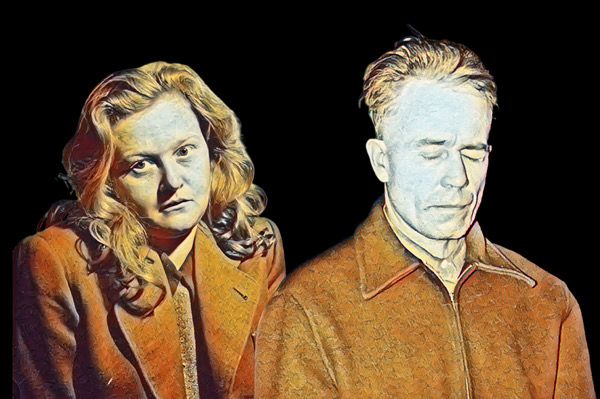
After Germany’s defeat in World War II, Ilse was tried in 1947 during the Dachau Trials. Initially sentenced to life imprisonment, her punishment was later reduced to four years, a decision that sparked public outrage. In 1951, in West Germany, she was tried again and once more condemned to life imprisonment. She spent the rest of her life behind bars until 1967, when she was found dead in her cell, an apparent suicide by hanging.
By introducing Ilse Koch as part of Gein’s fantasies, Monster forges a deeply unsettling connection. The isolated man from Wisconsin not only mutilated bodies on his farm but also projected his actions into a broader historical imagination haunted by echoes of cruelty on a global scale. If Ed Gein is regarded as postwar America’s “original monster,” Ilse Koch emerges as a macabre inspiration drawn from the very heart of the twentieth century’s atrocities.
But contrary to what the series suggests, the two were never in contact. Historically speaking, there is no real record of any connection between Ed Gein and Ilse Koch. They never met or exchanged correspondence. This link is purely fictional, created by the series as a thematic mirror — a deliberate choice by Ryan Murphy to contrast individual horror with collective horror.
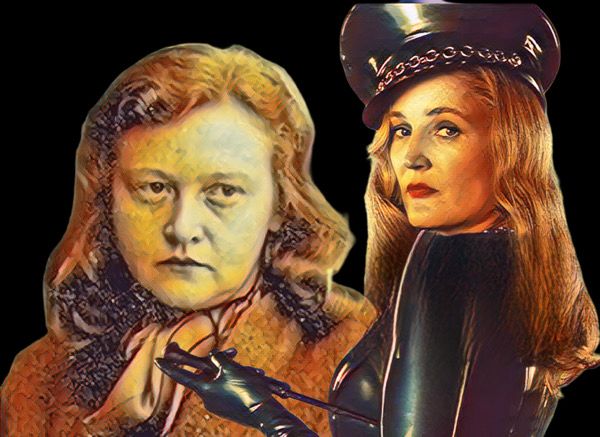
The casting of Vicky Krieps underscores this contrast. An internationally acclaimed actress known for films such as Phantom Thread, Old, and Bergman Island, Krieps lends the character a dramatic weight that rises above caricature. On screen, Ilse Koch is not only the cruel Nazi described in historical accounts but also a twisted projection within Gein’s psyche — a ghost that ties the microcosm of Plainfield to the global trauma of World War II.
This narrative choice may seem risky, but it also works as a powerful reminder that horror never arises in a vacuum. What Gein did on his small Wisconsin farm reverberates not only as local crime but within the larger context of violence and dehumanization that scarred the twentieth century. By weaving Ilse Koch into the storyline, Monster turns her history into a distorted mirror, reflecting not only Gein’s demons but also the collective monsters that history insists we must never forget.
Descubra mais sobre
Assine para receber nossas notícias mais recentes por e-mail.
 miscelana.com