
When Christine Jorgensen appeared in newspaper headlines in 1952, the world didn’t yet have the vocabulary to describe her. The former U.S. Army soldier had returned from Denmark as a woman. This physical and symbolic transformation exposed the prejudice and morbid curiosity of an era that barely understood the concept of gender identity. Christine would become the first trans woman to gain worldwide recognition, an unwilling celebrity who was both ridiculed and admired, and whose story became a milestone in the fight for trans dignity and visibility.
The Real Christine Jorgensen
Born George William Jorgensen Jr. in 1926, in the Bronx, Christine grew up in a conservative, deeply patriarchal environment. After serving in the Army during World War II, she began to seek answers for what she described as a disconnection between body and identity. In Denmark, she met doctors who were at the forefront of gender transition research and underwent a series of pioneering surgical and hormonal procedures.
When she returned to the United States, she was met with a media circus: sensational headlines called her “the man who became a woman,” and her privacy was violated on every front. But Christine, with intelligence and wit, took control of her own narrative. She became a performer, lecturer, and activist, challenging taboos about gender and sexuality at a time when the topic was virtually forbidden.
More than a medical pioneer, Christine was an intellectual and performer who understood the power of visibility. She used her voice to educate, laughed off scandal, and responded to attacks with lines that still resonate today:
“The operation gave me freedom, but what I really wanted was respect.”
She died in 1989 at the age of 62, leaving behind a legacy of courage and dignity — a rare example of someone who managed to humanize the conversation about gender in a society still bound by moral rigidity and scientific ignorance.
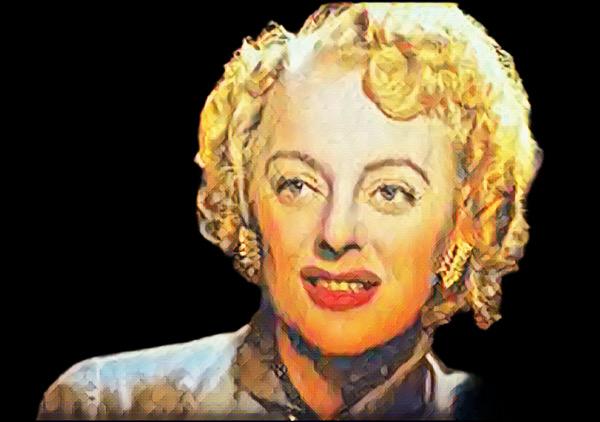

Christine in Monster: Between the Mirror and the Abyss
In the new season of Monster: The Ed Gein Story, Ryan Murphy uses Christine Jorgensen not as a central character but as a symbolic counterpoint. The series provocatively suggests that Ed Gein — the Butcher of Plainfield — harbored a confused obsession with themes of identity, body, and gender. In one of the season’s most talked-about scenes, he “hears” Christine on the radio and imagines a conversation in which she confronts him.
While Christine speaks of self-discovery and dignity, Gein listens as though searching for justification for his own psychosis. The sequence alternates between her voice and grotesque images of the farmer stitching together human skin — a parallel that is not literal but symbolic. Murphy wants the viewer to recognize the distortion: the same public that demonized Christine for becoming a woman was morbidly fascinated by a man who turned female bodies into trophies.
Christine, in the series, represents what Ed Gein never was and never understood — someone who turned pain into awareness, and desire into identity. The fictional dialogue works as a kind of moral reckoning — a clash between the legitimate pursuit of authenticity and the monstrosity born of repression and religious guilt.


The Purpose of the Parallel
By placing Christine Jorgensen within Ed Gein’s narrative, Ryan Murphy does more than provoke — he exposes the cultural hypocrisy of the 1950s. While society marginalized a trans woman who sought to live with dignity, the same repressive culture was breeding monsters like Gein — men whose violence was, in part, a byproduct of moral suffocation and distorted faith.
Christine’s presence is brief but essential. She exists as an ethical counterpoint, a reminder that true horror does not lie in the transformation of the body, but in the collective inability to comprehend the humanity of those who transform.
Descubra mais sobre
Assine para receber nossas notícias mais recentes por e-mail.
 miscelana.com