
Among the many disturbing stories surrounding Ed Gein, none is as tragic as that of Bernice Worden and her son, Deputy Sheriff Frank Worden. Bernice was the last confirmed victim of the “Butcher of Plainfield,” murdered on November 16, 1957. What makes this crime even more cruel is that it was her own son, a local officer, who had to investigate her disappearance — and, soon after, discover that Gein was responsible for her death.
That day, Bernice was alone at her hardware store when Gein came in to buy antifreeze. Hours later, the store stood empty, with bloodstains on the floor, and Bernice was gone. The sales receipt signed by Gein became the first link in solving the case. Frank Worden, who had long been suspicious of the eccentric, reclusive farmer, led the investigation that brought police to Gein’s farmhouse. There, he found his mother’s body grotesquely displayed — hung and mutilated in the barn — the definitive revelation that the “odd but harmless man” was hiding unimaginable horrors.

Why Did Ed Gein Kill Bernice?
Answering that question has never been simple. In some interrogations, Gein claimed it was an accident — that the gun went off while he was showing it to her. But the crime scene — the body suspended, decapitated, and gutted like an animal — left no room for doubt. Experts point to three main factors: the opportunity to attack a woman who was alone; the projection of Bernice as a subconscious substitute for his mother, Augusta; and the macabre need to obtain skin and organs to feed his fantasy of recreating an “eternal mother” from fragments of other women.
Bernice’s murder was not just another crime. It was the fatal mistake that exposed Ed Gein, revealing to the world the monster hiding in rural Wisconsin.
From Plainfield to Pop Culture
The impact of this case was immediate and lasting. When police entered the farmhouse, they not only found Bernice but also fragments of at least fifteen bodies, including remains of Mary Hogan, who had disappeared in 1954. Surrounded by bones, makeshift containers, and masks made of human skin, Gein literally lived among the dead. Investigators even found a “woman suit” sewn from human skin, evidence of his obsession with “becoming” his mother.
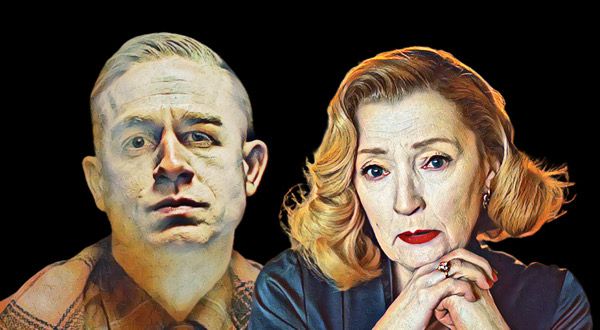
His crimes, grotesque even by true-crime standards, shocked 1950s America and echoed through cultural history. They inspired Norman Bates in Psycho, Leatherface in The Texas Chainsaw Massacre, and Buffalo Bill in The Silence of the Lambs. As author Harold Schechter observed, Gein was “the first truly all-American monster,” shifting horror away from European fantasy and placing it squarely in the heartland.
The Portrayal in the Series Monster
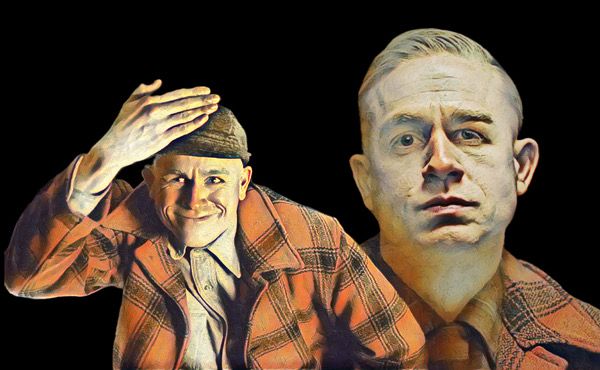
It is at this intersection of real crime and cultural myth that Monster: The Ed Gein Story finds its footing. The series portrays Bernice as the woman whose death broke Plainfield’s silence, but it also highlights the emotional weight carried by her son, who had to investigate his own nightmare. Frank Worden, played by Charlie Hall, becomes the human thread of the narrative — a deputy who, in fulfilling his duty, had to face the intimate pain of finding his murdered mother.

Hall, who had previously appeared in season two as Craig Cignarelli, a friend of Erik Menendez, now faces an even greater challenge. His performance captures the intersection between grief and duty, turning Frank into a symbol of the devastation Gein left behind — the emotional wreckage beyond the corpses. By recreating this arc, Ryan Murphy and Ian Brennan do more than reconstruct a criminal case; they highlight the emotional depth that makes the story all the more haunting.
The problem is that the series takes a liberty that borders on offensive. For instance, it portrays Frank struggling with alcohol after the tragedy — which is true — but it also implies that he somehow participated in or condoned the auction of Ed Gein’s belongings, which is completely false. Frank Worden did not take part in the auction.
In reality, he stayed completely away from any attempt to turn the case into a spectacle. Frank was Bernice Worden’s son, and although he was the officer who led the investigation and arrested Ed Gein, he never wanted to profit from or be involved in anything related to the sale of the killer’s property.
After Gein’s arrest, Frank remained with the Plainfield sheriff’s department for a while but avoided public discussion of the case. There are brief interviews and statements in which he expressed deep resentment toward what he saw as “indignity” — both the morbid curiosity and the commercial interest that the case generated.
When the auction was announced, the Worden family and other local families publicly objected, calling it an insult to the victims. The fire that destroyed Gein’s house on the eve of the auction was seen by many as a “symbolic act of justice” by the community, and Frank, according to reports from the time, did not mourn the loss of the property — to him, it was the place where he had found his mother’s body. Gein himself, confined to a psychiatric hospital, reportedly reacted calmly when he heard the news: “Just as well.”
The Legacy of Gein
Although he confessed to only two murders — Mary Hogan and Bernice Worden — Gein entered history as more than a mere killer: a necrophile obsessed with death who became a cultural myth. Labeling him a “serial killer” is imprecise, since, unlike Bundy or Dahmer, Gein seemed uninterested in the act of killing itself; what he wanted were the bodies that followed. He was, as scholars define, a “product killer” — someone who murders to possess remains rather than to take pleasure in the act of killing.
In the end, the tragedy of Frank and Bernice Worden remains the human core of a case that became synonymous with modern horror. If 1950s newspapers revealed the “Butcher of Plainfield” to the world, it was a son’s grief — and the exposure of a deranged mind — that turned Ed Gein’s name into a dark legend, immortalized not only in police archives but also in the collective nightmares of cinema and popular culture.
Descubra mais sobre
Assine para receber nossas notícias mais recentes por e-mail.
 miscelana.com
2 comentários Adicione o seu