
Nicknamed the “Ted Lasso of American football,” Chad Powers premiered on Disney+ (via Hulu) and marks another bold move for Glenn Powell — actor, producer, and now co-creator of a series that grew out of a joke and evolved into a story about second chances, cancel culture, and the messy beauty of reinvention. After his acclaimed performance in Hit Man — where he played a man of many disguises, exploring identity with humor and irony — Powell takes the concept further. Here, he becomes a disgraced quarterback who literally changes his face to rebuild his life.
The origin of Chad Powers is as curious as its premise. It all started back in 2022, when former NFL quarterback Eli Manning disguised himself as “Chad Powers” for an episode of his docuseries Eli’s Places, attempting to sneak into a college football tryout. The video went viral, and what began as a prank quickly became a concept too rich to ignore. Eli and his brother, Peyton Manning, came on board as executive producers, bringing authenticity and insider humor to the football scenes. Writer Michael Waldron (Loki, Rick and Morty) joined the creative team alongside Powell, and in 2024, Hulu gave the official green light for a six-episode comedy series.

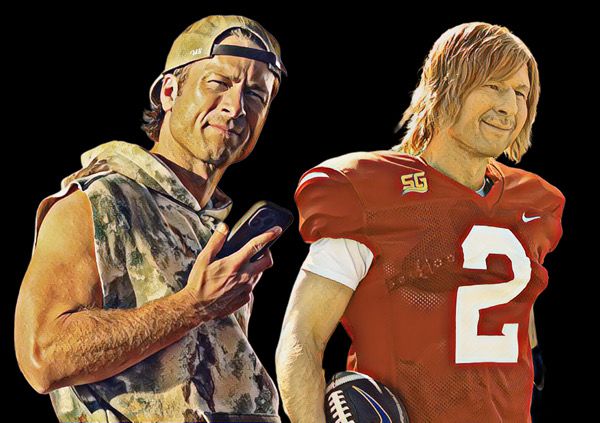
The result is a sports comedy that tries to balance lighthearted humor with social reflection. Powell plays Russ Holliday, a once-promising college football star who implodes after a scandal — a personal failure that cancels him publicly and privately. Eight years later, desperate for redemption, he invents a new identity and joins a small southern team as “Chad Powers,” a charismatic, slightly ridiculous quarterback that no one recognizes. Between wigs, prosthetics, and fake Southern charm, Russ throws himself into his alter ego until the boundary between man and mask starts to blur.
That’s where Chad Powers transcends the initial gag. The disguise becomes a metaphor for guilt, denial, and the modern obsession with second chances. It’s not really about football — it’s about reinvention in the age of public shaming, and how humor can expose both the cruelty and absurdity of cancel culture. Russ/Holliday isn’t just looking for a comeback; he’s searching for a version of himself the world might still accept.
Visually, the production delivers: real stadiums, genuine gameplay, and on-field authenticity thanks to the Manning brothers’ involvement. Powell’s performance anchors everything. Following Top Gun: Maverick, Anyone But You, and Hit Man, he cements himself as one of Hollywood’s most charismatic and adaptable leading men. He masters the comedic rhythm, brings emotional depth to a character on the brink, and thrives in the physical, often self-deprecating aspects of the role.
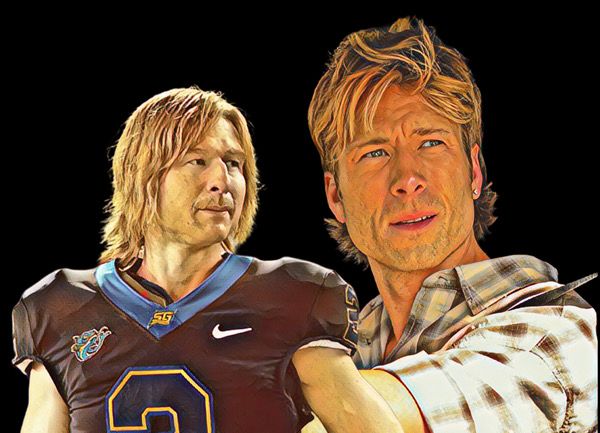
Critics, however, are split. Some call the series a “hidden gem” — a clever exploration of identity and redemption — while others argue it tries too hard to be likable without the emotional depth that made Ted Lasso soar. The Guardian praised Powell’s charisma and the show’s ambition but noted its occasional reliance on easy humor. Variety labeled it “pleasant but lukewarm,” while The Hollywood Reporter described the finale as “a Hail Mary pass that almost lands.” On Rotten Tomatoes, the approval score hovers around 56%, a fair reflection of the consensus: admiration for the intent, uncertainty about the execution.
Still, everyone seems to agree on one thing — Glenn Powell is the show’s engine. As both star and co-creator, he injects enough energy, timing, and vulnerability to keep the series afloat even when the script wobbles. In interviews, Powell calls Chad Powers his “passion project,” a story about failure and reinvention written at a time when Hollywood itself is confronting its illusions of perfection. It’s a meta-commentary on performance — not just in sports or entertainment, but in life — and on the lengths we go to stay visible, forgivable, and human.
Disney and Hulu were smart to back him: Chad Powers doubles as a showcase for Powell’s range and as a contemporary parable about survival in the public eye. It’s about pretending until you can believe again — about crafting a new self when the old one is beyond saving. The audience may laugh, cringe, or roll their eyes, but it’s hard to look away. Because behind the mask and the fake mustache, Glenn Powell is doing something rare in today’s Hollywood: turning comedy into confession.
Descubra mais sobre
Assine para receber nossas notícias mais recentes por e-mail.
 miscelana.com