
There’s a fine thread connecting many of the most infamous scandals of recent years — and it usually runs through the feeling of impunity. In the case of Ghislaine Maxwell, that thread reaches its end: the U.S. Supreme Court has rejected her final appeal, officially closing one of the darkest and most revealing chapters of modern elite history.
Maxwell, sentenced to 20 years in prison for sex trafficking and the exploitation of minors, argued that the government had violated a non-prosecution agreement made with Jeffrey Epstein back in 2007, when the billionaire was charged in Florida for similar crimes. According to her defense, that agreement — which stated it would protect “potential co-conspirators” — should have applied to her as well. In other words, if Epstein had negotiated immunity for himself and his associates, Ghislaine should have been covered by it. The argument, though clever, was rejected in every court. Now, the Supreme Court’s refusal to even hear the case is tantamount to a final verdict.
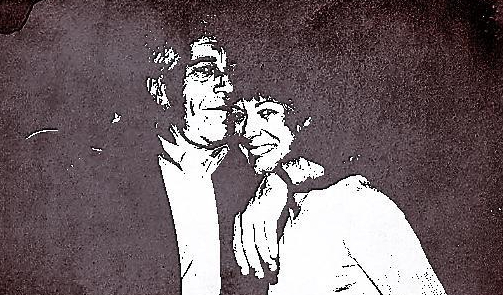
The decision reaffirms what was already clear: the American justice system has no intention of reopening the wounds of the Epstein affair. Since he died in 2019 — officially ruled a suicide, unofficially still a source of endless suspicion — investigations have circled around what was hidden and who truly knew everything. Ghislaine, once Epstein’s confidante, partner, and enabler, became the visible face of an empire of abuse disguised as privilege. Today, she serves her sentence in a federal prison in Florida, and with the Supreme Court’s decision, she has exhausted virtually every legal avenue to challenge it. What remains are only extraordinary measures, such as habeas corpus petitions claiming constitutional violations, or the highly unlikely possibility of a presidential pardon.
The latest appeal brought no new revelations — just an attempt to reinterpret Epstein’s original agreement as if it contained the key to rewriting history. But the case exposes something far deeper than legal semantics. Maxwell’s lawyers argued that the U.S. government had broken a promise; the courts replied that no promise made to Epstein could shield her from accountability. The symbolism is brutal: the man dies under suspicious circumstances, and the woman who helped sustain his web of power is left to bear the full weight of the crime.

And in this case, it’s hard to dispute the outcome. Based on everything revealed — the testimonies, the evidence, the sheer scope of the abuse — there’s no doubt about Ghislaine Maxwell’s active, decisive role in Epstein’s crimes. She was not a passive witness, nor a victim of manipulation. She was a key operative — the recruiter, the manipulator, the enabler. Her conviction, therefore, feels not only fair but necessary: a minimal form of justice in the face of an industry of horror that power itself tried to bury.
The contrast with Sean “Diddy” Combs is inevitable. The rapper and music mogul was also accused of serious sexual crimes, including trafficking and coercion, and for a moment it seemed like the industry was facing another reckoning. But the ending couldn’t have been more different: Diddy was acquitted of the most serious charges and convicted only of lesser ones — transporting women across state lines for prostitution. He received just over four years in prison, a sentence many saw as shockingly lenient considering the allegations.
The difference between their cases isn’t just in the facts, but in the ability to control the narrative. Combs’ defense was masterful in turning the shocking into the negligible — transforming a story of violence and exploitation into one about consent, contracts, and celebrity image. In the end, they managed to ensure that he would likely never be truly held accountable for the crimes he committed. Diddy emerged from the storm nearly unscathed, cloaked in the rhetoric of justice served, while the system once again showed its willingness to protect those who command both money and myth.


Maxwell, isolated and reviled, became the hidden machinery of a corrupt structure; Diddy, the public face of an empire that still prints money. She became the symbol of collective guilt; he, the embodiment of individual power. The Epstein case is now formally closed — at least in criminal terms. But its ghosts still hover over sealed documents and whispered names. Maxwell’s case, on the other hand, seems to have reached its final chapter: no pending appeals, no illusions of reversal. She remains imprisoned, without the safety net she once believed would protect her.
In the end, the contrast between Maxwell and Diddy exposes perhaps the greatest paradox in American justice: the difference between being a symbol and being a star. One pays for the collective sin; the other profits from the spectacle. In the court of public opinion, both have already been judged — but only one will remain behind bars for decades. And it ain’t Diddy…
Descubra mais sobre
Assine para receber nossas notícias mais recentes por e-mail.
 miscelana.com