
Season two of Billy the Kid marked an emotional turning point in MGM+’s Western saga. After a first season centered on conflict, betrayal, and the shaping of the outlaw’s myth, something unexpected happens: the arrival of a woman who challenges the weight of legend. Dulcinea Del Tobosco, played by Nuria Vega, enters softly, almost like an apparition — a name that sounds improbable amid the dust and blood of New Mexico, yet one that carries powerful literary symbolism.
The name Dulcinea is not a coincidence. It comes directly from Don Quixote by Miguel de Cervantes. Just like the knight’s Dulcinea, this one is an idealized woman — a presence that embodies purity, hope, and redemption within Billy the Kid’s brutal world. She represents calm amid chaos, the bridge between the man and the myth, between the outlaw and the boy he once was. But is she merely a creative liberty from Michael Hirst, or did a real Dulcinea ever exist?

A chance to love — and to be loved
As with everything surrounding Billy the Kid, his love life is wrapped in legend and mystery. Yet romantics insist that, yes, there was a great love in the outlaw’s life — one that, indirectly, may have led to his capture and death. (And yes — spoiler alert — his love for “Dulcinea” will prove fatal.) The question remains: was there truly a perfect muse in his life, or was she the fantasy of a wandering knight?
Billy’s story, as portrayed in the first season, was marked by pain and loss. He was a lonely young man pulled into a violent world.
In season two, Dulcinea Del Tobosco appears during a period of rebuilding. Billy, already famous and feared, is beginning to question what to do with his own legend. It’s in this moment of vulnerability that the series introduces love — not as a detour, but as a vital part of his humanity. Dulcinea is the counterpoint to the chaos of the frontier: where there is violence, she brings calm; where there is betrayal, she brings faith.

Their relationship unfolds slowly, filled with silences, glances, and the constant awareness that any gesture of tenderness could be the last. The direction captures this with restraint — the brush of a hand, the hesitant look, the fear of dreaming. Amid border wars and brutality, Dulcinea becomes the possible refuge, the reminder that even the most hardened men still long for love and belonging. Billy saves her and her family, and what begins as an impossible love becomes an ideal one.
The weight of the third season — love as legacy
By the time the third season begins, their love has deepened, and the stakes have changed. Dulcinea is pregnant. Her pregnancy transforms everything — for Billy, it’s not just about surviving anymore, but about leaving something behind. A child becomes a symbol of hope, a fragile reminder that even men condemned by history can dream of continuity.
But the series never treats this plot as sentimental. Dulcinea’s pregnancy feels precarious, heavy with foreboding. She knows what loving Billy means. Every moment together could end in tragedy. And yet she stays — not out of naivety, but conviction. She embodies quiet courage: loving a man who lives on borrowed time.
This season allows Dulcinea to grow into a fully realized character. She’s not merely a muse or a moral compass — she’s his equal, someone who challenges him as much as she consoles him. Through her, the show explores the version of Billy that history rarely shows: not the gunslinger, but the man yearning for a home he’ll never have.
The unborn child becomes more than a story arc; it’s a haunting metaphor. Billy’s life, built on rebellion and survival, was never meant to create roots — and yet, through Dulcinea, he dares to believe in something lasting. Whether the baby lives or not almost doesn’t matter. What matters is the possibility — the human spark that refuses to die, even when surrounded by darkness.
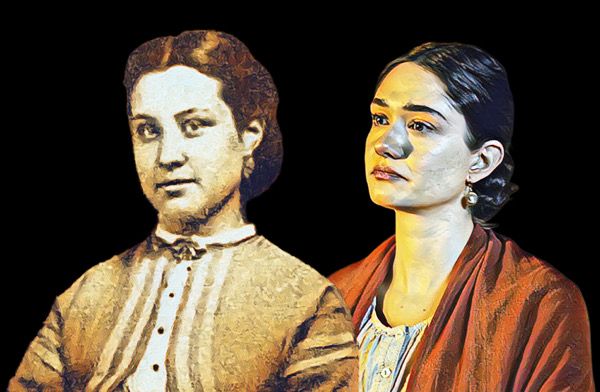
Paulita Maxwell — the real woman behind the myth
Behind the fiction stands Paulita Maxwell, the young woman who lived — and perhaps loved — the real Billy the Kid. Born in 1864, Paulita was the daughter of Lucien Maxwell, one of the most powerful landowners in New Mexico. Her home in Fort Sumner was a crossroads of soldiers, traders, and outlaws — a world where faith, wealth, and danger coexisted uneasily.
It was there that she met William H. Bonney, the boy with sharp eyes and a smile that could disarm or deceive. By then, Billy was already infamous, though among those who knew him personally, he was often described as gentle, loyal, and almost painfully young.
Stories about their connection are tangled between truth and legend. Some say they were lovers. Others insist it was a tender friendship. But nearly every account agrees on one thing: Paulita was different for him. She saw in Billy something beyond the bounty posters — a boy who laughed easily, who played guitar, who was haunted by loneliness.
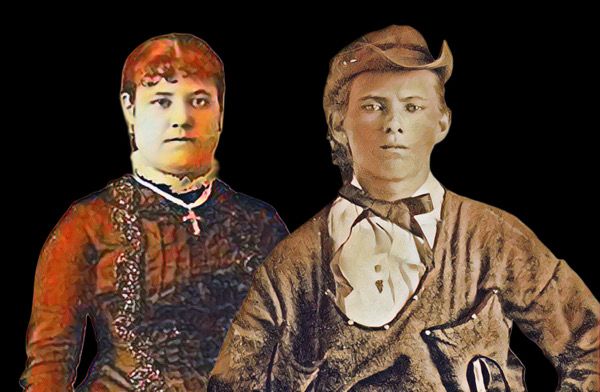
Rumors spread that she was pregnant when he died, a version that resonates deeply with Dulcinea’s current storyline in the series. Whether true or not, the symbolism is powerful: love trying to bloom in the shadow of death. And the cruel twist of fate? Billy died inside the Maxwell home, under the same roof where Paulita slept.
History is not a spoiler — the inevitable end
Billy the Kid’s death is one of the most famous moments in American outlaw lore. It happened on the night of July 14, 1881, in Fort Sumner, when he was just 21 years old.
The man who killed him, Sheriff Pat Garrett, had once been his friend. Garrett tracked Billy to the Maxwell property and waited for him in Pete Maxwell’s bedroom — Paulita’s brother.
Billy, unarmed, walked into the darkened room, unaware that Garrett was waiting. When Billy entered, he called out in Spanish:
“¿Quién es? ¿Quién está ahí?”
(“Who is it? Who’s there?”)
Those were his last words. Garrett fired a single shot into his chest. The most famous outlaw in New Mexico died instantly.
The irony — and the poetry — of that ending are unbearable: Billy died seeking shelter in the house of the woman he loved, only a few steps from her room. If the series follows history, the tragedy will not come as a surprise. History isn’t a spoiler — the destinies of Billy, Paulita, and, by extension, Dulcinea, have always been intertwined..
Paulita’s silence — and the echo that remained
When Billy was killed, Paulita was just 17 years old. She survived the scandal and the grief with almost mysterious composure. She married José Jaramillo, had children, and lived quietly between Fort Sumner and Puerto de Luna.
Her marriage, by many accounts, was unhappy — even abusive — and she eventually left him. But her association with Billy remained a shadow that followed her all her life.
She rarely spoke publicly. She never sought fame. She never confirmed — nor denied — what she had shared with Billy.

Paulita died on December 17, 1929, at 65, and was buried in the same Fort Sumner cemetery — just a few steps from Billy’s grave. Visitors still leave flowers between the two headstones, as if completing the story that history left unfinished.
She never became a figure of fame, never profited from the myth. Her silence became her legacy — one that the series, through Dulcinea, now breaks open. Because in the end, what Billy the Kid restores to Paulita is not a romance, but a voice.
Between history and invention
By creating Dulcinea Del Tobosco, Michael Hirst does something quietly radical: it gives back to Paulita Maxwell the emotional gravity she was denied by history. Dulcinea is not a copy of Paulita, but a reflection — a poetic reconstruction of a woman erased from the narrative. She’s tenderness born from silence.
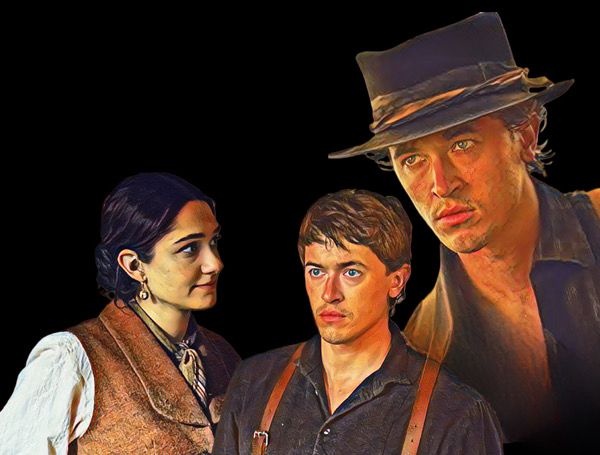
And that’s what makes the fiction so moving. Even surrounded by the violence and mythology of the Old West, the story of Billy and Dulcinea — Billy and Paulita — lingers because it’s achingly human. It reminds us that behind every legend of blood and bullets, there was always a heartbeat, and sometimes, a woman who dared to love a man already lost to history.
Billy died young. Paulita lived long enough to become a ghost of his story. And now, through the invention of Dulcinea, both of them live again — where truth and imagination finally meet, not as outlaws, but as lovers suspended between myth and memory.
Descubra mais sobre
Assine para receber nossas notícias mais recentes por e-mail.
 miscelana.com