
In 2025, A Chorus Line turns fifty. Half a century of a musical that began as a collective experiment and became one of the greatest theatrical phenomena of all time. A work that gave the spotlight to those who had always lived in its shadow — the dancers in the chorus — and proved that behind every synchronized step lies a personal story made of sacrifice, dreams, and vulnerability. Fifty years later, its pulse still echoes onstage, onscreen, and, soon, in Ryan Murphy’s upcoming series.
The Genesis: a Conversation, a Confession, a Mirror
The story of A Chorus Line began in 1974, when choreographer Michael Bennett gathered a group of New York dancers — the so-called “gypsies,” who drifted from one production to another chasing auditions — to record late-night conversations about their lives. What started as an informal workshop became a revelation: intimate confessions about childhood, sexuality, rejection, and the relentless pursuit of validation.

From those taped sessions, Bennett, together with playwright James Kirkwood Jr. and composer Marvin Hamlisch, built the skeleton of a new kind of musical. Instead of a plot-driven narrative, there would be an audition. The stage would be bare, the lights harsh, the focus entirely on the performers. One by one, the dancers would reveal their wounds, ambitions, and insecurities — and through that collective catharsis, a deeply human portrait of life in the performing arts emerged.
A Story of Love, Rejection, and Resilience
When A Chorus Line premiered Off-Broadway in 1975 at The Public Theater, the reaction was immediate and electric. Within weeks, it transferred to the Shubert Theatre on Broadway and became a cultural sensation. Audiences recognized themselves in those stories. It wasn’t a musical about fame; it was about survival, the fear of fading away, the dignity of continuing to dance even when no one is watching.
Marvin Hamlisch’s score and Edward Kleban’s lyrics remain a cornerstone of American musical theatre. “I Hope I Get It” captures the terror of auditions; “Nothing” reveals the humiliation of a young Latina actress dismissed by her teachers; and “What I Did for Love” transcends show business — it’s a hymn to passion and sacrifice, a song about devotion to one’s craft even when it breaks your heart.
The original production ran for fifteen consecutive years, with more than six thousand performances. It won nine Tony Awards and the Pulitzer Prize for Drama in 1976 — a rare honor for a musical. More than that, it changed the Broadway landscape: no lavish sets, no stars above the ensemble. Its power came from honesty, vulnerability, and collective truth.
A Chorus Line Takes the Stage in Brazil
In 1983, A Chorus Line made its way to Brazil, becoming the first officially licensed replica of a Broadway musical ever produced in the country. Directed by Roy Smith, produced by Walter Clark, and translated by Millôr Fernandes, the show opened at Teatro Sérgio Cardoso in São Paulo before moving to Rio de Janeiro in 1984.
The Brazilian production was a landmark event. It brought a modern theatrical language, technical precision, and emotional intensity that audiences had rarely seen before. The cast featured Cláudia Raia, Totia Meirelles, Raul Gazolla, Regina Restelli, Thales Pan Chacon, and Guilherme Leme, among others. It was met with curiosity, skepticism, and ultimately, admiration. Applause broke out mid-scene; people recognized their own fears and ambitions in the dancers’ stories.
Now, four decades later, the show returns to Brazil to mark its 50th anniversary. Raul Gazolla — once part of the original cast — steps into the role of Zach in a new production led by Miguel Falabella and directed by Bárbara Guerra. The revival feels symbolic: a full-circle moment for a musical that remains a rite of passage for performers and audiences alike.
The 1985 Film: Translating the Intangible
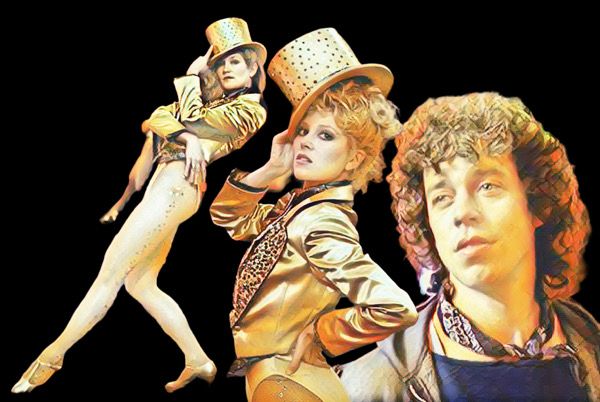
After its meteoric success onstage, A Chorus Line inevitably caught Hollywood’s attention. The film adaptation, directed by Sir Richard Attenborough — who had just won an Oscar for Gandhi — starred Michael Douglas as Zach. On paper, it had everything to succeed. But what makes a stage musical soar doesn’t always survive on film.
The show’s magic depended on intimacy — the raw connection between performer and audience. Onscreen, that immediacy vanished. Attenborough opted for a more conventional narrative, centering the story on the romance between Zach and Cassie. Several songs were cut or reworked, and more controversial themes — including sexuality, discrimination, and emotional trauma — were toned down for a broader audience.
Technically polished but emotionally detached, the film received lukewarm reviews. Critics accused it of missing the essence of the stage version. At the box office, it struggled as well: with a $25 million budget, it grossed only about half that amount. Yet, over time, the movie earned a second life as a cultural artifact — not for what it achieved, but for the questions it raises about translating theatre’s intimacy into cinema’s distance.
Revivals, Reflections, and Every Little Step
Despite the film’s failure, A Chorus Line never left the stage. In 2006, a Broadway revival, directed by Bob Avian — Bennett’s original co-choreographer — faithfully recreated the production for a new generation. The success proved that the material had lost none of its emotional resonance.
The 2008 documentary Every Little Step chronicled that revival from the inside. It followed young performers auditioning to play characters based on real people — while intercutting original audio from the 1974 workshops. The result is both a time capsule and a mirror, showing how each generation of artists lives the same dream, faces the same rejection, and keeps dancing anyway.

Since then, A Chorus Line has never disappeared from the global stage. It has been revived in London, Tokyo, Sydney, Buenos Aires, and Berlin, each version adding its own rhythm, language, and emotion. The question that closes the show — “What would you do for love?” — remains timeless.
Ryan Murphy’s Vision: The Next Chapter
The newest chapter in the A Chorus Line legacy comes from Ryan Murphy, who is developing a limited series for Netflix. The project aims not to simply recreate the musical, but to dramatize its creation — exploring the lives, conflicts, and breakthroughs of the artists who built it.


Murphy, who has long explored the intersection of performance and identity in shows like Glee and Pose, seems uniquely suited to revisit the story. The series is expected to run for ten episodes and blend dramatization with documentary tone, revealing how the original workshops revolutionized Broadway in the 1970s. Though still in development, the project carries immense potential — a chance to revisit the confessional spirit of A Chorus Line through a modern lens.
An Everlasting Echo
Half a century after its debut, A Chorus Line still resonates because it captures something eternal: the yearning to be seen. Its structure may seem simple — a group of dancers auditioning for a show — but its heart beats with the universal rhythm of identity and desire.
It is about what we give up for our dreams, and what we gain when we share them with others. The film stumbled, the revivals evolved, but the message remains. A Chorus Line is not just about dancers — it’s about all of us, standing in line, waiting for our chance, hoping to be chosen, and dancing anyway.
Descubra mais sobre
Assine para receber nossas notícias mais recentes por e-mail.
 miscelana.com