
Diane Keaton passed away on October 11, 2025, at the age of 79, in California. The news, confirmed by People, marks the end of one of Hollywood’s brightest and most beloved eras. Actress, director, writer, and eternal muse of self-expression, Diane Keaton was more than a performer — she was an idea. A way of being. Her laughter, her charm, her contradictions, and her refusal to conform changed the way the world saw women, aging, and individuality. The cause, according to the family’s statement a few days later, was pneumonia.
Born Diane Hall on January 5, 1946, in Los Angeles, she was the eldest of four children. Her stage name, Keaton, came from her mother, Dorothy — a creative, spirited woman whom Diane described as her first muse. “She wanted to be an artist, but she stayed home,” Diane once said. “She was my greatest advocate.” That duality — the woman torn between duty and dreams — would become the emotional spine of her entire career.
In the late 1960s, she left drama school and moved to New York, chasing the chaos of theater and the promise of something bigger. She sang, waited tables, performed in Hair, and faced the silent battles of a young woman trying to exist in a world obsessed with perfection. It was on Broadway that she met Woody Allen, starring opposite him in Play It Again, Sam. Their connection was immediate — creative, romantic, and electric. Together, they would define an era of neurotic brilliance and bittersweet comedy.
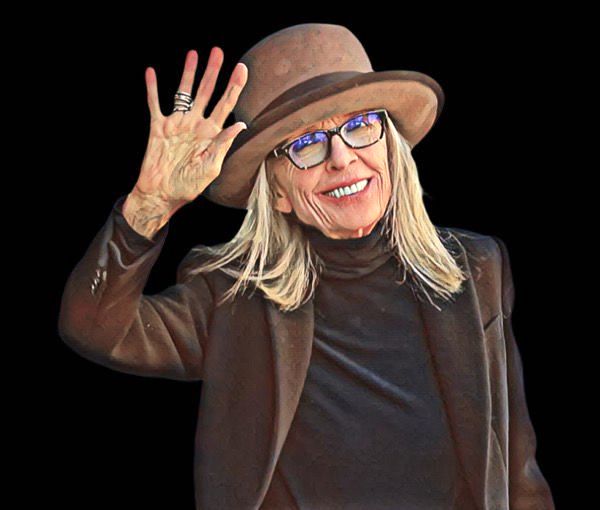
Then came Annie Hall (1977) — the film that didn’t just win her the Academy Award for Best Actress, but forever redefined modern womanhood on screen. Annie wasn’t just inspired by Diane Keaton — she was Diane Keaton. Her nickname “Annie” and her real surname “Hall” were embedded in the script. Woody Allen and co-writer Marshall Brickman later admitted that the character’s mannerisms, wardrobe, humor, and even cadence were drawn from Diane herself.
Her clothes, famously assembled from her own closet — oversized jackets, wide trousers, crisp shirts, and men’s ties — became a revolution. With Ralph Lauren’s touch, the “Annie Hall look” changed fashion forever. Suddenly, women were dressing like Diane: effortlessly elegant, nonconforming, confident. She blurred the lines between masculine and feminine, showing that style could be power — that comfort and confidence were the new seduction.
Diane didn’t play the Hollywood game. Her beauty was unpolished, her voice quivered, her humor was self-effacing — and that’s precisely what made her magnetic. She was real in an industry built on illusion.
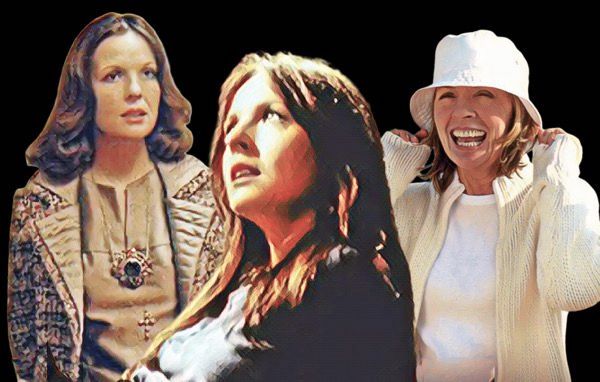
Before Annie Hall, she had already made her mark as Kay Adams, Michael Corleone’s long-suffering wife in The Godfather (1972). Francis Ford Coppola cast her, famously, because she seemed “unpredictable, with a quiet intensity.” Diane hadn’t read Mario Puzo’s novel before auditioning and had no idea what she was walking into. The result was unforgettable: a woman trapped between love and morality, light and shadow.
Diane and Al Pacino: The Love That Never Faded
It was on The Godfather set that she met Al Pacino — the man she would later call the love of her life. Their connection was immediate, built on opposite energies: he, the brooding method actor; she, the spontaneous and unguarded soul. Their relationship lasted on and off for years, spanning three Godfather films and a lifetime of longing.
“He was everything I wasn’t — intense, mysterious, unpredictable. And I loved him in ways I could never explain,” she said once.
They broke up before The Godfather Part III, but when filming resumed, the chemistry was still alive — painful, electric, and undeniable. The scene in which Kay walks away from Michael was more than fiction; it was closure. “That was real,” Diane admitted later. “It was our goodbye.”
Though their romance ended, their affection never did. They remained bonded by tenderness and mutual respect. When asked who the great love of her life was, Diane never hesitated: “It was Al.”
The Actress Who Made Vulnerability a Superpower
Between her collaborations with Woody Allen and her relationship with Pacino, Diane Keaton built one of the most versatile careers in American film. She could be both tragic and comic, glamorous and plain, lighthearted and profound.
In Reds (1981), directed by Warren Beatty (with whom she also shared a brief romance), she played journalist Louise Bryant, earning another Oscar nomination. In Baby Boom (1987), she portrayed a workaholic executive unexpectedly turned mother, years before Hollywood took motherhood seriously as a theme.

Through the 1990s, she found a new kind of stardom as the comforting, sharp-witted mother in Father of the Bride (1991) and its sequel, and as part of the feminist cult classic The First Wives Club (1996), alongside Bette Midler and Goldie Hawn.
Then came Something’s Gotta Give (2003), directed by Nancy Meyers — her great late-career triumph. As Erica Barry, she gave audiences one of cinema’s most intimate portraits of middle-aged love and heartbreak. The moment she weeps alone at her computer, writing an email to the man who left her, remains a defining scene in American film — raw, relatable, deeply human.
A Life Without Scripts
Off-screen, Diane Keaton was as distinctive as her roles. She never married — and celebrated that fact with humor and conviction. “I’m a happy oddball,” she once said. “I never wanted to be a wife — I’d have been terrible at it.” Instead, she created her own family. She adopted two children — Dexter in 1996 and Duke in 2001 — calling motherhood “a late act of love.”
Her passions extended far beyond film. She became a respected photographer, architectural preservationist, and design visionary. She restored historic homes in Los Angeles, published photography books (House, California Romantica, Then Again), and even launched her own home décor line. Her aesthetic — natural textures, clean lines, muted tones — mirrored her personality: playful yet disciplined, bold yet tender.
In her later years, Diane remained active in Hollywood, starring in Book Club (2018), Poms (2019), and her final film, Summer Camp (2024), a heartfelt comedy about aging and friendship. On Instagram, she became an unlikely star, sharing quirky videos, candid reflections, and her signature humor about life, loneliness, and laughter.
A Fashion and Cultural Legacy
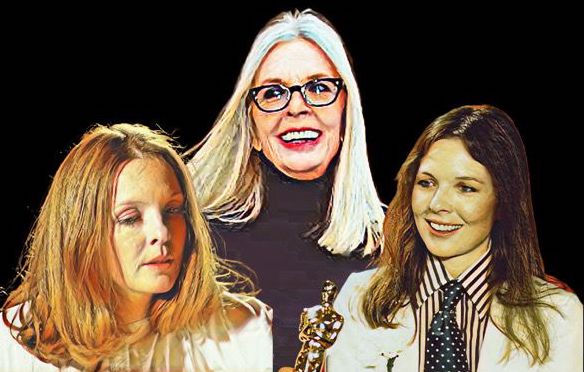
Few actors have influenced fashion the way Diane Keaton did. Her Annie Hall wardrobe didn’t just inspire generations of women — it redefined femininity itself. Designers like Ralph Lauren, Phoebe Philo, and Jenna Lyons have all cited her as an influence. She turned boyish elegance into a statement, made hats and gloves her signature, and proved that personal style could be as radical as any political act.
To this day, her silhouette — the high-waisted pants, crisp shirts, tailored coats, oversized glasses, and soft laughter — remains shorthand for individuality and confidence. Diane Keaton didn’t follow trends; she became one.
The Legacy
Across five decades, Diane Keaton earned four Oscar nominations, countless honors, and something rarer: universal affection. She stood for authenticity in an industry obsessed with façades. Actresses from Meryl Streep to Emma Stone have cited her as inspiration, not only for her performances but for her unapologetic sense of self.
In 2019, she told People: “Without acting, I’d be a misfit. I don’t know anything. I haven’t learned anything — but I keep trying.” That relentless curiosity defined her. She was always trying — to love, to laugh, to create, to live truthfully.
Diane Keaton leaves behind not just films, but a way of being. She taught the world that charm lives in imperfection, that humor is grace, and that the most stylish thing a woman can ever be is herself.
The hats, the laughter, the brilliance — they will never fade. Because Diane Keaton didn’t just play characters. She lived them. And in doing so, she gave generations permission to live — loudly, awkwardly, beautifully — as themselves.
Descubra mais sobre
Assine para receber nossas notícias mais recentes por e-mail.
 miscelana.com