
Among all the names orbiting the legend of Billy the Kid, none is as decisive — or as enigmatic — as Jesse Evans (c. 1853 – disappeared 1882). In real life, he was a ruthless outlaw, leader of the Jesse Evans Gang — also known as The Boys — hired to intimidate, steal cattle, and kill.
On screen, he became something else entirely: Billy’s moral shadow, the man who shaped him and ultimately destroyed him.

The real Jesse Evans was born around 1853, likely in Missouri, though some historians claim Texas. He even attended Washington and Lee College in Virginia before his life turned toward crime. In 1871, Jesse and his parents were arrested in Elk City, Kansas, for passing counterfeit money. Released shortly after, he resurfaced in New Mexico in 1872 — a cowboy for hire on John Chisum’s ranch, before falling in with John Kinney, leader of one of the territory’s most notorious gangs.
By the mid-1870s, Jesse had earned a reputation as a violent, charming, and unpredictable gunman. After a bloody clash with U.S. Cavalry soldiers in Las Cruces in 1875, he formed his own crew — The Jesse Evans Gang. Alongside men like Billy Morton, Frank Baker, and Tom Hill, they terrorized the New Mexico frontier, robbing, rustling, and killing with impunity.
Then came the Lincoln County War — a feud between two rival business factions that would define an era.
Evans and his gang were hired by the Murphy–Dolan faction, a corrupt trading monopoly in Lincoln, to intimidate their English competitors, John Tunstall and Alexander McSween. On February 18, 1878, Jesse led the ambush that murdered Tunstall, Billy’s employer and mentor. The killing ignited a full-blown war and turned young William Bonney into Billy the Kid.
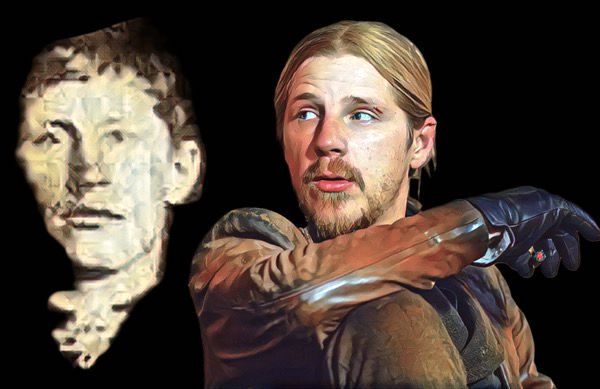
Historical letters from Billy to Governor Lew Wallace reveal how deeply he feared Jesse’s revenge. Evans commanded attacks against the Regulators — the vigilante group formed to avenge Tunstall’s death — and was said to have killed Frank McNab and wounded Ab Saunders. By 1879, he was a wanted man. After murdering attorney Huston Chapman, Jesse was captured, escaped, recaptured, and sent to Huntsville Prison in Texas.
Released in 1882, he vanished forever.
Decades later, in 1948, a Florida man named Joe Hines claimed to have fought in the Lincoln County War — and hinted that Billy the Kid was still alive. Some believed Hines was Jesse Evans living under an alias. Nothing was proven, and the mystery only deepened. Like all true Western ghosts, Jesse’s story ends where myth begins.
The MGM+ Reinvention
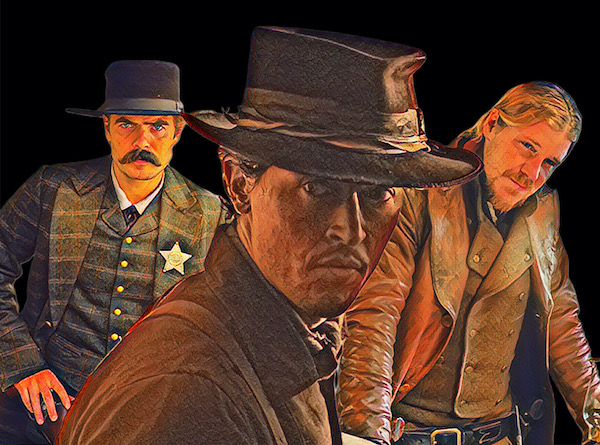
In Billy the Kid (MGM+), Jesse Evans is reimagined as more than an outlaw.
Played by Daniel Webber, he becomes Billy’s first mentor, his brother in arms — and his first betrayer. Webber, who previously portrayed Lee Harvey Oswald in 11.22.63 and the tormented Lewis Wilson in The Punisher, delivers a performance of dirty humanity: magnetic, cruel, yet strangely tender.
The show reframes Jesse’s actions as deeply personal. The killing of Tunstall is no longer an order from his employers — it’s a crime of jealousy and wounded pride. His betrayal defines Billy’s transformation: from an idealistic boy to a haunted gunman. In season two, Jesse returns as a ghost of conscience, not in body but in memory — the echo of the man who taught Billy everything, including regret.

Critics praised the portrayal. The Guardian called Webber “a Shakespearean villain in spurs,” while Collider described him as “the show’s dark, beating heart.” Webber turns Jesse into something beyond history — a symbol of corruption and brotherhood intertwined.
Fact vs. Fiction — What the Series Changes
The MGM+ adaptation takes generous creative liberties, not to distort history but to give it emotional coherence.
Here’s how the real story diverges from the screen version:
- A brotherly bond: Historically, Jesse and Billy were rivals, not close friends. The series deepens their connection to heighten the sense of betrayal.
- Tunstall’s murder: Ordered by Dolan and Murphy in reality, the show depicts it as Jesse’s reckless decision.
- The Chinese laundry robbery: Attributed to Jesse on screen, it was actually committed with Sombrero Jack (George Shaefer).
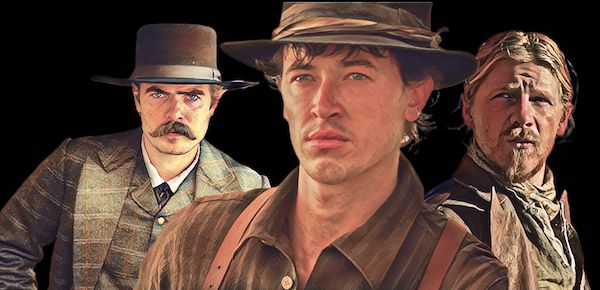
- Billy’s brother Joe: The series kills Joe early for emotional weight, though the real Joe McCarty lived until 1930.
- Romantic fiction: Dulcinea Del Tobosco replaces Billy’s real love interest, Paulita Maxwell, the woman tied to his death.
- Leadership of the Regulators: In truth, Billy was not the leader; that role belonged to Dick Brewer, Frank McNab, and Doc Scurlock.
- Sheriffs and succession: The series simplifies the power transitions, jumping straight to Pat Garrett. Historically, John Copeland and George Peppin came first, and Garrett was elected in 1881, not appointed.
- The nickname “Billy the Kid”: The show credits Garrett with coining it, but it was a local nickname later sensationalized by the press.
- Brady’s ambush: In the real shootout, Billy took back his own pearl-handled revolver, not a legal warrant as shown in the series.
All these creative shifts serve one clear purpose: to center Jesse Evans as the catalyst of the legend. By making him the man who tempts, corrupts, and finally dies by Billy’s hand, the series turns a historical footnote into the emotional cornerstone of the myth.

Epilogue — The Ghost in the Dust
In history, Jesse Evans disappeared. Whatever the truth was, it’s the same: without Jesse, there is no Billy the Kid.
Daniel Webber brings the outlaw back to life, not as a villain, but as a tragic reflection — the mentor, the betrayer, the necessary ghost.
Billy the Kid reminds us that every legend in the American West is built on someone else’s shadow. And Jesse Evans, lost to time, still lingers in the dust — the man who made Billy the Kid possible.
Descubra mais sobre
Assine para receber nossas notícias mais recentes por e-mail.
 miscelana.com