
As published in CLAUDIA Magazine
If you ever spot someone spinning with open arms in an open field — preferably atop a mountain — chances are they’re recreating the iconic opening scene from The Sound of Music. That sequence is one of cinema’s most legendary — perfectly timed and technically groundbreaking for its era. And yes, in 2025, this timeless classic, which has captivated generation after generation, celebrates its 60th anniversary.
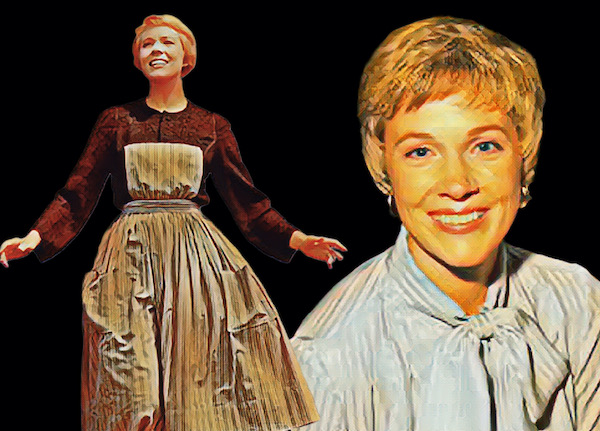
Inspired by a true story and a Broadway hit before being adapted into a film, The Sound of Music combines unforgettable songs, romance, and the breathtaking beauty of the Austrian Alps. It remains one of the greatest classics in world cinema — a work of art that continues to inspire nostalgia, study, and celebration. Directed by Robert Wise, featuring an unforgettable Julie Andrews as Maria von Trapp, the film is more than a movie — it’s a cultural phenomenon.

Based on Maria von Trapp’s memoir, the story of a young novice who brings light and joy to the strict Trapp family — while facing the rise of Nazism in Austria — is filled with music and emotion. Songs like Do-Re-Mi, My Favorite Things, and Climb Ev’ry Mountain became eternal, part of the world’s collective memory. Yet, behind the magic, The Sound of Music also hides fascinating behind-the-scenes stories that reveal the challenges of creating cinematic perfection.
The Beginning: Casting the Von Trapps
It might seem obvious that London’s reigning musical star and Oscar winner Julie Andrews would play Maria, but she was hesitant. The role of a nun-turned-governess felt too similar to her previous character, Mary Poppins. Still, The Sound of Music turned out to be transformative: it cemented Andrews’ place as one of Hollywood’s greatest stars.
Another inspired choice was Christopher Plummer as Captain von Trapp — though he was famously reluctant at first. A classically trained actor who disliked musicals, Plummer only accepted the role to prepare for Cyrano de Bergerac on Broadway. Years later, he admitted the experience changed his career forever, confessing regret for his earlier bad mood on set.
Behind the Scenes and the Making of a Masterpiece
Director Robert Wise, already acclaimed for West Side Story, achieved a rare balance of humor, drama, and visual splendor. Though partly filmed in Austria, many scenes were recreated on studio sets to capture the grandeur of the Alps. The result was seamless.
The cast underwent intense vocal training — especially Julie Andrews, whose performance required stamina and precision. The Trapp family home, often mistaken for a real mansion, was actually a detailed studio creation. The external shots filmed in Salzburg — particularly the “hilltop dance” — became some of cinema’s most iconic imagery.
The Legacy: Music and Cultural Impact
The Sound of Music didn’t just charm audiences — it defined an era. The film won five Academy Awards, including Best Picture and Best Director, and remains one of the most beloved musicals ever made. Its songs continue to echo through school recitals, television marathons, and new stage productions.
More than six decades later, its message of family, courage, and resilience against oppression still resonates deeply. The film is both a joyful celebration of life and a timeless reflection on resistance and love.
From Stage to Screen: Broadway to Hollywood
It all began in 1959, when The Sound of Music premiered on Broadway with music by Richard Rodgers and lyrics by Oscar Hammerstein II — the legendary duo behind The King and I. Based on The Story of the Trapp Family Singers, the production starred Mary Martin and ran for over 1,400 performances.
Its success caught Hollywood’s attention. Producer Saul Chaplin brought it to the big screen, and Robert Wise’s cinematic vision transformed a family story into an emotional and visual epic. The rest is history.
60 Years Later: Where Are the Von Trapps?
Six decades after Maria and the Captain sang their way through the Alps, the magic remains alive — not only in the music but in the real lives of the child actors who played the seven Trapp children. Their paths diverged, but their bond endures.
Charmian Carr (Liesl)
Forever remembered for “I am Sixteen, Going on Seventeen,” Charmian left acting in the 1970s to become an interior designer. She maintained close ties with her castmates and fans until she died in 2016 at age 73 — remembered as the “first crush” of an entire generation.
Nicholas Hammond (Friedrich)
The eldest brother went on to TV fame as Spider-Man in the 1970s series. Now living in Australia, he works as a screenwriter and director. “We still call each other brothers and sisters,” he said in a recent interview.
Heather Menzies-Urich (Louisa)
Heather continued acting and married actor Robert Urich. Together, they founded a foundation supporting cancer patients. She passed away in 2017, leaving a legacy of kindness and dedication.
Duane Chase (Kurt)
After the film, Duane traded show business for science, earning a degree in geology and working on environmental projects. He occasionally attends reunions and calls the experience “the greatest adventure of my childhood.”
Angela Cartwright (Brigitta)
Already a seasoned performer, Angela starred in Lost in Space before becoming a photographer and artist. She has published books about The Sound of Music and remains an active ambassador for the film’s legacy.
Debbie Turner (Marta)
Debbie left Hollywood early and became a floral designer and event specialist in Minnesota. She regularly participates in anniversary celebrations, saying, “The Sound of Music is like a family that never ended.”
Kym Karath (Gretl)
The youngest of the Trapps continued acting briefly, then focused on family and philanthropy. She now leads SOM7, a foundation uniting the original cast in charitable causes.

A Bond Time Never Broke
Though distance and loss have taken their toll, the cast of The Sound of Music continues to reunite — each meeting a joyful celebration of friendship and art. Julie Andrews, now 89, remains the group’s heart and soul. Christopher Plummer, who passed away in 2021, is fondly remembered by all.
Sixty years later, it’s impossible to watch The Sound of Music without thinking of those children running across the hills — their laughter echoing through time.
And perhaps that’s the true secret of its immortality: The Sound of Music continues to grow with us.
A perfect film to revisit — especially on Children’s Day.
Descubra mais sobre
Assine para receber nossas notícias mais recentes por e-mail.
 miscelana.com