
There’s something deeply moving about witnessing, in real time, the slow fading of one of cinema’s most iconic voices. Bruce Willis — the eternal John McClane, the man who survived skyscrapers, meteors, and paradoxes — now faces a quieter, more human battle: the one against forgetting.
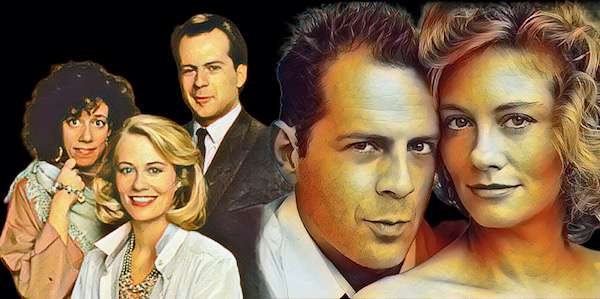
Born in 1955 in West Germany, the son of an American soldier and a German mother, Bruce grew up between worlds — shy, restless, stuttering. Acting became his liberation. It was the TV series Moonlighting in the 1980s that revealed that rare, irreverent charm to the world. The perfect mix of wit and defiance made him the face of a new kind of American hero: vulnerable, funny, and real.
And then came Die Hard. A film that redefined the action genre — and the idea of endurance itself. Willis turned John McClane into an archetype: the ordinary man who, through stubbornness, courage, and love, defies the impossible. Over the years, he shapeshifted again and again — the drifter in Pulp Fiction, the haunted soul in The Sixth Sense, the self-sacrificing astronaut in Armageddon. Bruce’s characters were always about men trying to make sense of fate.
Time, Body, and Silence
In 2022, when his family announced that he would retire due to aphasia, the world seemed to pause for a moment. The man whose voice had delivered some of cinema’s most memorable lines was losing the ability to speak. A year later came the confirmation of something even more devastating: frontotemporal dementia, a disease that erases language, memory, and connection.
Since then, time itself has taken on a strange tenderness. His wife, Emma Heming Willis, has shared glimpses of courage and heartbreak — describing how “his brain is leaving him,” yet how his face still lights up when their daughters walk into the room. The young Mabel and Evelyn still have their father, in the ways that matter most.
Demi Moore and his older daughters have stood by him too, forming a quiet circle of care and remembrance. There’s immense dignity in how the family has chosen to make this grief visible — transforming pain into love, allowing Bruce to be remembered with respect, not pity.

The Man Behind the Legend
Bruce was never just an action star. He was a storyteller, a musician, a man who laughed loudly and lived fully. On set, he was intense — sometimes difficult, often brilliant — but always authentic. His bond with audiences was straightforward; he didn’t perform for admiration, only connection. Even in the twilight of his career, in smaller, direct-to-video films, his presence carried a kind of gravity that couldn’t be faked.
Now, at seventy, Bruce lives in a specially adapted home, surrounded by care and quiet. He no longer speaks, sometimes doesn’t recognize faces, but, as his family says, “he still feels love.” And maybe that’s enough — maybe that’s everything.
The Legacy That Remains
Bruce Willis leaves, still in life, a legacy that transcends cinema. He redefined the modern hero — bruised, tired, human, but unbreakable. In his films, he bled, wept, and failed — yet somehow, always saved the day.
Now, in this unscripted final act, he continues to teach us about resilience: the courage to exist even when words are gone.

As M. Night Shyamalan once wrote, the director who gave him The Sixth Sense and Unbreakable:
“Bruce was always the man you believed would make it through to the end — even when the end was near.”
And that’s how we’ll keep him — not as the man who forgot the world, but as the one who made it dream for over four decades.
Descubra mais sobre
Assine para receber nossas notícias mais recentes por e-mail.
 miscelana.com