
It would be easy to assume that Murdaugh: Death in the Family is just another entry in the true-crime dramatization boom — one more tale of tragedy turned into prestige television. Something in the spirit of HBO Max’s The Staircase, with Colin Firth and Toni Collette, which revisited the chilling 2001 death of Kathleen Peterson; or Hulu’s Under the Bridge (2024), starring Riley Keough and Lily Gladstone, about the brutal murder of Reena Virk in Canada; or even Love & Death (HBO Max, 2023) and Candy (Hulu, 2022), both drawn from the same Texas case of a suburban housewife who killed her best friend with an axe in 1980.
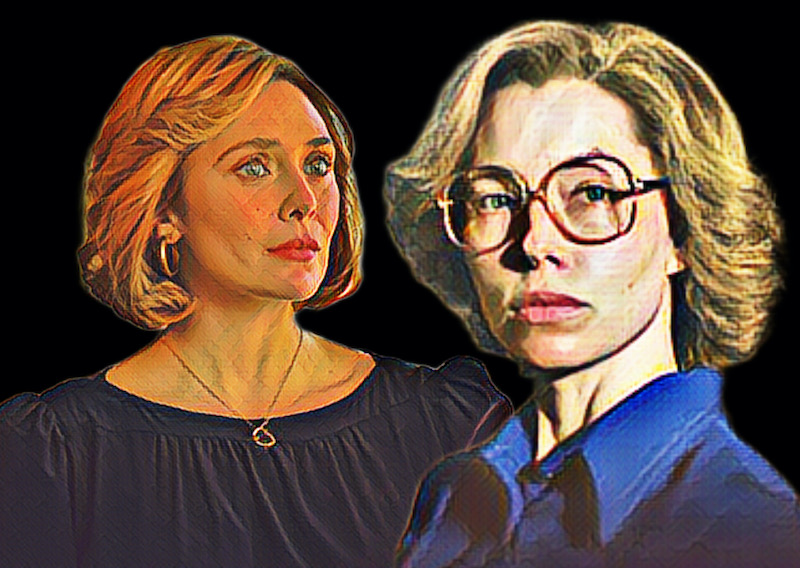

Add to that the Menéndez brothers, The Act, Dahmer — and it’s clear that the public’s appetite for reliving horror remains insatiable.
Each of these productions raises the same question: do we really need to revisit the same crimes, the same tragedies, again and again, through new lenses?
Curiously, Murdaugh: Death in the Family makes the case that yes, we do — because some stories are so absurd, so deeply rooted in privilege, arrogance, and decay, that only time can reveal their true shape.
The Murdaughs: A Monarchy in a Republic
For anyone outside the United States, the name “Murdaugh” might not ring familiar. But in South Carolina — particularly in Colleton County — this family was an institution. For more than a century, three generations of Murdaughs held the post of local prosecutor, effectively turning the family into a legal dynasty. They weren’t just powerful; they were the law itself.
Their empire thrived on silence, legacy, and an unshakable sense of immunity — until one fatal night cracked it open.
In February 2019, a group of intoxicated young people returned from a party on a boat that crashed into a bridge on the Beaufort River. Among them was Paul Murdaugh; 19-year-old Mallory Beach died in the accident. That tragedy would become the first domino to fall, exposing financial crimes, insurance fraud, and a string of suspicious deaths. The illusion of invincibility began to crumble.
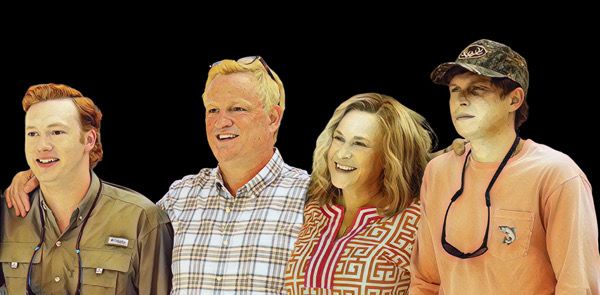
The Horror Within Their Own Walls
Even for those who followed the real case through documentaries, podcasts, and endless news cycles, watching it unfold through drama feels startlingly new. The series opens at the end — with Alex Murdaugh (Jason Clarke) discovering the bodies of his wife, Maggie (Patricia Arquette), and son, Paul, before making the infamous 911 call. What he believed to be the beginning of his defense becomes, instead, the beginning of his undoing.
From there, the show rewinds — to the boat crash, to Paul’s reckless behavior, to Alex’s opioid addiction and web of financial deceit, to the suspicious death of the family’s longtime housekeeper, Gloria Satterfield. Each episode strips away another layer of the Murdaugh myth until only corruption and denial remain.
Clarke and Arquette deliver remarkable performances, inhabiting their real-life counterparts rather than merely impersonating them. Arquette, in particular, plays Maggie as a woman torn between complicity and fear — trapped inside a system she did not build but could never escape.
And then there is Johnny Berchtold, whose portrayal of Paul Murdaugh may be the show’s most haunting revelation.
Paul — killed at 22 — is an enigma: reckless, privileged, cruel at times, but also lost, haunted, and desperate for approval. Berchtold brings rare humanity to a character often reduced to headlines. He plays Paul as both perpetrator and victim, shaped by — and suffocating under — his father’s shadow.
While Alex long ago abandoned any trace of self-awareness, Paul still flickers with doubt, with moments of unease that hint at a buried conscience. The series, more than any documentary, leaves us wondering: could he have broken the cycle if he had lived long enough?

When Reality Outruns Fiction
What makes Murdaugh: Death in the Family so effective is its refusal to sensationalize.
The story doesn’t need embellishment — its horror lies in the ordinariness of evil. The scripts are tight, the pacing deliberate, and the tone avoids voyeurism.
Director John Hillcoat (Lawless, Triple 9) stages it all with unnerving restraint, using the stillness of the South Carolina low country as a metaphor for rot beneath civility. The production design captures a world where legacy replaces morality, and surnames matter more than justice.
Sharp-eyed viewers will spot quiet nods to the case’s lore — a roadside sign referencing Gloria, the rhythmic crash of the river that recalls Mallory’s death, a dog that senses something off long before anyone else does. These details tether the show to reality while deepening its gothic undertone.

A Perfect American Tragedy
Murdaugh: Death in the Family is more than a polished true-crime drama.
It’s a modern morality play about the corrosion of conscience when privilege goes unchecked. It’s about fathers and sons, money and addiction, gender and silence — themes that extend far beyond the American South.
Even knowing the ending, the impact remains visceral.
Watching Clarke, Arquette, and Berchtold reenact these events is to confront the absurdity of power’s final illusion: that wealth can always purchase innocence.
That illusion dies here.
And that is the series’ true achievement — not in teaching us anything new about the case, but in reminding us, with quiet horror, that evil can wear a familiar face, speak with a Southern drawl, and carry a family name that once stood for justice.
Descubra mais sobre
Assine para receber nossas notícias mais recentes por e-mail.
 miscelana.com