
Few literary figures have endured the centuries with the haunting power of Ophelia, the young woman from Hamlet who loses her mind, sings to the flowers, and drowns. Since Shakespeare first imagined her in the late 16th century, she has become a universal symbol of feminine madness, romantic melancholy, and the beauty of collapse. By the 19th century, she was also one of the most depicted muses in art history.
In 2025, more than a century after it was painted, “Ophelia” (c. 1900) by Friedrich Wilhelm Theodor Heyser resurfaced as a cultural phenomenon. The reason? Taylor Swift.
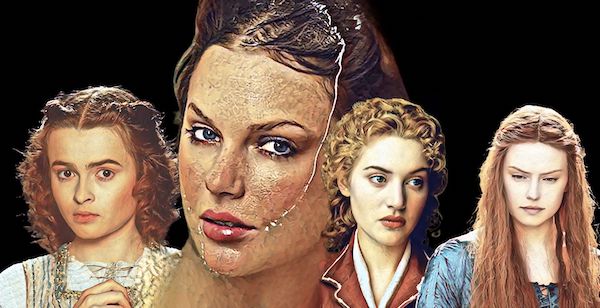
When Pop Meets Symbolism
It all began with the release of “The Fate of Ophelia,” the opening track of Swift’s new album, The Life of a Showgirl. The video’s first scene — the singer floating in a stream, wrapped in a white gown, surrounded by water lilies — mirrors Heyser’s composition almost perfectly.
Fans immediately noticed. Soon, hundreds of Swifties began flocking to the Hessische Landesmuseum in Wiesbaden, Germany, where the painting is displayed. According to Town & Country (October 16, 2025), hundreds of fans traveled — some driving five hours — just to see the canvas. “One family came all the way from Hamburg,” said museum spokesperson Susanne Hirschmann to German media.
Within days, Heyser’s painting transformed from a quiet regional piece into a viral attraction. European outlets jokingly referred to it as “art overtourism,” and the museum saw an unprecedented influx of young visitors. The once-overlooked 19th-century painting had suddenly become the backdrop for endless selfies and videos.
There’s also poetic symmetry in this connection. In her lyrics, Swift rewrites Ophelia’s tragic fate: “I might’ve drowned in the melancholy,” she sings, “but you saved my heart from the fate of Ophelia.” The death becomes rebirth — the woman who once sank into despair now floats, saved by love.
Friedrich Heyser’s German Ophelia
But who was Friedrich Heyser, the painter behind this rediscovered masterpiece?
Born in 1857, Heyser was a German artist trained at the Dresden Academy of Fine Arts, influenced by late-19th-century realism and symbolism. He studied in Paris at the Académie Julian and absorbed elements of Art Nouveau and literary painting.
Around 1900, when he painted Ophelia, Europe was deep in the Symbolist era — a movement devoted to expressing emotional and spiritual states through poetic imagery. The story of Ophelia, the woman driven to madness and dissolution within nature, was one of its most powerful icons.
Heyser’s version captures precisely that mood. His Ophelia lies serene, embraced by water and flowers, suspended between life and death. Unlike John Everett Millais’s famous 1852 version, which shows the moment of drowning, Heyser paints the stillness after the end — silence, not struggle.
His is a quieter, more introspective vision. A German Ophelia, heir to Romantic melancholy, where nature mirrors the soul and death merges with landscape. The white dress, the filtered light, the soft greens — all evoke spiritual calm.
Millais vs. Heyser: Two Visions of Death and Peace
Millais’s Ophelia, housed at the Tate Britain, has long been the definitive image of the character. Using Elizabeth Siddal as his model, Millais created a Victorian icon of beauty and tragedy.
Heyser’s painting, by contrast, remained obscure for decades, tucked away in German collections and rarely reproduced abroad. Yet both share the same poetic core — the merging of body, nature, and destiny.
While Millais captures the drama of life slipping away, Heyser paints the quiet afterward — peace after despair, as if Ophelia had already become one with the river.

A Viral Renaissance
That serenity perhaps explains why, more than a century later, Heyser’s Ophelia speaks so vividly to modern audiences. Its diffused light, pale tones, and surrendering posture align perfectly with today’s cinematic and digital aesthetics.
Taylor Swift’s homage only amplified that resonance. The Ophelia of 1900 — born from European Symbolism — has been reborn through global pop culture, completing a full circle between art, literature, and music.
Between Tragedy and Rebirth
Across history, each generation has reinvented Ophelia. In Romanticism, she embodied purity destroyed; in Symbolism, the union of beauty and death; in contemporary feminism, a woman defying imposed narratives.
Now, in 2025, she speaks again — not in madness, but in survival.
Taylor Swift rewrites the ending. Friedrich Heyser, a century earlier, had already softened the despair. Together, they remind us that melancholy can be beautiful — and that art, even after a hundred years, still floats.
Descubra mais sobre
Assine para receber nossas notícias mais recentes por e-mail.
 miscelana.com