
The year went by so fast that the 75th anniversary of the classic Cinderella, in February 2025, almost slipped by unnoticed. Almost. How could it? Some films don’t age — they simply find new ways to shine. Cinderella (1950) is one of those rare miracles.
The story of a young woman who turns pain into hope has crossed generations and, more than a fairy tale, became the very symbol of Disney itself: the belief that magic exists — and can be restored.
The Story That Became a Mirror
Centuries before reaching the screen, Cinderella was already one of humanity’s oldest and most universal stories. Its origin crosses borders and eras, constantly changing form but always preserving the same essence: that of a young woman whose kindness and courage are rewarded.
The earliest known version comes from Ancient Egypt. The Greek historian Strabo, in the first century BCE, recorded the tale of Rhodopis, a Greek slave living in Egypt whose sandal was stolen by an eagle. The bird, sent by the gods, dropped the shoe onto the Pharaoh’s lap, who saw it as a divine sign. He searched the land for the owner of the shoe and, upon finding her, made her his queen. It was the first recorded appearance of the “lost slipper” motif — a symbol of destiny, identity, and recognition that would endure through centuries.
Many centuries later, in China’s Tang dynasty, came Ye Xian, an orphan mistreated by her stepmother, who befriends a magical fish. When the fish is killed, its spirit continues to help her, granting her a gown and golden shoes to attend a festival. The king falls in love with her after finding one of the shoes. It’s a more spiritual than romantic story — where the slipper represents purity and divine intervention rewards silent virtue.
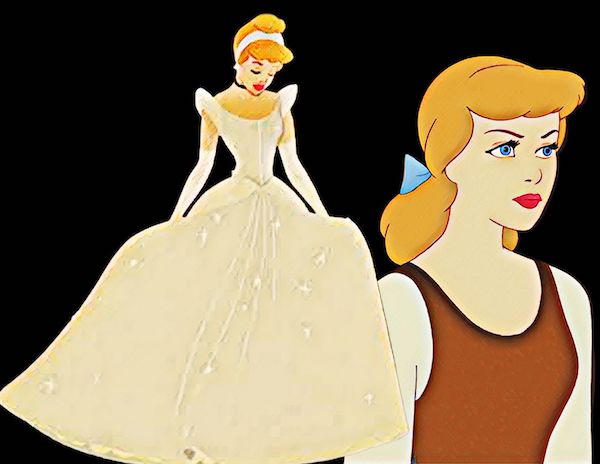
That Chinese version traveled along the Silk Road to Europe and inspired the folk tales told among peasants and nobility alike. The most famous of them was Italian: “La Gatta Cenerentola,” published by Giambattista Basile in 1634. The heroine, Zezolla, suffers under her stepmother’s cruelty but is helped by a fairy living inside a magical date tree. From this story comes the term Cenerentola — “the girl of the ashes” — and a darker, more adult tone of vengeance, punishment, and morality.
When Charles Perrault published his version in 1697, he civilized the story. Cendrillon is more elegant, moral, and optimistic. The fairy godmother replaces spirits and enchanted trees; the ball and glass slipper become symbols of grace rather than power. Cruelty gives way to virtue, and the lesson is simple: kindness is the true miracle.
Perrault turned an ancient tale into a modern fable of faith and reward — and it was this version that captivated Walt Disney nearly three centuries later. He saw in Cinderella not just a princess but a metaphor for rebirth, perseverance, and belief in the impossible — the foundation of all things Disney: dreams and wishes that come true.
Walt’s Longtime Dream
Walt first tried to adapt Cinderella in 1922, at the Laugh-O-Gram Studio, and returned to the idea in 1933 as part of the Silly Symphonies. By 1938, the project almost became a reality — with story drafts featuring a stepmother named Florimel de la Pochel, mice, a turtle, and the prince’s aides.
War and financial turmoil delayed everything. In 1943, Dick Huemer and Joe Grant resumed development, but it wasn’t until 1946, when the studio began to recover, that the project was truly approved. Maurice Rapf wrote a version with a more rebellious Cinderella — a woman who refused to accept humiliation. Although that script was abandoned, its spirit lived on in the character we know: resilient, but never submissive.
By 1947, with Ted Sears, Homer Brightman, and Harry Reeves, Walt finally found the right tone. It was time to return to the fairy-tale roots — and to save his studio.

Risk and Rebirth
In the 1940s, Disney faced a devastating financial crisis. After World War II, Pinocchio, Fantasia, and Bambi had underperformed, and the studio survived only through smaller productions.
Walt decided to risk everything on a return to his origins. He chose Cinderella as the film that would bring audiences back — and staked his personal fortune and reputation on it. The screenplay, developed by Ted Sears, Homer Brightman, and Bill Peet, turned the fairy tale into a story about quiet resilience — of someone who isn’t strong despite her goodness, but because of it.
Characters, Voices, and Humanity
Casting the voice of the protagonist defined the tone of the entire film. Nearly 400 actresses auditioned, but Ilene Woods, a radio singer, was chosen after Walt heard her demo recordings of “A Dream Is a Wish Your Heart Makes” and “So This Is Love.” Walt decided on the spot: she was Cinderella.
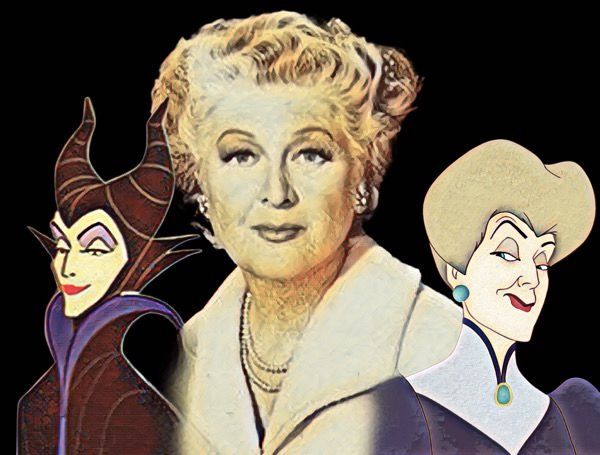
Verna Felton, forever the voice of Disney’s warm matriarchs, brought life to the Fairy Godmother, balancing sweetness with humor. (She was also the Queen of Hearts in Alice in Wonderland, the Elephant Matriarch in Dumbo, and the fairy Flora in Sleeping Beauty.)
Music and Emotion
The soundtrack, written by Mack David, Jerry Livingston, and Al Hoffman, is the film’s emotional core.
“A Dream Is a Wish Your Heart Makes” became an anthem of hope, while “Bibbidi-Bobbidi-Boo” earned an Oscar nomination for Best Original Song in 1951. Both express Walt’s philosophy: faith in the impossible and joy as a form of survival.
Animation with Real Life
To reduce costs and enhance realism, Disney relied heavily on live-action reference footage filmed on large soundstages, synchronized to the dialogue playback. Helene Stanley performed Cinderella’s scenes so animators could draw frame by frame from her movements — an approach she would repeat for Aurora (Sleeping Beauty) and Anita (101 Dalmatians).
The Prince was modeled on Jeffrey Stone, and the Fairy Godmother on Claire Du Brey, whose final design was inspired by Mary Alice O’Connor (the wife of layout artist Ken O’Connor). The technique saved time and money but created artistic tension. Animator Frank Thomas recalled that it sometimes “restricted imagination — in animation, the camera can go anywhere.”
The Nine Old Men and Character Creation
By 1950, Disney had assembled its legendary team of supervising animators — the Nine Old Men: Frank Thomas, Ollie Johnston, Les Clark, Wolfgang Reitherman, Eric Larson, Ward Kimball, Milt Kahl, John Lounsbery, and Marc Davis.
Eric Larson first animated a youthful, simple Cinderella; Walt preferred the refined elegance of Marc Davis, who envisioned a long-necked, graceful heroine. Ken O’Brien unified their approaches into the final design.
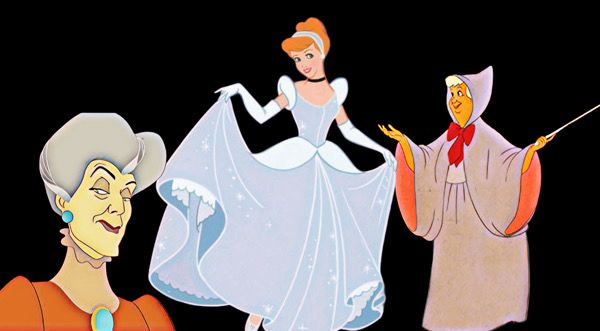
Frank Thomas, known for gentle characters like Pinocchio and Bambi, was surprised to be tasked with Lady Tremaine — and created one of Disney’s most sophisticated villains. Milt Kahl handled the Fairy Godmother, the King, and the Grand Duke, insisting that the fairy be warm and comical rather than distant, unlike Pinocchio’s Blue Fairy.
The animal characters came purely from imagination: Ward Kimball based the cat Lucifer on his own pet, while Reitherman animated the thrilling scene of Jaq and Gus hauling the key up the stairs.
The Scene That Defined Disney
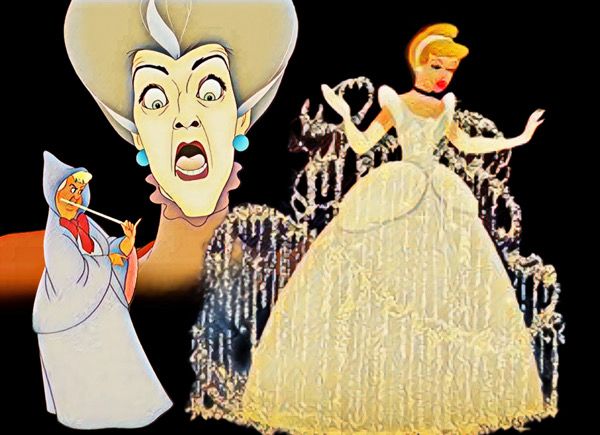
The transformation sequence — when the Fairy Godmother turns Cinderella’s torn dress into the iconic silver-blue gown — was personally supervised by Walt. He called it “the essence of the dream,” and with reason: in those two minutes of pure animation, art becomes transcendence.
The Premiere That Changed Everything
Cinderella premiered on February 15, 1950. It became Disney’s biggest success since Snow White and the Seven Dwarfs, earning $4.28 million in U.S. and Canadian rentals, ranking as the 5th highest-grossing film of 1950 in North America and 5th in the UK the following year. In France, it sold 13.2 million tickets — one of the largest admissions in the country’s history. Across its lifetime, it grossed $182 million worldwide, or about $565 million adjusted for inflation.
The triumph financed Disney’s golden decade — from Alice in Wonderland and Peter Pan to Sleeping Beauty — enabling television ventures, a distribution arm, and the creation of Disneyland (and later the Florida Project, now Walt Disney World).
The Live-Action Renaissance (2015)

Branagh didn’t reinvent; he deepened. Cinderella’s kindness became resilience, and Blanchett’s Lady Tremaine gained humanity without losing her cruelty. Sandy Powell’s costumes, Patrick Doyle’s score, and Branagh’s classical direction restored the tale’s timeless force — proving that in an age of irony, sincerity can still be revolutionary.
The Legacy
Cinderella earned three Academy Award nominations (Best Scoring, Best Sound, and Best Original Song) and decades of critical acclaim. From its record-breaking 1988 VHS release to every new restoration, the film has remained a living artifact of animation’s golden age.
From 1950 to 2025, it stands as a reminder that beauty and hope never disappear — they simply change form. The castle that opens every Disney film is her castle. The dream that saved a studio is the same one that, 75 years later, continues to inspire new generations.
Because, as the song says, “A dream is a wish your heart makes.”
And dreams — the true ones — never age. Cinderella continues to remind us that believing in them is always the first step toward transformation.
Descubra mais sobre
Assine para receber nossas notícias mais recentes por e-mail.
 miscelana.com
1 comentário Adicione o seu