
When Kenneth Branagh released Mary Shelley’s Frankenstein in 1994, it seemed to have everything needed to become an instant classic: a stellar cast (Robert De Niro, Helena Bonham Carter, John Cleese, and Tom Hulce), lavish production design, and the seal of approval from producer Francis Ford Coppola. Yet despite all its promise, the film faltered. Both critics and audiences found it overwrought, and it is remembered more for its excess than its emotional impact.
Theatrical Excess and Directorial Ego
At the time, Branagh was regarded as the modern heir to Laurence Olivier, but the Shakespearean grandeur that had defined his earlier work became a liability here. Everything in Frankenstein feels heightened, operatic, drenched in sweat and melodrama. The camera circles Victor Frankenstein as if inviting the audience to admire him rather than fear him. The result is a film more concerned with spectacle than with the moral horror and human tragedy that define Mary Shelley’s novel.
Mary Shelley’s Frankenstein never quite decides what it wants to be. It oscillates between gothic horror and romantic tragedy, between a love story and a philosophical fable. De Niro’s Creature — tender and grotesque at once — feels trapped between two interpretations, and the film never achieves true emotional balance.

The “Irresistible” License: Elizabeth and the Bride’s Temptation
In Shelley’s novel, Elizabeth Lavenza is murdered by the Creature on her wedding night — a definitive tragedy. Victor, destroyed by grief, never attempts to bring her back. But Branagh couldn’t resist what he later called an “irresistible deviation.” He merged Frankenstein with its cinematic sequel, Bride of Frankenstein (1935), crafting one of the film’s boldest inventions.
After Elizabeth’s death (played by Helena Bonham Carter), Victor — mad with guilt — reconstructs her body using pieces of her and the nurse Justine, unjustly executed under the accusation of murdering Victor’s brother. He resurrects her, only to watch her awaken in horror at her own transformation. Torn between two selves — the woman she was and the abomination she’s become — Elizabeth takes her own life before the men who created her.
This sequence does not exist in Shelley’s novel. It’s the film’s most fascinating betrayal — a moment where Branagh abandons textual fidelity for pure cinematic instinct, bridging Shelley’s romantic tragedy with James Whale’s 1935 myth of creation and rejection.
Behind the Scenes: Artistic and Personal Upheaval
The turmoil surrounding Frankenstein wasn’t confined to the screen. The production itself was marked by tension — the studio pushed for a more commercial film, while Branagh insisted on a tragic, literary tone. The final cut reflects that tug of war: uneven pacing, truncated scenes, and a mood that swings between grandeur and chaos.
But the film also marked a turning point in Branagh’s personal life. During filming, his marriage to Emma Thompson collapsed. Once regarded as Britain’s golden couple — partners on stage, in Henry V, Much Ado About Nothing, and Dead Again — their union imploded under the pressure of the production and Branagh’s growing closeness to Helena Bonham Carter, who played Elizabeth.

The affair became a media scandal. Thompson and Bonham Carter had been friends, having just starred together in Howards End (1992). The British press devoured the story, turning the Frankenstein set into a parallel drama of its own. For many, the film came to symbolize the moment Branagh’s professional and personal ambitions collided — when the creation consumed its creator.
Branagh and Bonham Carter remained together for approximately five years, collaborating on two films: Frankenstein and The Theory of Flight (1998). Their relationship eventually ended, but the episode marked a permanent shift in Branagh’s image — Mary Shelley’s Frankenstein became, unintentionally, the emblem of both artistic excess and emotional unraveling.
Living in Dracula’s Shadow
The film also arrived in the wake of Francis Ford Coppola’s Bram Stoker’s Dracula (1992), a sensual, stylized reimagining of gothic horror. Marketing positioned Branagh’s film as its “companion piece,” but the comparison was unforgiving. Coppola controlled his extravagance; Branagh was consumed by it.

Patrick Doyle’s Score: The Soul the Film Needed
If there’s one truly brilliant element in Frankenstein, it’s Patrick Doyle’s score. Often cited as one of his most powerful works, the music translates — with precision and emotion — everything the film tries, but fails, to convey.
A longtime collaborator of Branagh, Doyle composed a score that fuses tragic romanticism with moral horror, balancing sweeping orchestration with aching tenderness. As Movie Music UK observed, “In many ways, Frankenstein is the culmination of Doyle’s style — a magnificent blend of dark drama, sweeping romance, and spectacular suspense.”
The main theme, grand and mournful, mirrors Victor Frankenstein’s boundless ambition; the love theme, heard in moments like The Wedding Night, is pure heartbreak — delicate, passionate, doomed. The contrast between lyricism and thunder gives the score a narrative clarity the film itself often lacks.

Even when Branagh’s direction spirals into excess, Doyle’s music holds steady — epic, human, and devastatingly beautiful. It is, in many ways, the film’s true heart: the empathy the story forgets, preserved in melody.
Mary Shelley’s novel is a meditation on guilt, isolation, and the longing for connection. Branagh’s film, however, becomes consumed by its own aesthetics. Despite De Niro’s powerful performance and Doyle’s transcendent score, the audience rarely connects emotionally. It’s a grand, hollow spectacle — gorgeous to look at, but cold to the touch.
Over time, Mary Shelley’s Frankenstein has gained a strange, cult-like fascination — a monument to ambition and self-indulgence. Some critics now defend it as one of the most textually faithful adaptations ever attempted, even if unbalanced. Doyle’s score, meanwhile, has achieved near-universal acclaim as its lasting emotional legacy — the heart of a film that wanted to be tragic and ended up operatic.
And Now, Guillermo del Toro’s Frankenstein
Three decades later, Frankenstein returns through the hands of Guillermo del Toro, and expectations are high. The Mexican filmmaker — who has always explored the humanity within monsters (Pan’s Labyrinth, The Shape of Water) — promises an adaptation truer to Shelley’s spirit: a story of empathy, solitude, and creation.
Between Branagh’s 1994 version and del Toro’s 2025 adaptation came countless smaller renditions, but none with this level of artistic ambition. It’s fair to say that del Toro’s film marks the first major auteur-driven reinterpretation of Frankenstein since Branagh’s, a modern answer to that baroque 1990s vision.

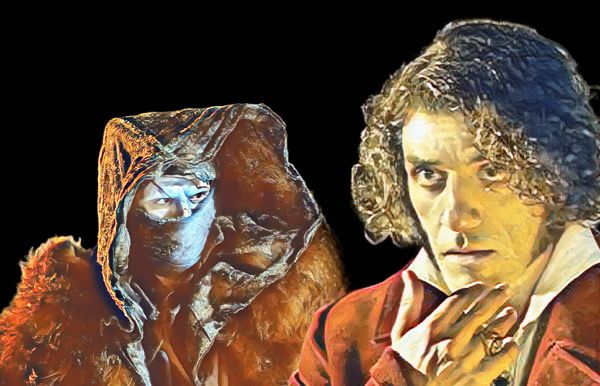
If Doyle turned excess into music, del Toro seems to seek its opposite: silence, restraint, and compassion. Where Branagh shouted, del Toro whispers. His Frankenstein promises to restore humanity to the myth — and perhaps, at last, reconcile creator and creature with the empathy Patrick Doyle’s music already intuited thirty years ago.
Descubra mais sobre
Assine para receber nossas notícias mais recentes por e-mail.
 miscelana.com