
Few lyricists have ever captured love, time, and memory with the elegance of Alan and Marilyn Bergman. The couple — who worked side by side for more than sixty years — created their own language: sophisticated, intimate, and always on the edge of melancholy. They wrote about adult feelings, real relationships, and the burden of still believing in beauty.
Their words gave voice to melodies by Michel Legrand, Marvin Hamlisch, Dave Grusin, and Johnny Mandel, and were immortalized by Barbra Streisand, Frank Sinatra, Tony Bennett, and Sarah Vaughan.
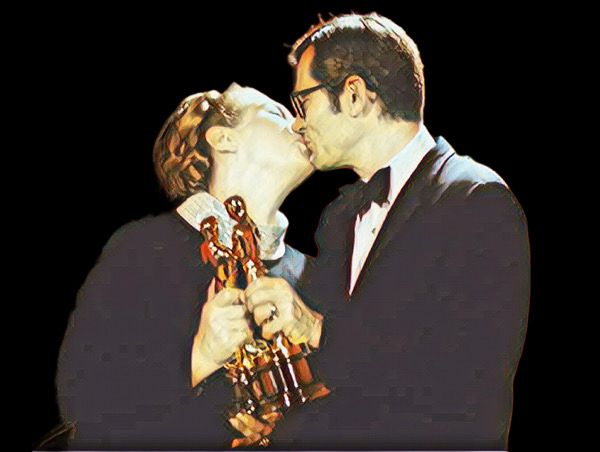
Together, they won three Oscars and were nominated sixteen times over four decades — a record that places them among the most awarded and respected lyricists in Academy history.
Below are five songs that best represent this rare fusion of poetry and music.
“The Windmills of Your Mind” (1968)
Written especially for The Thomas Crown Affair, the song accompanies the film’s opening sequence — a symbolic montage that mirrors the mental labyrinth of Thomas Crown (Steve McQueen), a man torn between boredom and risk, control and chaos.
Michel Legrand composed a spiral-like melody, and the Bergmans created lyrics that echo that circular structure: images that repeat, overlap, and spin endlessly, like thoughts trapped in a loop. The result is a song that describes the motion of the mind with the precision of a surrealist poem.
“Like a circle in a spiral, like a wheel within a wheel,
Never ending or beginning on an ever-spinning reel…”
Within the film, it works as a mirror of Crown himself — rational, elegant, yet emotionally restless. Beyond the screen, it became a timeless standard, recorded by artists across genres: Noel Harrison (who performed it in the film), Dusty Springfield, Barbra Streisand, Sting, and Petula Clark, among many others.
In French, “Les Moulins de mon Cœur”, with lyrics adapted by the Bergmans from Legrand’s original, became a chanson classic, immortalized by Claude Nougaro, Eddy Marnay, and later Dany Brillant.
It is a whirlwind of images and metaphors — time, the mind, and love endlessly spinning. The lyric doesn’t tell a story; it evokes a state of mind. It moves like thought itself, suggesting the restless effort of someone trying to understand what they feel.
“What Are You Doing the Rest of Your Life?” (1969)
Music: Michel Legrand
Lyrics: Alan & Marilyn Bergman
Film: The Happy Ending (1969)
Oscar Nomination for Best Original Song (1970)
In Richard Brooks’s The Happy Ending, the song appears in one of the film’s most poignant moments. The story follows the collapse of a seemingly perfect marriage, eaten away by betrayal, secrets, and lies. Jean Simmons plays Mary, a woman who abandons her husband and her picture-perfect life in search of meaning — and it’s in this context that the song emerges.
“I want to see your face in every kind of light,
In fields of dawn and forests of the night.”
Within the film, the song becomes even more moving: it embodies Mary’s longing for an ideal love — one she never truly had. The contrast between the lyrics and the story is heartbreaking.
While the verses speak of complete devotion and eternal love, the character faces the ruin of romantic illusion. It is the dream of someone yearning for the impossible: a pure love in a world of disappointments.
“I want to see your face in every kind of light…”
sounds like a promise, but also a confession of loneliness.
The film went largely unnoticed upon release, but the song survived — and became one of the most recorded in the Bergmans’ catalog. Barbra Streisand, Sarah Vaughan, Tony Bennett, Peggy Lee, Frank Sinatra, and Diana Krall each offered a unique interpretation of its melancholy.
It is an anthem to the search for ideal love — but also the lament of someone who already knows that eternity rarely fits inside real life. It is also my favorite of all their works (especially with Legrand, of course): a serene, whispered declaration of love, like a wish made before blowing out candles. Each verse is an act of surrender — the lyric doesn’t ask; it invites. The Bergmans had a rare gift for capturing the vulnerability of mature love, something few songwriters ever achieved. Written for Brooks’s film, the song transcended cinema and became a jazz standard almost instantly.
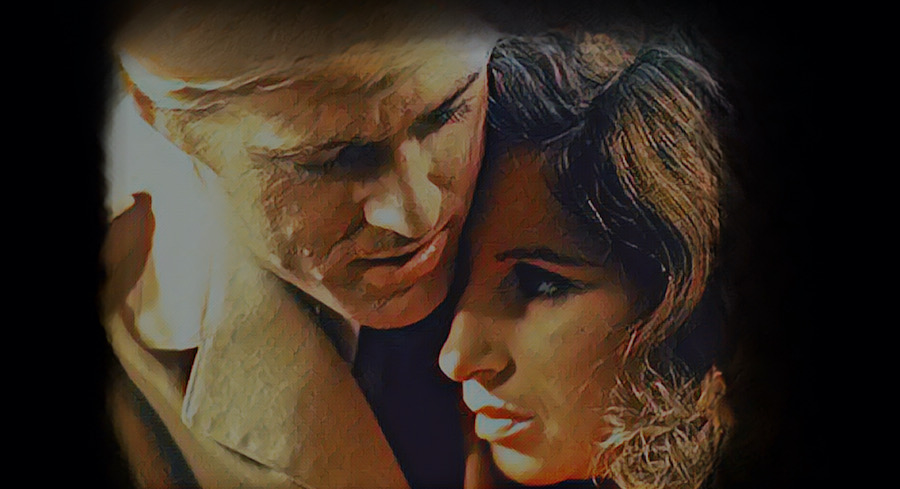
“The Way We Were” (1973)
Music: Marvin Hamlisch
Film: The Way We Were (1973)
Oscar for Best Original Song (1974)
Perhaps the Bergmans’ greatest commercial success, immortalized by Barbra Streisand, this song distills the sweetness and sorrow of memories that never fade. It is about love and loss — but without bitterness.
In The Way We Were, the song is the emotional center of the film and mirrors the love story between Katie Morosky (Streisand) and Hubbell Gardiner (Robert Redford). It serves not just as a theme, but as a lyrical synthesis of the narrative: a deep, imperfect love undone by political and personal differences.
“Memories may be beautiful and yet,
What’s too painful to remember,
We simply choose to forget.”
The Bergmans captured the moment when love turns into memory — when all that’s left are fragments of an idealized past. In the film, the song becomes Katie’s voice, expressing both her intensity and her acceptance.
Its simplicity is its power: every person who’s ever lost love recognizes themselves in it. Beyond cinema, “The Way We Were” became synonymous with nostalgia — a ballad about what can never quite be erased.
“How Do You Keep the Music Playing?” (1982)
Music: Michel Legrand
Film: Best Friends (1982)**
Oscar Nomination for Best Original Song (1983)
The Bergmans returned to their favorite subject — enduring love. The lyrics are a conversation between two lovers trying to understand how to keep passion alive without losing themselves.
In Norman Jewison’s Best Friends, the protagonists (Burt Reynolds and Goldie Hawn) are screenwriters who marry and discover that love, so easy in fiction, is much harder in real life. The song emerges as an adult question about continuity — how to keep the melody alive once the magic has become routine.
“How do you keep the song from fading too fast?
How do you lose yourself to someone,
And never lose your way?”
The Bergmans wrote one of their most honest lyrics here — a dialogue between vulnerability and endurance. There is no idealization, only truth.
The original recording by Patti Austin and James Ingram captures that tension perfectly: a duet that begins in harmony and ends in doubt — just like every real relationship.
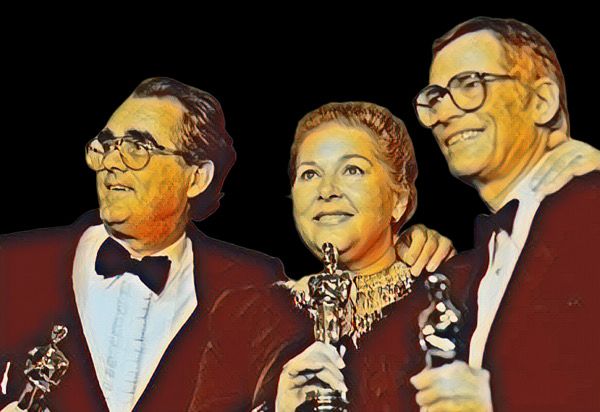
It’s a reflection on emotional maturity, a treatise on love as a continuous act of courage. The definitive version remains Austin and Ingram’s, but Johnny Mathis’s recording with Michel Legrand at the piano is pure tenderness.
“It Might Be You” (1982)
Music: Dave Grusin
Film: Tootsie (1982)**
Oscar Nomination for Best Original Song (1983)
Lighter in tone but equally sincere, this song speaks about the unexpected discovery of love. The narrator observes, waits, doubts — until finally admitting that it might be “the one.”
Written for Tootsie, directed by Sydney Pollack, the song accompanies Dustin Hoffman’s character — an actor who disguises himself as a woman to find work, only to be transformed by the experience.
While the film is a comedy about gender and identity, “It Might Be You” becomes its emotional heart: a moment of stillness where irony gives way to tenderness.
“Time, I’ve been passing time watching trains go by.
All of my life, wondering where you are,
And if I’ll ever see you walk into my life.”
The lyrics speak of waiting — of time passing and hope enduring even when it feels naïve.
Within the film, it marks the character’s awakening to love and self-knowledge. Beyond Tootsie, the song became one of the most beloved romantic hits of the 1980s. Stephen Bishop’s recording captures the Bergmans’ gentle introspection, and its popularity was immediate — a fixture on radio, weddings, and movie soundtracks ever since.
It’s one of the Bergmans’ softest lyrics, yet deeply emotional — the quiet sound of hope returning.
The Poets of Adult Love
Alan and Marilyn Bergman wrote about love not as an ideal, but as an experience. In their songs, romance is never simple — it’s a dialogue between reason and emotion, faith and fatigue, memory and desire.
They wrote for adults who have loved and been disappointed, but still believe love, when real, is worth the risk.
With Michel Legrand, they created melodies that swirl like memories; with Marvin Hamlisch, they gave voice to nostalgia; with Dave Grusin, they found lightness in hope.
Their songs inhabit the most difficult territory in popular music: honesty. They are poems about what it means to keep feeling, even when everything could have faded away.
Barbra Streisand — the artist who best understood their spirit — once said:
“The Bergmans write what the heart feels when words fail.”
And perhaps that’s what makes them eternal: each line seems written for a moment everyone has lived — and one that will never quite be forgotten.
Descubra mais sobre
Assine para receber nossas notícias mais recentes por e-mail.
 miscelana.com