
Fight me if you must, but I’m not a Stephen King fan. I respect him, I admire him, but I don’t love him. I’ve never liked it when the psychological is given a “supernatural” explanation — a hallmark of his storytelling. Still, there are stories that never truly leave us, even when we think we’ve moved on. It is one of them.
Since its publication in 1986, the novel has become a mirror reflecting everything that terrifies us: childhood, forgetfulness, the quiet violence that festers in small towns, and the monsters we invent to give shape to what we can’t name. And now, almost forty years later, It beats again in Welcome to Derry, the HBO Max series that returns to the origins of fear to tell not only the birth of Pennywise, but also that of the town itself — and of everything it has buried beneath the ground.

Derry has always been more than a setting. It’s a city that breathes, decays, and denies. It’s the portrait of an America that prefers to forget — and it’s that very act of forgetting that feeds evil. Stephen King never wrote about a mere killer clown. It is about what happens when an entire community decides not to look. It’s about collective fear turned into a habit. It’s about everyday horror disguised as normal life.
In the original novel, we follow the so-called Losers’ Club — seven children united by instinct, courage, and survival. Bill, Beverly, Ben, Richie, Eddie, Mike, and Stan are, each in their own way, fragments of the same pain: bullying, abuse, racism, loneliness. In Derry, it’s the children who see what the adults refuse to. They are the ones who find the creature that lives in the sewers — It, evil in its purest form — and who confront the impossible for one simple reason: no one else will.
The story begins with a scene that became legend: little Georgie Denbrough playing in the rain with a paper boat made by his brother. When the toy falls into a storm drain, he meets Pennywise the Dancing Clown, who offers to give it back. And in that instant, childhood ends. It’s the symbol of everything King constructed — horror emerging from safety, the monster hiding behind laughter.

The power of It lies in its spiral structure. Two stories told in parallel: past and present, childhood and adulthood, trauma and the attempt to forget. When the Losers defeat It for the first time, in 1958, they swear to return if it ever comes back. And twenty-seven years later, in 1985, the cycle begins anew. Fear returns, the city awakens, and they come back to fulfill their promise. Derry is a mirror of time: nothing changes, because no one wants to change — and that’s what kills.
King turns fear into metaphor. It is not merely a creature, but the reflection of what humanity hides: racism, homophobia, abuse, neglect, violence. Derry is deep in America, where crimes happen in daylight and no one reports them. It’s a city that devours its own children and keeps moving, indifferent. That’s why It transcends the horror genre: it’s an allegory of collective memory and the cost of silence.
In adaptations, this idea has continually reinvented itself. The 1990 miniseries starring Tim Curry turned Pennywise into a pop culture icon. Andy Muschietti’s films — It (2017) and It: Chapter Two (2019) — infused the story with new energy, stunning visuals, and a perfectly tuned cast. Bill Skarsgård took on the role with rare intensity, turning the creature into something between childhood nightmare and grotesque irony. Yet, even with global success, one question persisted: where did Pennywise come from?
That’s where It: Welcome to Derry steps in.
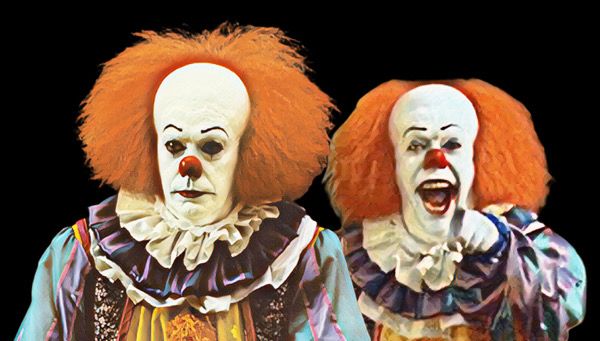
Set in 1962 — twenty-seven years before the events of the first film — the series, created by Andy and Barbara Muschietti alongside Jason Fuchs, returns to the heart of the city. More than explaining Pennywise’s origins, Welcome to Derry seeks to show what made the birth of evil possible. Who built this town? What traumas were buried beneath its foundations? And why, generation after generation, does Derry remain the place where children disappear — and no one asks why?
Pennywise is back, once again played by Bill Skarsgård, and the mere announcement of his return reignited fan excitement. But the series goes beyond jump scares. It dives into the social tensions of the 1960s — racism, conservatism, the fear of change — and reveals that Derry has always been a microcosm of America. The creators have promised that we’ll witness “the birth of evil,” but the real horror might be realizing it never had to be born at all — it was always there.
Welcome to Derry, don’t try to replace It. It expands the universe, as if digging deeper beneath the city to uncover older, darker layers of horror. The images already released suggest a heavy, melancholic, almost elegiac tone. The cold palette, the empty corridors, the red balloons floating over deserted streets — everything carries the weight of memory. It’s an aesthetic that blends the supernatural and the social, as if each haunting were also a repressed memory resurfacing.

King’s fans celebrate the return to Derry’s universe, praising the care for the original material and the unsettling tone the series maintains. Critics, on the other hand, are cautious: they praise its atmosphere and period reconstruction but question how much there is still to reveal. The risk is real — in a world oversaturated with prequels, Welcome to Derry must justify its existence without diluting the mystery. So far, the first episodes suggest it succeeds: the fear is there, but so is the emotion.
Watching the series feels like revisiting a childhood place you swore you’d forgotten — only to realize nothing has changed. Welcome to Derry is less about monsters and more about the city that creates them, the system that sustains them, the fear that keeps them alive. And perhaps that’s what makes It eternal: the reminder that evil doesn’t die. It only sleeps, waiting for the right moment to wake — when memory fades, when silence returns, when fear finds space to grow again.
In Derry, evil doesn’t come from outside. It’s homegrown. And that’s what makes it terrifying.
It is the mirror that forces us to look within — and Welcome to Derry is the clearest reflection of that mirror, now enlarged by history and nostalgia. Stephen King wrote about monsters that crawl out of the sewers, but the real terror is what runs beneath the streets — invisible and ordinary. What the series does, brilliantly, is remind us of this: it’s not Pennywise who keeps Derry alive — it’s us.
Fear, after all, always finds its way home.
Descubra mais sobre
Assine para receber nossas notícias mais recentes por e-mail.
 miscelana.com