
As published in Bravo Magazine
New York has always been a city of contrasts — modern skyscrapers side by side with century-old brownstones, glamour on display, and secrets hidden behind ordinary doors. It’s no surprise that a show like Only Murders in the Building leans into this imagery, suggesting that a luxury apartment building could hide an underground casino. But could that actually happen in real life?
A City Built on Hidden Stories
In the 19th century, New York ran on horsepower. Elite buildings and brownstones often had carriage houses and stables, many located underground. With the rise of automobiles between 1900 and 1920, those spaces were converted into garages, service areas, storage rooms, and sometimes even residences. On the Upper West Side, in grand constructions like The Belnord (the real-life inspiration for the fictional Arconia), this transformation became part of urban life.
Then came the allure of illegal gambling. Historical records confirm that New York once had thousands of underground gaming spots, especially during the 1920s and 1930s. These secret locations operated behind discreet doors, inside apartments or private clubs, with entry codes and passwords. During Prohibition, basements also housed speakeasies, reinforcing the city’s reputation for hidden spaces and forbidden pleasures.
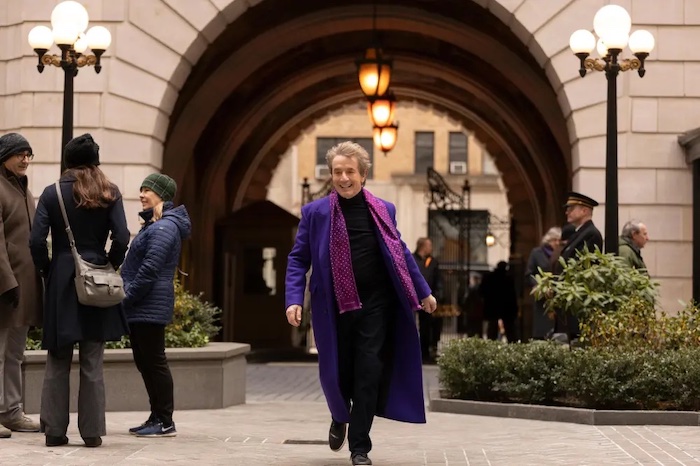
There’s no solid evidence that old stables were commonly converted into casinos — that part is more urban myth than historical fact. But myths hold power. The idea that a space once home to horses or luxury cars could become the stage for high-stakes games is irresistible to storytellers.
That’s why Only Murders in the Building hits the mark by imagining a secret casino hidden beneath the Arconia. The show taps into New York’s real history — full of hidden rooms, illicit clubs, and whispers behind locked doors — the perfect setting for a crime and, of course, a podcast.
From The Apthorp to The Belnord: Real Inspirations
For anyone who’s lived on the Upper West Side, walking those streets feels like stepping into an architectural dream. Many Gilded Age buildings still stand, rewriting their stories with every generation. When Only Murders in the Building premiered, I was sure it was inspired by The Apthorp — the iconic residential building that occupies an entire block between 78th and 79th Streets.
Designed by Clinton & Russell for William Waldorf Astor and built between 1906 and 1908, The Apthorp is a city landmark. Its grand interior courtyard is legendary — Nora Ephron wrote about falling in love with it at first sight, saying the building “rescued” her during one of the hardest times in her adult life.
But I was wrong. The series is filmed at The Belnord, another Gilded Age icon located on 86th Street. Like The Apthorp, The Belnord has housed celebrities — from Lee Strasberg to Walter Matthau — and was long considered nearly impossible to secure for filming. Showrunner John Hoffman told The New York Times:
“I was obsessed. It’s a cliché to say the building is a character, but what fascinates me is exploring how we connect when we live in these spaces.”
And then there’s The Ansonia — a 17-story building just a few blocks away, with a history as dramatic as it is fascinating. Built by eccentric millionaire William Earl Dodge Stokes, The Ansonia was meant to be Manhattan’s grandest residential hotel, complete with a ballroom, Turkish baths, and even a rooftop farm. Over the decades, it became the site of scandals, crimes, and even a swingers’ club — exactly the kind of colorful past that would make Mabel, Oliver, and Charles grab their microphones.
The Confessed Secrets of Season 5
All this history makes the Arconia feel even more alive. And that’s where the man behind its many layers comes in: set designer Patrick Howe. To understand how this “character” is built, we spoke with Patrick, who joined the team in Season 2 and has been responsible for keeping Only Murders in the Building’s visual magic alive ever since.
In this conversation, Patrick shares how he joined the show, the challenges of keeping the sets fresh yet believable, the inspirations behind the Arconia and the characters’ apartments, and reveals fascinating behind-the-scenes details — including what it was like working with Meryl Streep and designing the underground casino that marked the latest season. Naturally, we also asked about The Godfather house featured this year.
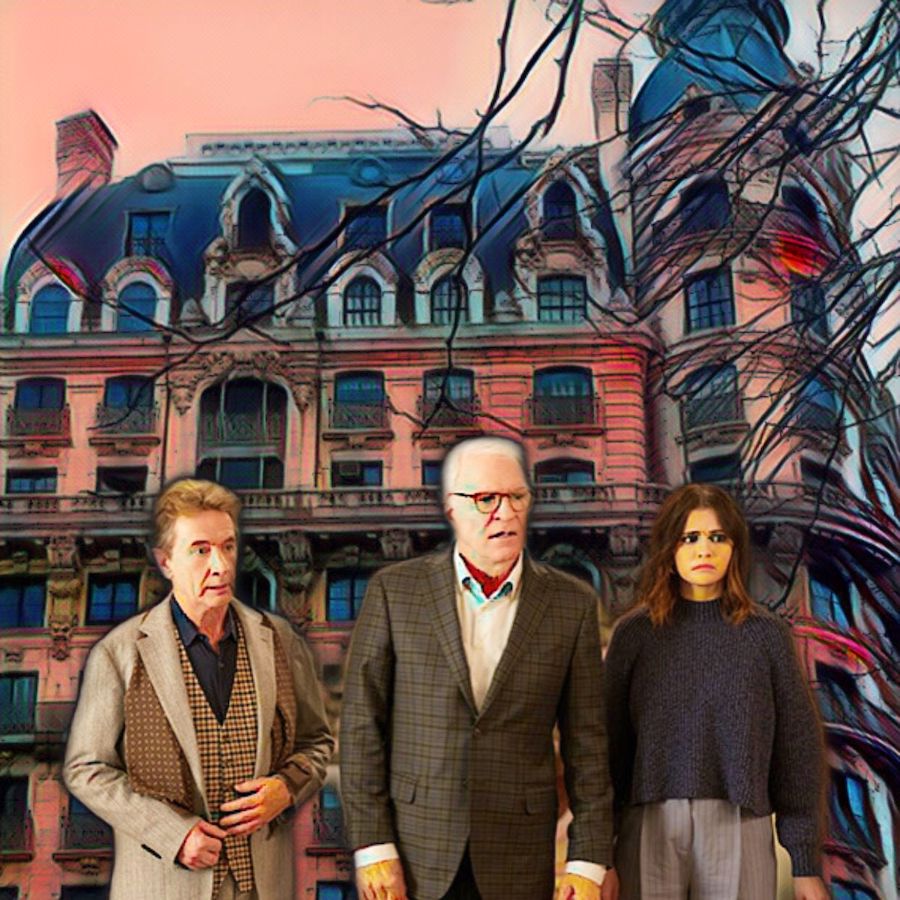
Bravo: Patrick, how did you join the Only Murders in the Building team?
Patrick: Like most of us, I was looking for my next job. There was an opening starting in Season 2 because the original designer wasn’t available to continue. I already knew several people on the show, but I went through the regular interview process. Somehow, I must have said the right things at the right time — and it worked out wonderfully. I had already been watching the show; a few episodes of the first season had aired, and I loved the humor, warmth, and New York eccentricity. It’s rare to get to work on something you genuinely enjoy watching, so it felt like a win-win.
Bravo: The building is practically a main character. What’s the biggest challenge in bringing the Arconia to life?
Patrick: The challenge is to keep the spaces fresh and interesting but still make them feel like they belong to that building. Its “skin” hasn’t changed since the original 1907 construction. I have to create variety while respecting the proportions, window patterns, and existing architecture. It’s really an exercise in plausibility. Honestly, I didn’t realize at first how important the building would be to the story. In most shows, design is just background — here, it is the story.
Bravo: Is the Arconia inspired by real buildings?
Patrick: Yes. There are four or five very similar buildings, all designed around the same time in southwest Manhattan. Back then, this was a new kind of apartment building — almost a “headquarters” for the upper-middle class. I researched The Ansonia, The Dakota, The Belnord, and others, then created a collage of their elements — the layout from one, the ornamentation from another — to build our own world.
Bravo: How does it feel knowing the building has become a tourist spot for fans?
Patrick: It’s amazing! Every time we film, there are people outside taking photos and selfies. The building has taken on a life of its own.
Bravo: Each apartment reflects the personality of its resident. How does that process work? Do you talk to the actors?
Patrick: I have a lot of creative freedom. Usually, we don’t speak with the actors — it’s a matter of logistics. My main conversations are with the showrunner. But we’ve had exceptions: when designing Meryl Streep’s apartment in Season 3, she had time to visit the set before shooting. She made small suggestions that we incorporated, and she loved the result. It was a privilege to adjust the design for her.

Bravo: You created iconic spaces like the underground casino and the “Godfather House.” Which was the hardest?
Patrick: The casino, by far, because of its scale. I knew there would be action scenes, so I designed it with a lot of flexibility, adding entrances and exits that would work for whatever the script demanded. The “Godfather House” was fun in a different way — it was a real home, but we had to make it darker and more threatening, far from the modern look we first saw. Each set has its challenge, but the casino was the most fun to build.
Bravo: Fans love the show’s Easter Eggs. Are they really hidden throughout the sets? Any clues about this season’s killer?
Patrick: Oh, yes. Some are visible to the audience; others are only the actors’ notice. There are nods to Renée Zellweger, Richard Kind… but you’ll have to look closely to find them.
Descubra mais sobre
Assine para receber nossas notícias mais recentes por e-mail.
 miscelana.com