
It’s a shame that Billy the Kid remains such an underrated historical series. Michael Hirst — the mind behind Vikings and The Tudors — delivers here another of his signatures: a dense, emotional, and deeply human portrait of a man trapped between history and legend.
Played with quiet intensity by Tom Blyth, Billy is no longer the outlaw of folklore, but a young man betrayed by the system that created him. In episode 5, “Breaking the Shackles,” the tension reaches its peak. Captured, condemned to hang, and guarded by two men who represent opposite ends of the law — the brutal Bob Olinger and the kind-hearted James Bell — Billy remains, as always, two steps ahead.

Pat Garrett (a sharp and conflicted Alex Roe) knows better than anyone what Billy can do. But Hirst reminds us that Billy’s cunning isn’t cruelty; it’s survival. In a moment as mundane as asking to use the bathroom, he sees a way out. He doesn’t want to kill Bell, even warns him, but fear wins — and one shot later, Bell is dead. Olinger’s fate is different. Billy kills him without hesitation, vengeance burning quietly beneath his calm exterior.
Once again, the boy escapes. Chains broken, revolver in hand, he rides into the vast, golden plains — free for now, though never truly free. Yet his image, already distorted by the press, is turning into myth. Newspapers call him a monster, a cold-blooded killer, while the series insists on showing the truth: Billy was a victim of the very society that cornered him.
Meanwhile, Emily (Nuria Vega) begins to question her father, Judge Catron, about his obsession with executing Billy. Her defense of the young man isn’t just compassion — it’s rebellion. She sees in Billy a reflection of America itself: a land built by immigrants, poisoned by hypocrisy, and forever rewriting its own morality. Garrett, on the other hand, begins to lose himself. His growing violence, even toward Dulcinea (Rasha Bilal), exposes what he’s becoming — a man who hunts not for justice, but to silence his own fear.
The episode culminates in the haunting scene at Fort Sumner. Billy, believing himself safe at Pete Maxwell’s house, is ambushed in the dark. Garrett’s gun fires, and the shot echoes like the end of an era. Billy falls — maybe. With three episodes still ahead, Billy the Kid leaves us wondering: will Hirst follow Garrett’s account, or dare to embrace the legend that Billy lived?
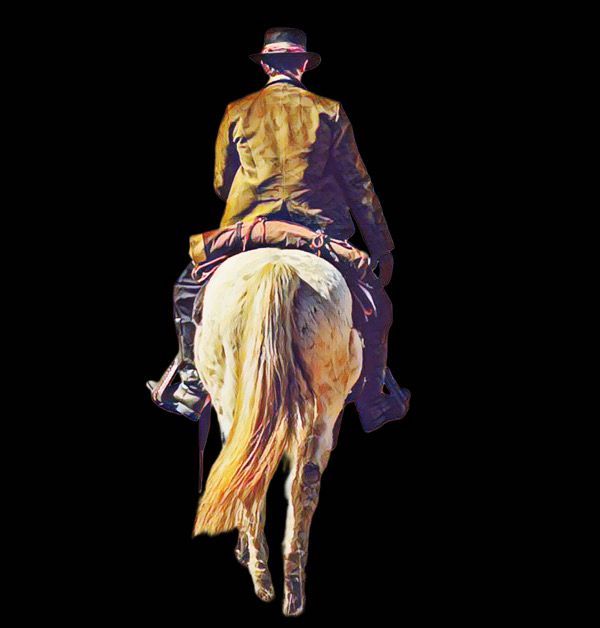

Between Man and Myth: The Reflection of the Antihero
Billy’s “death” — or what seems like it — is less an ending than a mirror. Hirst’s Billy the Kid joins the same lineage of stories as Peaky Blinders or The Assassination of Jesse James by the Coward Robert Ford, all circling the same question: how do you kill a legend?
None of these men was a hero in the traditional sense. They were violent, wounded, and painfully aware of their own contradictions. But unlike Tommy Shelby or Jesse James, Billy never manipulates anyone — he simply exists. He’s punished not for ambition, but for surviving in a world that made him an outcast.
The camera lingers on silence, on empty landscapes and unfinished sentences. When Garrett fires in the dark, it isn’t just an execution: it’s a metaphor. The man of law killing the reflection of everything he’s lost: freedom, youth, chaos. The West, after all, has always been a duel between order and spirit. Billy is the spirit.
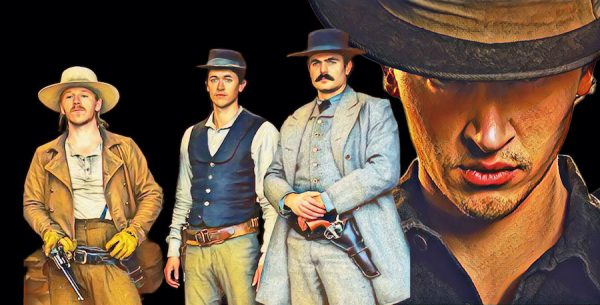
Andrew Dominik’s The Assassination of Jesse James turned a death into an eternal myth, a man frozen in time by his killer’s envy. In Peaky Blinders, Tommy Shelby doesn’t die because he understands that his legend already has. Here, Hirst follows that same truth: Billy may fall, but the myth lives on.
The tragedy, then, isn’t that Billy dies — it’s how history chooses to remember him. The outlaw, as Billy the Kid reminds us, is often the one who believes in justice more than anyone else. Not the justice of men, but that of nature itself.
And so, as the dust settles and the silence of the prairie returns, we’re left with the question that echoes through time — whispered in the dark before the gunfire:
“Who’s there?”
Because perhaps, in some corner of legend, Billy still is.
Descubra mais sobre
Assine para receber nossas notícias mais recentes por e-mail.
 miscelana.com