
We’re entering the final stretch of Stranger Things — an iconic series in every sense, one that’s captivated fans around the world since 2018. But there’s a hidden twist that goes beyond whether you’ve watched all four seasons in time for the fifth (and here’s your recap): you’ll enjoy it much more if you understand the rules of Dungeons & Dragons (D&D), the 50-year-old cultural phenomenon that inspired the show’s entire narrative structure.
Yes — it’s time to understand the game that shaped the imagination and strategy of Hawkins’ heroes.

What Is Dungeons & Dragons
Dungeons & Dragons is the world’s first and most influential role-playing game (RPG). Created in 1974 by Gary Gygax and Dave Arneson, it revolutionized gaming by replacing fixed boards with pure imagination.
Instead of competing, players cooperate to tell a story. It’s a game of shared storytelling, where each person plays a character in an adventure guided by a narrator — the Dungeon Master.
How It Works
The Dungeon Master is both storyteller and referee. They describe the scene (“You step into a cavern draped in spider webs…”), present challenges, and play all non-player characters — monsters, kings, villagers, even gods.
The players describe what their characters do:
“I want to try opening the door.”
“I cast a fireball at the ogre.”
“I inspect the symbol on the wall.”
The outcome isn’t chosen by the Master but decided by polyhedral dice — the famous D4, D6, D8, D10, D12, and D20. The D20 is the most iconic: the higher the roll, the greater the chance of success. One unlucky roll can change everything, and that unpredictability is what keeps the game alive.
Characters and Classes
Each player creates a character built on two pillars: race and class.
- Race defines origin: human, elf, dwarf, orc, halfling, tiefling — each with unique traits.
- Class defines role: warrior, wizard, rogue, cleric, druid, bard, paladin, and many more.
Characters have attributes (strength, dexterity, constitution, intelligence, wisdom, charisma) that shape what they can or can’t do. Over time, they level up, gaining new powers, magical weapons, and sometimes legendary status.
The Goal and the World
There’s no “winner” in D&D. The goal is to live the story — solve mysteries, defeat monsters, explore new lands, make moral choices, and above all, create together.
Campaigns unfold in worlds designed by the Dungeon Master or drawn from official settings like Forgotten Realms, Dragonlance, Ravenloft, or Eberron — realms of gods, guilds, politics, wars, and magic. The system is flexible enough to fit any universe — from outer space to the Wild West or post-apocalyptic worlds.
Why It Matters
Dungeons & Dragons changed modern culture. It’s the ancestor of nearly every role-playing video game — from Final Fantasy to Baldur’s Gate — and inspired generations of storytellers, from George R. R. Martin to Dan Harmon (Community, Rick and Morty).
More than a game, it’s a school of empathy, improvisation, and creativity. Each session teaches players how to make decisions in uncertainty — and face the consequences, real or imagined.

✨ The Philosophy
At the heart of D&D lies a simple, powerful truth:
“You can be whoever you want to be — and your fate depends on your choices.”
The Dungeon Master creates the world, but the players shape it. There’s no fixed script; every roll can alter destiny. After five decades, the game endures because it mirrors life itself: you don’t control the dice — only how you play the result.
The Connection with Stranger Things
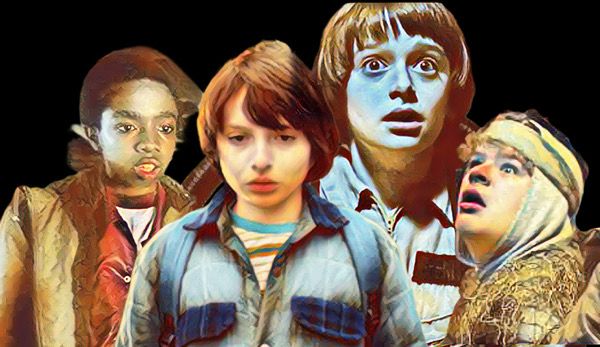
From its very first episode, Stranger Things has been a game within a game — an invisible board where childhood, trauma, and heroism intertwine. When Mike, Dustin, Lucas, and Will gather in a basement to play Dungeons & Dragons, they’re not just passing time — they’re rehearsing how to face the unknown.
Hawkins is the board.
The Upside Down is the dungeon.
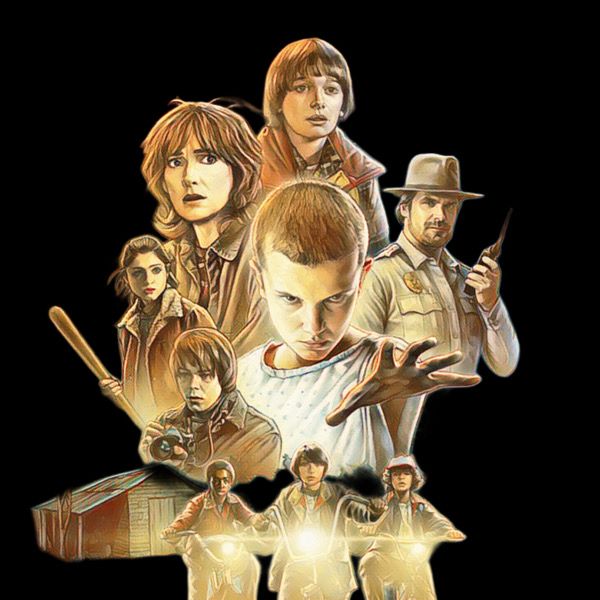
And Eleven, Mike, Will, Dustin, Lucas, Max, Nancy, Steve, and Hopper are the players — learning through every failure, every loss, every bad roll.
The Campaigns of Hawkins
Campaign One – The Demogorgon and the Birth of Heroes
1983. Will disappears — “pulled into the game.” The boys name the creature Demogorgon, after a classic D&D monster. The Hawkins Lab becomes the dark castle where power is twisted, and Eleven appears as the unexpected mage who joins their party. As in every great first campaign, victory comes at a cost.
Campaign Two – The Mind Flayer and the Shadows of Expansion
After defeating one monster, the players discover something greater. The Mind Flayer, another D&D icon, controls minds from afar — the perfect metaphor for trauma and manipulation. Will returns “marked,” a psychic bridge between worlds.

Campaign Three – The Castle of Consumption
The new dungeon is the Starcourt Mall, the gleaming heart of 1980s America. Evil hides behind neon lights and consumerist bliss. The Mind Flayer possesses humans, and the campaign becomes a meditation on sacrifice — what does “winning” mean when victory costs everything?
Campaign Four – Vecna and the Return of Fear
Every RPG needs its final villain. In D&D lore, Vecna is a sorcerer turned undead lich in pursuit of immortality; in Stranger Things, he’s Henry Creel, the lab’s first test subject — the original player who became the monster. Eleven banishes him to the Upside Down, creating the perfect enemy: one who knows the rules and can rewrite them.
Campaign Five – The Final Battle
Now, Hawkins lies fractured, Vecna has vanished, and chaos widens the rifts between worlds. Eleven returns in full warrior mode. The mission is clear: find and destroy Vecna before reality collapses. Yet, as in D&D, the true ending isn’t killing the monster — it’s understanding what he represents. Vecna mirrors them all: Lucas’s rage, Eleven’s guilt, Will’s fear, Max’s grief.
The Power of the Party
In Dungeons & Dragons, each player has a role: mage, warrior, healer, strategist. Alone, they’re vulnerable; together, unstoppable. That’s the soul of Stranger Things. Growing up is like venturing through a dungeon — there are monsters at every corner, but always friends ready to roll the dice beside you.
When the final season arrives, we won’t just witness the end of a show — we’ll experience the close of an epic campaign, where every loss, every tear, and every act of courage counts as experience gained.
And if the board is swallowed by the Upside Down, then let it be fighting as always — together, dice rolling, believing that friendship remains the most powerful magic of all.
Descubra mais sobre
Assine para receber nossas notícias mais recentes por e-mail.
 miscelana.com