
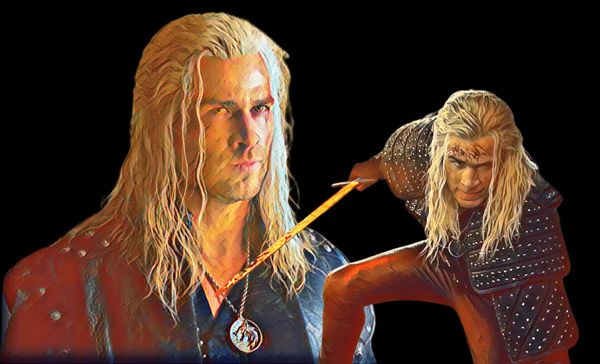
The fourth season of The Witcher — the first without Henry Cavill — took its time to arrive on Netflix, and the wait only reinforced an unpleasant feeling: the once-mighty fantasy saga has lost its way. The problem isn’t Liam Hemsworth, who does his best to inhabit Geralt of Rivia, but a fractured script, an overstuffed web of subplots, and production values that feel oddly shrunken for a show of this scope. Sets and effects fail to meet the epic promise, often sliding into the unintentionally kitschy.

It’s rare for me to be this harsh, but The Witcher 4 leaves no choice. The decline had already begun during Cavill’s tenure, but now it’s undeniable. The world remains rich on paper, the characters compelling, yet what we see on screen is a disjointed collage — a story that’s forgotten what made it special.
Geralt returns scarred and weary, but missing the silent gravitas Cavill brought to the role. Hemsworth’s version feels more human and less mythic. Yennefer (Anya Chalotra) still anchors the show’s emotional and political heart, yet spends most of her time delivering exposition rather than shaping the action. Ciri (Freya Allan) fares best: feral, independent, and forged by loss, she becomes the tragic pulse of the series — the fallen princess who survives by instinct alone.

And then there’s Laurence Fishburne as Regis — the season’s biggest letdown. In Andrzej Sapkowski’s novels, Regis is a mesmerizing creation: a higher vampire who embodies wisdom and moral clarity, serving as Geralt’s philosophical counterweight. Fishburne, with his gravitas and soulful presence, seemed born for the part. Yet the show squanders him. Regis drifts through the story like a cameo — a “prestige guest star” with no purpose. The editing, the blocking, even the dialogue, reduce him to a decorative piece. When even Laurence Fishburne looks lost, you know the problem runs deeper than casting; it’s the creative compass that’s broken.
The plot tries to tie everything together — wars, magic, destiny, monsters, politics — but ends up tangled in its own threads. The political tone grows heavier while the heart of The Witcher — the bond between Geralt, Ciri, and Yennefer — gets buried under noise. The season wants to be dark and mature but drifts between tedious exposition and bursts of hollow spectacle. There are flashes of brilliance, yes, but they dissolve in the uneven pacing and tonal confusion.
Critics are split. Some hail this as a modest improvement — “the best season since the first,” according to a few outlets. Others call it “the final blow to a series that forgot its soul.” Comparisons with House of the Dragon and The Rings of Power are inevitable and, unfortunately, unflattering. Once a contender, The Witcher now feels like a pale echo of its own promise.
Netflix has confirmed a fifth and final season, which will close the story. Whether it can recover the magic remains to be seen. For now, The Witcher 4 stands as the melancholy portrait of a once-great show that, even surrounded by monsters, magic, and Laurence Fishburne, fell prey to its deadliest foe: creative drift.
Descubra mais sobre
Assine para receber nossas notícias mais recentes por e-mail.
 miscelana.com