
Some artists make music; Florence Welch performs rituals. Her voice doesn’t merely sing — it summons, frees, defies. The world of Florence + The Machine is that sacred, uncanny place where pop merges with literature, dance, visual art, and the emotional chaos of being human.
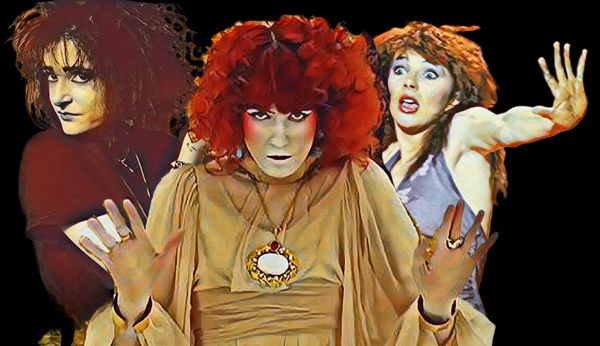
Being a Florence fan is an acquired taste — not because her music is inaccessible, but because she refuses to be pasteurized. It’s unfiltered emotion, poetry in the raw. Florence could have tailored her art to be more popular, of course. She chose risk instead. That’s why she stands in the direct lineage of Kate Bush and Siouxsie Sioux — women never shaped by the market, who redefined what pop can be.
Like Siouxsie, Florence embraces darkness and transcends it. Like Kate, she turns performance into a complete artistic gesture, where sound and image are inseparable. Her videos are visual poems; her albums, choreographed confessions. With each new work, Florence moves closer to total art — a fusion of languages to express the inexpressible.
Everybody Scream: the cleansing cry
Her new album, Everybody Scream (2025), is the apex of that devotion. A record born of pain and survival, in which she confronts physical and spiritual trauma with her trademark grandeur — only now with an open wound.
Critics describe it as a “gothic ritual of rebirth,” where pop drama meets emotional exorcism. The title track lands like a confession torn from the stage: “Blood on the stage / Look at me run myself ragged.” It’s about the price of being an artist, about what you lose by giving so much — and choosing to go on anyway.
With contributions from Mitski, Aaron Dessner, and Mark Bowen (IDLES), the album expands Florence’s sonic universe into something denser and more organic, almost subterranean. The result sounds like a storm and prayer — steeped in ritual percussion and liturgical echoes.
The British press has called it “her most vulnerable and most courageous work,” while outlets like Consequence and Aftonbladet highlight its “tragic and spiritual force.” It’s not an album that seeks to be loved by everyone, which is precisely why it becomes indispensable.
Florence, the modern priestess
There’s a particular beauty in watching Florence Welch continue to defy the pop template. In an era of algorithms and formulas, she remains devoted to emotion and art. Every show is a collective ritual; every song, an offering.
If Kate Bush carved a path for the feminine unconscious to dance in front of the camera, Florence widened that space — turning vulnerability into strength and chaos into celebration. Her music isn’t for consumption; it’s for lived experience.
Because in the end, like every worthy heir to music’s witches, Florence doesn’t want us only to listen. She wants us to feel — down to the last echo.

Everybody Scream: the cry as a survival rite
After turning pain into dance on Dance Fever (2022), Florence Welch returns even rawer and more intense on Everybody Scream — the sixth studio album by Florence + The Machine. The title is no metaphor: it is literally a cry. And, like every Florencian catharsis, it springs from a body that has hit its limit.
During the album’s creation, Florence faced an ectopic pregnancy and an emergency surgery that nearly cost her life. She has said that writing was how she gave meaning to an experience that left profound physical and spiritual marks. The record is born of trauma but refuses to surrender to pain. It’s about surviving one’s own body, turning horror into art, and suffering into release.
“There was basically an urgency to this record,” she said. “It came out of me in this furious burst.” — Florence Welch
If Dance Fever was a record about the desire for movement, Everybody Scream is about the price of that movement. It’s the body that dances to the point of fainting; the artist who gives until she’s spent. The album brings back the tribal drums, liturgical choirs, and the near-baroque architecture that have always defined Florence — only here, everything feels more organic, denser, earthbound.
Among the singles, standouts include the title track, the propulsive “One of the Greats,” and the hypnotic “Sympathy Magic,” each embodying a facet of the artist’s emotional exorcism.
Continuity and rupture
In many ways, Everybody Scream converses with Florence’s entire trajectory. The spirituality and bodily symbolism of Ceremonials, the introspection of High as Hope, the vital energy of Dance Fever — it all reverberates here, but something has shifted.
Where she once sought redemption through art, she now seeks acceptance. The album is a rite of passage: a recognition that there is beauty in the wounded body, the tired voice, the woman who survived. It’s the moment the mystical priestess becomes human — and, paradoxically, more divine than ever.
The Old Religion: the ancestral call
Among the album’s most powerful tracks is “The Old Religion,” one of Florence’s most spiritual songs to date. It speaks of an ancient instinct — a force that awakens when we try too hard to be contained, gentle, controlled. It’s the moment the body demands the cry.
“And the old religion humming in your veins,
Some animal instinct starting up again…”
It’s a song about reconnecting with the wild, about a woman who refuses docility and reclaims fury as freedom. Musically, it’s a trance: it begins like a prayer and ends like possession. The arrangement swells, the voice tears through, the drum thunders like a heart — and art fuses with ritual.

Drink Deep: Siouxsie’s spell
“Drink Deep” is pure Siouxsie — and Florence knows it. It could sit on Juju or Kaleidoscope for the way it balances the tribal and the supernatural. The track pulses like an initiation rite, with a voice that seems to conjure rather than merely sing.
“Drink deep from the dark, my dear / There’s light somewhere in here…”
It’s a surrender to the abyss — the courage to dive into what frightens. “Drink Deep” is the album’s most pagan cut, music for enchantment and moon-red dancing — a direct heir to the witch-lineage that has always inspired Florence, from Siouxsie to Stevie Nicks.
And Love: the silence after the cry
If “Everybody Scream” is the exorcism, “And Love” is the cure.
One of the album’s most delicate and sincere songs — perhaps of Florence’s entire career.
“And love — not the blaze, but the ember / Not the fight, but the remembering…”
Here, the cry dissolves into acceptance: the love that remains when pain quiets, what survives after the storm. It’s the end of the ritual, the moment the woman who cried, danced, and fell finally rises.
Music By Men: The Broken Spell
On “Music By Men,” Florence turns anger into lucidity — a feminist self-exorcism, a mirror held up to an industry that too often tried to shape her voice.
“They said my pain sounds pretty / When filtered through a man’s guitar…”
The song asks who gets to translate female pain — and what’s lost when that pain is domesticated to fit someone else’s taste. It’s the same impulse behind Kate Bush and PJ Harvey: confronting the system from within, wielding art as a weapon.
“You made me divine, but only in suffering / So now I’m done performing your kind of pain.”
Minimal at first and grand by the end, the track swells into a march, rewriting the patriarchy’s hymns in her own grammar. It’s collective liberation — a chorus of “no.”

The closing of the rite
With “Music By Men,” Everybody Scream ends as it began: with a cry. But now it’s no longer despair — it’s awareness.
The album is a spiral: it begins in the wounded body and ends in freedom.
In “Drink Deep,” she dives into instinct.
In “The Old Religion,” she reconnects with ancestral power.
In “And Love,” she finds serenity.
And in “Music By Men,” she claims the right to author her own narrative.
The cry and the legacy
Everybody Scream is more than an album: it’s a purification. Florence Welch doesn’t sing about pain — she passes through it. And in doing so, she reasserts her place in a lineage of women who turn vulnerability into power and sound into survival.
Like Kate Bush, she doesn’t aim to be immediately understood — she wants to be felt. Like Siouxsie Sioux, she doesn’t fear the dark — she inhabits it and turns it into language and beauty. But Florence is, above all, a contemporary artist, acutely aware she lives in a time that still expects women to be magical without ever getting blood on their hands.
Everybody Scream refuses that idea — it’s the cry of a body that bleeds and creates anyway.
The record is personal and political, intimate and cosmic. It’s about body, faith, trauma, art, and authorship — about who has the right to tell their own story. Across “Drink Deep,” “The Old Religion,” “And Love,” and “Music By Men,” Florence builds a narrative that begins in instinct, passes through the rite, arrives at love, and ends in freedom — a cycle of death and rebirth, of loss and assertion.

Contrary to what’s expected of pop divas, Florence doesn’t pretend to be invincible. She shows what it is to be fragile — and precisely for that, she becomes indestructible. With each record, she says goodbye to a former self; with each performance, she leaves her body on the altar; with each verse, she reveals what others would hide.
Everybody Scream is both an exorcism and a call — an invitation to feel, deeply, dangerously, honestly.
In an age of sonic and emotional uniformity, Florence Welch remains a reminder of what art can be when it refuses to fit the mold.
Yes, she is an heir to Siouxsie and Kate. But with this album, Florence Welch finally becomes her own lineage.
Descubra mais sobre
Assine para receber nossas notícias mais recentes por e-mail.
 miscelana.com