
Some stories never disappear — they just change shape. Since the 15th century, when A Lyttle Geste of Robyn Hode entered British folklore, the tale of the outlaw who steals from the rich and gives to the poor has been retold in every possible form. In 2025, MGM+ offers a new vision that doesn’t run away from history — it confronts it. Robin Hood is a series that blends historical realism, psychological depth, and political resonance, crafting an origin story that feels both medieval and unmistakably modern.
Directed by Jonathan English and created by John Glenn, the show was openly inspired by Christopher Nolan’s Batman Begins. Glenn explained in an interview with ComicBook that the team wanted to build a world that felt tangible — not fantasy, but lived-in. “We’re huge fans of Nolan and Batman Begins,” he said. “The way he builds a world that you truly believe exists — that’s what we wanted.” The result is a grounded origin story for a man who becomes a myth—a hero born not of destiny but of despair.
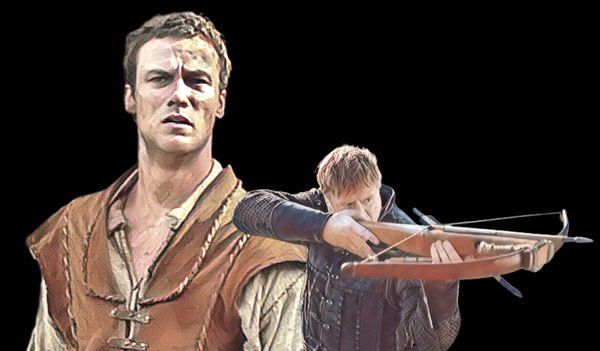
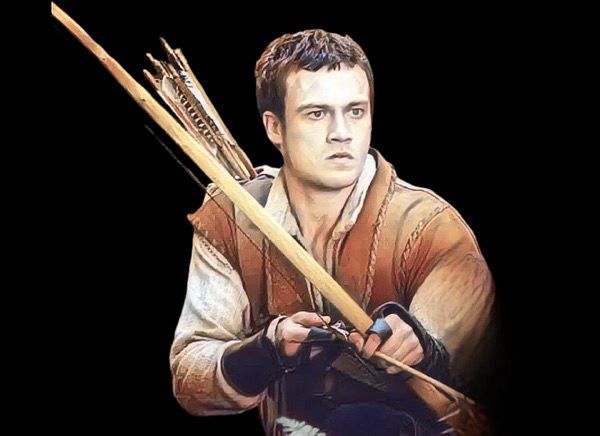
Set in 1186, two decades after the Norman invasion that reshaped England, the series unfolds amid a landscape of conquest and resistance. The Saxons, stripped of their land and faith, are left to survive under foreign rule. We first meet a young boy hearing pagan stories about forgotten gods and stolen homes — a child destined to grow into Rob Locksley (Jack Patten), the man who will become Robin Hood. This Robin isn’t a swashbuckling romantic hero; he’s a wounded survivor. What he wants back is not glory, but belonging.
What makes this adaptation remarkable is its political clarity. Glenn and English use the legend to explore questions of sovereignty, land, and identity, portraying Robin as a radical figure — not just for his time, but for ours. The show delves into the aftermath of the Norman conquest and the forced Christianization of Saxon lands, giving the myth new weight. It becomes a story about power, culture, and defiance — about what happens when faith and empire intertwine.
The MGM+ synopsis calls it a “rich tapestry of historical accuracy and modern relevance,” and that proves true. The series moves beyond Sherwood Forest, expanding to Westminster Palace, the Vatican, and the corridors of royal authority. Filmed in Serbia, the production uses real medieval landscapes to recreate a 12th-century world stripped of glamour and full of grit — a far cry from the polished romanticism of previous versions.
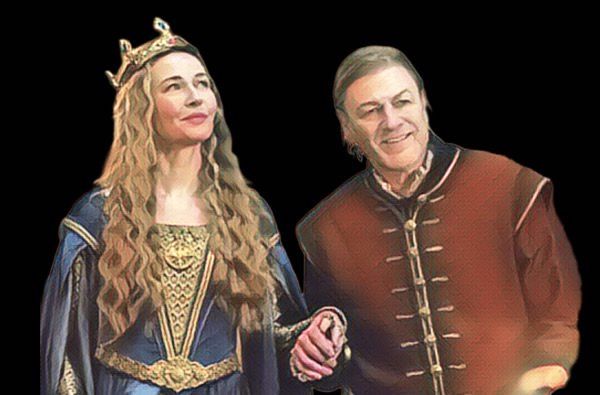
Equally compelling are its women. Maid Marian (Lauren McQueen), daughter of a Norman lord, becomes a bridge between privilege and rebellion. Her love for Rob is less a fairy tale than an act of treason. She’s no longer a passive observer but a political agent in her own right. Queen Eleanor of Aquitaine (Connie Nielsen), newly freed after sixteen years of imprisonment, returns to court as a strategist and survivor — manipulating alliances to protect her sons, Richard the Lionheart and Prince John, while asserting her own power in a man’s world.


And then there’s Priscilla (Lydia Peckham), daughter of the Sheriff of Nottingham (Sean Bean) — one of the show’s standout creations. Priscilla moves through the world with cunning and charm, using proximity to power as a weapon. Critics have compared her to Morgan le Fay, and indeed, she brings a touch of mystical realism to an otherwise grounded narrative. Her friendship with Marian — two women from opposite sides of the social divide — gives the series a complex emotional rhythm.
Sean Bean, as always, brings gravitas to the Sheriff. Here, he’s not a caricatured villain but a conflicted man — loyal to duty, yet humanized by his love for his daughter. His opposition to Robin feels less like good versus evil and more like a moral collision between law and conscience.
Despite the scope of its politics, Robin Hood finds its emotional core in the community around its hero. The Merry Men — Little John (Marcus Fraser), Friar Tuck (Angus Castle-Doughty), Ralph Miller (Erica Ford), Henry (Mihailo Lazić), and Drew (Matija Gredić) — are depicted not as comic relief but as a found family. Their scenes are tender and lived-in, capturing the spirit of camaraderie that defines the myth. Through them, the story reclaims its heart: rebellion as an act of love.
Visually, the show is stunning. Cinematographer Ivan Kostić paints with shadow and flame — faces lit by candles and bonfires, armor reflecting dim gold. The imagery evokes medieval tapestries come to life. Composer Federico Jusid’s score swells and weaves through each scene, balancing melancholy and hope. By night, Robin Hood is luminous; by day, it’s austere — a visual metaphor for the moral contrasts at its center.
Yet for all its artistry, the series sometimes falters under its own ambition. In striving to be the next Game of Thrones, Robin Hood occasionally loses the intimacy that makes its early episodes so compelling. The political subplots multiply; romances stretch thin. The show is strongest when it focuses on people, not palaces — on how a farmer’s son became a legend. Even so, its sincerity and craft keep it afloat.
Critics have called it “Game of Thrones without the magic” — and that’s not entirely wrong. But beneath the uneven pacing lies a vision of the legend that feels urgent and new. This Robin is not a symbol of perfection but of perseverance. He fails, doubts, bleeds — and keeps fighting, because injustice is older than any crown.
With ten episodes, the first season lays the foundation for what the producers hope will be a long-running saga. For MGM+, it arrives at the perfect moment — a spiritual successor to Billy the Kid, but denser, darker, and far more political.
Ultimately, Robin Hood succeeds not by reinventing the myth, but by remembering why it endures. It’s a story about power and empathy, faith and resistance — about the eternal question of which side of history we choose to stand on. And in this version, the outlaw who once stole from the rich gives back something we’d nearly forgotten: the belief that justice begins not with power, but with courage.
Descubra mais sobre
Assine para receber nossas notícias mais recentes por e-mail.
 miscelana.com
1 comentário Adicione o seu