
In 1992, I was still a student and part of the local UN support team for the Earth Summit — the historic United Nations Conference on Environment and Development held in Rio de Janeiro. I remember the city overflowing with delegations from every corner of the world, the surreal feeling of seeing global leaders strolling along the Aterro do Flamengo, hearing a dozen languages at once, and even bumping into Jane Fonda among the pavilions. It felt like the future had arrived. For the first time, the world was truly gathering to talk about the planet’s fate, and Rio was its beating heart.

That event, known globally as ECO-92, produced the foundations of today’s environmental diplomacy: Agenda 21, the Climate Convention, the Biodiversity Convention, and the Desertification Convention. It was there that the idea of sustainable development took shape — still idealistic, but deeply inspiring. The mood was one of belief: scientists, activists, and governments trying to prove that cooperation could save the planet.
Now, thirty-three years later, Rio once again finds itself at the center of a global conversation — but in a different era, and with a different tone. From November 3 to 5, 2025, the city hosts the C40 World Mayors Summit, an event that in many ways is the spiritual heir of the Earth Summit. Back then, it was presidents and prime ministers negotiating treaties; today, it is mayors presenting results. Environmental diplomacy has moved from the global stage to the local street.
The C40 was created precisely because the promises of 1992 took too long to materialize. Founded in 2005 by then-Mayor of London Ken Livingstone, the network brought together the world’s largest cities to show that climate action could — and must — begin locally. After all, it is in cities that we live, consume, pollute, and innovate. The climate crisis is urban at its core, and so are the solutions.
The 2025 edition marks twenty years of C40 action and comes under the banner “The Era of Delivery.” The focus is less on ideals and more on execution — showcasing tangible results and accelerating commitments that can be replicated globally. The summit will be led by Sadiq Khan, Mayor of London, and Yvonne Aki-Sawyerr, Mayor of Freetown, with Eduardo Paes as host. Nearly one hundred city leaders will be in Rio, joined by philanthropists, investors, scientists, and civic organizations.
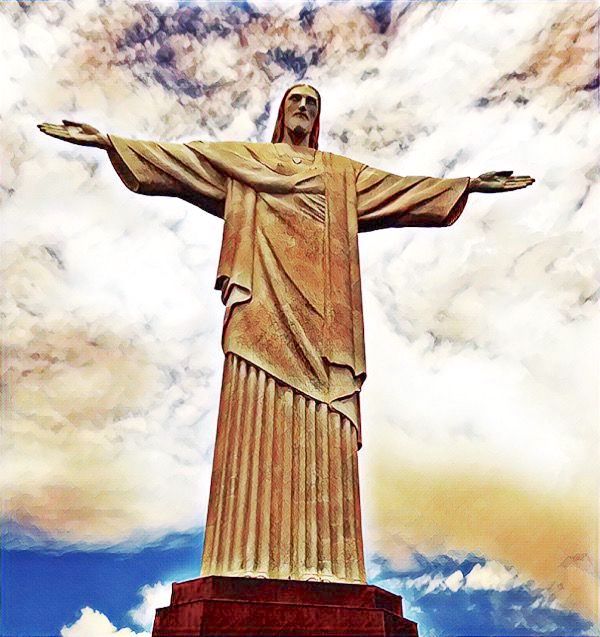
The agenda ranges from clean transport and energy transition to resilient housing, green mobility, and urban adaptation. And the goal is to align the discussions in Rio with the upcoming COP30 in Belém, bridging two Brazilian capitals that symbolize the urban and the Amazonian dimensions of the same crisis.
There is something deeply poetic — and perhaps inevitable — about Rio returning to this role. The city that once embodied environmental hope now becomes a laboratory for delivery. The world has changed: the urgency is sharper, inequality more visible, and idealism has given way to necessity. But the essence remains. We are still searching for balance — between development and preservation, between the right to the city and our duty to the planet.
When I think of the young woman I was at ECO-92, listening to speeches that seemed to sketch the new century, and of the journalist I am today writing about C40 2025, I see an invisible thread between those two moments. The difference is that now we no longer speak of a distant future — we speak of a present that demands survival.
May C40 Rio 2025 transform the spirit of ECO-92 into something real: fewer promises, more action; fewer summits, more streets; fewer slogans, more solutions. Once again, may Rio inspire the world — not only as a symbol, but as proof that change can begin here.
Descubra mais sobre
Assine para receber nossas notícias mais recentes por e-mail.
 miscelana.com