
The sitcom Bewitched was one of television’s biggest hits between 1964 and 1972. As I wrote last year, Samantha Stephens (Elizabeth Montgomery) was meant to be the perfect mid-century housewife — sweet, graceful, devoted — except for one tiny detail: she was a witch. And that twist allowed the show to poke fun at nearly every sexist convention of its time.
The charm of Bewitched lay in its irony. Samantha could do absolutely anything — move objects, solve crises, fix the world with a twitch of her nose — yet her mortal husband, Darrin, constantly forbade her from using her powers. That prohibition was the show’s entire premise: a powerful woman pretending to be powerless. Paradoxically, everything only worked out because she disobeyed.
The magic was in watching her navigate patriarchy with humor and intelligence. Audiences in the 1960s laughed without realizing how subversive it really was — that “perfect wife” was also a quiet act of rebellion. Today, that same irony is the biggest challenge for any reboot: how do you revive a character whose strength was framed as a flaw?
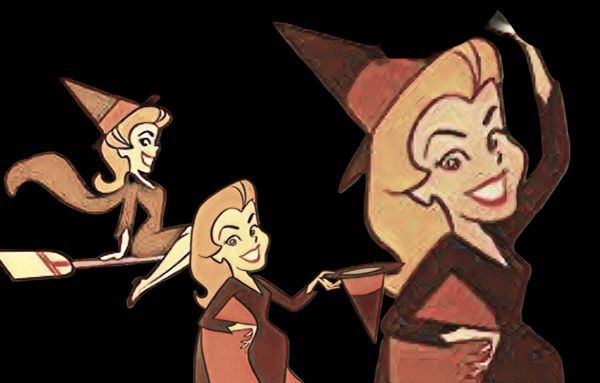
The 21st-Century Challenge
Twenty-one years after the failed 2005 movie adaptation with Nicole Kidman and Will Ferrell, Bewitched is finally returning. Sony and Fox are developing a new version written and executive-produced by Judalina Neira, known for her work on The Boys and Daisy Jones & The Six.
Described as an “irreverent reimagining”, the new series will run as an hour-long dramedy, blending humor and emotion in a more contemporary tone. Neira, who has proven her ability to craft complex, feminist, and morally layered worlds, seems the perfect choice to “save” Samantha — or rather, to free her once and for all from the domestic cage built by Darrin and 1960s convention.
Still, it won’t be easy. The original Bewitched thrived on the tension of a woman who pretended not to have power. In the 21st century, surrounded by independent, outspoken female leads, Samantha will need a new reason to hide — or perhaps, to stop hiding altogether.
From Nora Ephron to Judalina Neira
Back in 2005, Nora Ephron attempted to address this very issue by turning Samantha’s external conflict into an internal one. In Ephron’s version, Nicole Kidman played Isabel, a real witch who wants to live as a regular woman and ends up starring in a Bewitched remake opposite a narcissistic actor (Will Ferrell).
It was an interesting concept — Bewitched about Bewitched — but the execution fell flat. Kidman and Ferrell had no chemistry, and while the film had moments of charm, it lacked the spark and comic timing that made Montgomery’s performance timeless. Kidman’s porcelain elegance couldn’t replace the mischievous warmth of the original Samantha.
Now, Judalina Neira seems determined to go further. The new reboot is being compared to Bel-Air, the dramatic reinvention of The Fresh Prince of Bel-Air. The upcoming version of Bewitched will explore love, difference, and identity with a more emotional tone — and will even expand into an animated spin-off about Samantha’s teenage daughter, Tabitha, signaling that the next generation of witches is on its way.
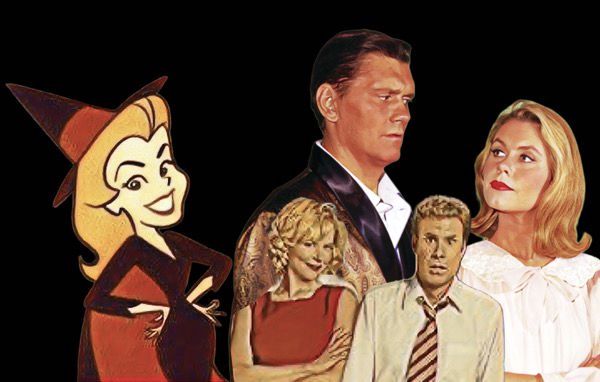
The Spell Still Works
More than fifty years later, Bewitched continues to mirror the women of each era. In the 1960s, it was about conformity; in the 2000s, about self-discovery; and now, it may finally be about power — not the magical kind, but the personal kind.
Elizabeth Montgomery remains, to this day, the definitive Samantha Stephens — and that might be the real spell Judalina Neira has to break. But if anyone can reinvent her for the 21st century, it’s a writer who already thrives in worlds of chaos, rebellion, and hidden strength — like The Boys.
The challenge isn’t just updating a nostalgic sitcom. It’s transforming a witch who once had to hide her magic into a woman who no longer needs permission to shine.
Descubra mais sobre
Assine para receber nossas notícias mais recentes por e-mail.
 miscelana.com