
Madonna may be Queen, Muse, and Legend — but her triumphs were never easy or unanimous. She conquered the world, just as she promised in her twenties, but by 2005, nearing fifty (she was only 47 then), she had already reinvented herself a dozen times — each with critics declaring her “finished.”
Yet with Confessions on a Dance Floor and its accompanying tour, Madonna lit up the dance floor once again, inviting us to move with her as if time, labels, and eras had melted away beneath that perfect beat.
Released on November 11, 2005 — exactly twenty years ago — the album is, for many, her last truly iconic work. As a fan, I still admire the ones that followed, but Confessions stands apart: the most seamless, the most cohesive, the most purely Madonna.
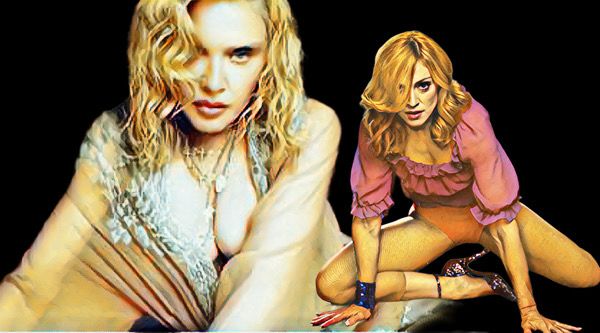
It’s more than an album — it’s a manifesto. A dive into the past to redefine the present. A record that begins and ends without pause, like an endless night where the body tires but the soul keeps dancing. It’s the confession of an artist who, after decades of provocation and reinvention, looks within and says: I’m still here — and I can still set the floor on fire.
Madonna came from turbulent years. American Life (2003), produced with Mirwais, split audiences: experimental, political, and dark. She could have withdrawn, but instead, she doubled down — joining forces with Stuart Price, the brilliant producer from her tours and club sets. Together, they achieved something magical: the perfect balance between intellect and instinct. For Madonna, the dance floor has always been more than a place — it’s a metaphor, a sanctuary, a mirror.
From the opening notes of Hung Up, everything falls into place with mathematical precision. Sampling ABBA’s “Gimme! Gimme! Gimme!” — approved personally by Benny and Björn — was a bold wink to pop history. And when she sings “Time goes by so slowly for those who wait”, she’s winking at age, patience, and the anxiety of those who doubt her place in the now.
But Confessions is much more than “Hung Up.” It’s the futuristic pulse of Future Lovers, the mysticism of Isaac, the confessional tone of Like It or Not, the hopeful flight of Jump. It’s an emotional arc — euphoria to introspection, celebration to vulnerability — wrapped in a sound that remains pristine and alive.

Madonna didn’t invent disco or electro-pop, but in 2005 she did what she’s always done best: distilled the spirit of the moment and returned it, stamped with her own DNA. And back then, the world needed to dance again.
The Confessions Tour was history in motion — Madonna crucified within a disco ball, blending faith and rhythm, guilt and release. It was the perfect distillation of her identity: provocative, spiritual, human.
Two decades later, Confessions on a Dance Floor stands not just as one of her greatest works but as one of modern pop’s most immaculately produced albums. The beats remain flawless, Price’s mix remains a masterclass, and Madonna herself has never again sounded so light, so centered, so powerful.
After Confessions came Hard Candy, MDNA, Rebel Heart, Madame X — all fascinating in their own way — but none with the same cultural gravity or cohesion. Confessions is Madonna’s last pure peak: vocal, physical, emotional, creative.

And now, twenty years later, she embraces that truth. During the Celebration Tour, revisiting “Hung Up” and “Sorry,” she admitted that the album “saved” her relationship with music. In 2025, she confirmed her reunion with Stuart Price — working on Confessions Part 2, “a reunion, not a repetition.”
For fans, the anniversary came with another gift: the return of tracks long scattered across limited releases. Madonna has always been notoriously guarded with her B-sides — and when she opens the vault, it’s rarely without mischief. Over the years, Super Pop, History, and Fighting Spirit appeared separately, almost as artifacts from a finished era. Now, remastered and contextualized, they enrich the album’s legacy — expanding its message of love, endurance, and motion.
Of the three, Fighting Spirit stands out. Produced by Mirwais, it carries a disco shimmer that bridges his world with Price’s — a spiritual extension of Confessions: vibrant, teasing, emotional. When Madonna asks, “What you gonna do when your love is gone?”, it’s both a dare and a meditation. The song, both warning and mantra, reminds us that love — like dance — survives only through the will to fight for it.
It’s hard to argue that Fighting Spirit belonged among Confessions’ twelve flawless tracks, but it’s equally hard not to imagine how it might have fit. With all three songs now recontextualized, the record feels, at last, complete.

Confessions was never about youth — it was about essence. And essence doesn’t age.
I remember hearing it for the first time and feeling each beat tug me toward what Madonna always evokes: movement — not just of body, but of mind and soul. It was impossible not to dance, and impossible not to think.
Revisiting Confessions on a Dance Floor is remembering why Madonna is singular. Because instead of competing with time, she dances with it. Twenty years later, the beat still pulses — and we’re still dancing with her.
Descubra mais sobre
Assine para receber nossas notícias mais recentes por e-mail.
 miscelana.com
1 comentário Adicione o seu