
Back when Erotica came out, I often found myself having to justify it to friends who scoffed: “You still listen to Madonna?” My answer was always yes. My sister likes to tease me about my loyalty to the artists I love, and, as a true Taurus, when I love, it’s for life. There’s a clear difference between the artists I “really like” and the ones I “love.” Madonna, of course, has always been in the latter group, especially for what she still represents four decades later. And I don’t need to apologize for that.
Erotica sounded “dirty” to me, and not because of its explicit sexual content, but because it strayed from the polished, safe pop of her previous albums. It was raw, uncomfortable, and unapologetically human. Two years later, Bedtime Stories arrived as a hypnotic contrast: soft, smooth, ethereal — and, for that reason, difficult to fit into my cassette tapes and burned CDs (pre-playlist era). Even today, when I revisit Madonna’s catalog, I still struggle to find tracks that blend naturally with it. But that never meant I didn’t like the album — it just means that here lies its difference.
And that difference is precisely what makes it so fascinating.
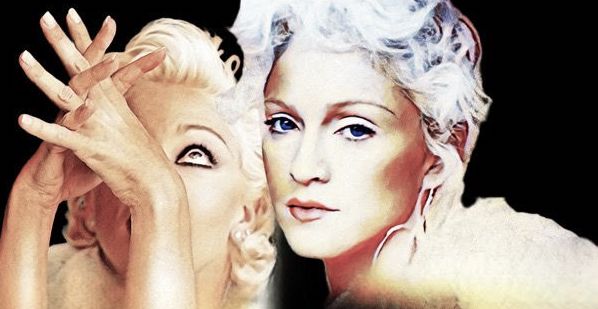
The quiet transition
Released in 1994, Bedtime Stories was Madonna’s strategic softening. After the public backlash from Erotica, the Sex book, and Body of Evidence, she had become a media scapegoat. The cultural misogyny of the time demanded that she “apologize” — and she did, but in her own way: with a record that seemed to repent while actually reclaiming control on a different frequency.
Produced by Babyface, Dallas Austin, Nellee Hooper, and Björk, the album dove into contemporary R&B, soul, and trip-hop — years ahead of what would become mainstream by the turn of the millennium. Secret, Take a Bow, Human Nature, and Bedtime Story form a tapestry of restraint and confidence — Madonna no longer needing to shout to be heard.
At the time, critics were lukewarm. They said she was “playing it safe,” “trying to be palatable.” But time revealed Bedtime Stories as a reflection of maturity — an album by someone who had learned to provoke not through spectacle, but through introspection.
The album that grew with time
Three decades later, Bedtime Stories is recognized as one of Madonna’s most elegant and visionary works. Its fusion of R&B, soul, and ambient pop — once dismissed as “off-brand” — now feels prophetic, anticipating the electronic and spiritual Madonna of Ray of Light.
“Human Nature” has become a feminist anthem, its refrain “I’m not sorry, it’s human nature” reclaiming the agency that critics tried to strip from her. “Take a Bow,” in turn, remains one of the most delicate and cinematic moments in her entire discography — a whispered farewell to a lover (or perhaps to an era). The music video also served as an audition tape, helping her secure the coveted role of Eva Perón in the film adaptation of Evita.
Once again, Madonna was ahead of her time. We just needed to grow into her wavelength.
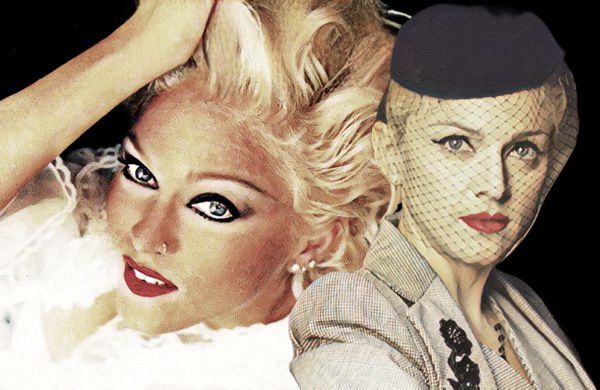
Björk, the unlikely muse
One of the most intriguing elements of Bedtime Stories is the presence of Björk, then an emerging Icelandic artist known for her experimental mix of the organic and the electronic. Madonna — already a global icon — had the humility and curiosity to seek inspiration from her, later admitting that Björk influenced the creative direction of the album.
The title track, Bedtime Story, written by Björk, is a dreamlike trip through the subconscious — abandoning traditional pop narratives of love and heartbreak to explore sound, imagery, and escape. It stands as the album’s most avant-garde moment, almost a spiritual preview of Ray of Light and the sonic awakening Madonna would later pursue with William Orbit.
The return to dreams
Now, in 2025, Madonna celebrates the 30th anniversary of Bedtime Stories with the upcoming release of Bedtime Stories: The Untold Chapter, an EP set for November 28. The project includes demos, alternate versions, and unreleased tracks from the original sessions — a window back into that soft blue-gray universe of restraint and control.


It arrives alongside another milestone: the 20th anniversary of Confessions on a Dance Floor — her triumphant return to euphoria, the dance floor, and mirror-ball catharsis. Between ecstasy and introspection, Madonna once again traverses her own layers — flesh and spirit, sound and silence.
Thirty years later, she revisits the past not to repeat it, but to retell it with the wisdom of a survivor, a transformer, and a muse to generations. If Confessions is the celebration, Bedtime Stories is the dream that precedes it — that quiet, closed-eyes moment when an artist, before reinventing herself, finally learns to listen within.
Descubra mais sobre
Assine para receber nossas notícias mais recentes por e-mail.
 miscelana.com