
In the 1990s, long before feminism became a trending hashtag, Sarah McLachlan made a quiet revolution. Tired of being told that “women don’t sell tickets,” she turned defiance into a movement — gathering female artists on one stage to prove that solidarity could fill stadiums. The result was Lilith Fair, a traveling festival that, between 1997 and 1999, did far more than sell out shows. It redefined the possibilities for women in music, created a space of empathy and rebellion, and — without ever claiming to — became one of the first large-scale feminist statements in pop culture.
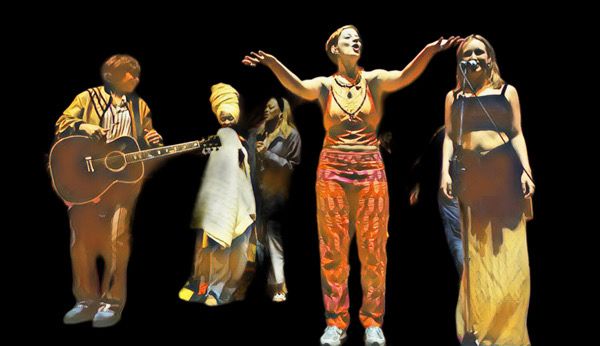
The new documentary Lilith Fair: Building a Mystery — The Untold Story, directed by Ally Pankiw and produced by ABC News Studios, revisits that groundbreaking moment with rare footage and emotional precision. Featuring voices like Sheryl Crow, Paula Cole, Shawn Colvin, Erykah Badu, Indigo Girls, Natalie Merchant, and Jewel, it’s both a time capsule of the 1990s and a mirror reflecting how far — and how little — we’ve come since.
The Birth of a Myth (and a Movement)
McLachlan named her festival after Lilith, the mythic first wife of Adam, who left Eden rather than submit to him — a symbol of autonomy and rebellion that perfectly captured the spirit of what she was building.
At its core, Lilith Fair was a simple idea: put multiple women on one bill and watch what happens. What happened, however, was extraordinary. The tour became a cultural earthquake, raising millions for charities, amplifying diverse female voices, and fostering a sense of community and belonging among fans of all backgrounds.
But not everyone celebrated. The press derided it as a “chick fest,” critics mocked its “earnestness,” and even some women rolled their eyes. Misogyny found new disguises — belittling the festival’s success as sentimental or niche, when in truth it was changing the paradigm.
The Misconceptions and the Resistance
Pankiw’s film doesn’t sugarcoat how absurdly sexist the 1990s could be. Radio stations were told not to play two women back-to-back. Promoters refused to book more than one female act per tour. Liz Phair was asked to pose half-naked for “artistic reasons.”
Even among artists, there was hesitation. Lisa Loeb and Suzanne Vega admit in the film that they initially resisted joining, worried about being typecast as “women musicians.” Chrissie Hynde arrived at Lilith Fair, announcing she didn’t know why she was “with these bitches,” only to later confess she had the time of her life.
The documentary also revives the infamous 1998 Grammy “Lilith Medley,” where Sarah McLachlan, Paula Cole, and Shawn Colvin were grouped into a single performance slot — while male nominees performed solo. It’s a small moment that perfectly captures the double standard the festival was born to challenge.
Motherhood, Activism, and Musical Freedom
Lilith Fair wasn’t just a concert; it was a sanctuary. A place where women could be artists, mothers, activists — all at once. Musicians brought their babies on tour, fans brought theirs to the audience, and the air pulsed with the energy of something revolutionary but gentle.
The inclusion of Planned Parenthood as a sponsor triggered protests and even bomb threats. Yet when a Texas venue tried to block their presence, Joan Osborne stood firm, performing in a shirt that read “I Am the Face of Pro-Choice Texas.”
Moments like that, Pankiw reminds us, are what made Lilith more than music — it was defiance in harmony.

Expanding the Sound — and the Vision
As the tour evolved, McLachlan diversified the lineup, inviting Erykah Badu, Queen Latifah, and Missy Elliott, whose debut at Lilith was as unpredictable as it was symbolic (her bus broke down and she hitched a ride in a red convertible).
By welcoming genres from R&B to hip-hop to folk, Lilith broke the walls that had long divided women in music. It wasn’t “Lily-white Fair,” as some critics said — it was a glimpse of what inclusivity could sound like.
A Call to Remember — and Reignite
“Building a Mystery” is not a nostalgic documentary. It’s a call to arms wrapped in melody. Watching McLachlan cancel her own premiere performance in protest of censorship today, one realizes that Lilith’s fire still burns — not as an artifact of the ’90s, but as a living testament to collective action.
For younger audiences, the film is a revelation. For those who lived it, it’s a love letter to a time when music became resistance, and kindness was radical.

Legacy
Lilith Fair proved a point that still matters: women are not a trend; they are the foundation.
The documentary ends with McLachlan’s quiet satisfaction: “We proved our point. Now it’s time for others to build their own Liliths.”
More than two decades later, that remains the challenge — and the invitation. Because, as Building a Mystery reminds us, the revolution sounded beautiful.
Descubra mais sobre
Assine para receber nossas notícias mais recentes por e-mail.
 miscelana.com