
I was still playing with dolls when Brazil was shaken by the news of a “crime of passion” in the small coastal town of Búzios, where the socialite from Minas Gerais, Ângela Diniz, was found dead, shot six times in the face. Her killer was her boyfriend of only a few months, Raul Fernando do Amaral Street, known as Doca Street, who went on the run after the murder. For weeks, the entire country spoke of nothing else — in newspapers, in cafés, at dinner tables. Even as a child, I never forgot that tragic story.
Half a century later, Ângela’s name still causes unease, because it forces Brazil to confront its own darkness: structural machismo, violence disguised as love, and a culture of impunity that turns victims into villains.

Ângela Maria Fernandes Diniz was born on November 10, 1944, in Curvelo, Minas Gerais, into an upper-class family. Beautiful, intelligent, and naturally charismatic, she grew up surrounded by privilege and expectation. At 17, she married engineer Milton Villas Boas, had three children, and seemed destined for the life society prescribed for women of her class. (A detail omitted in the HBO Max series, which only shows her daughter, just as the Amazon Prime Video film Angela does.) But Ângela was restless. When she decided to separate, in the mid-1960s, she defied the social and religious conventions that still condemned divorce. Even now, rereading her 1973 Revista Manchete interview where she said, “I’m tied to the present, to now. Tomorrow, I might be somewhere else,” feels strikingly modern, 52 years later.
She said that while living through a scandal in Belo Horizonte — her boyfriend, “Tuca,” had murdered her housekeeper — and soon after, she moved to Rio de Janeiro, where she reinvented herself as a free woman. That freedom would become the beginning of her end. The press dubbed her “The Panther of Minas,” a mix of fascination and misogyny. She attended parties, moved among artists and businessmen, and cultivated an independent lifestyle. What society labeled as scandal was, in truth, an act of courage: Ângela wanted ownership of her life, her body, her destiny.
But in 1970s Brazil, female freedom was still read as a threat. Her image was shaped by gossip columns and sensationalist headlines, blending fascination with moral judgment. Her reputation was already “lost”: a divorcée, linked to a murder case, accused of kidnapping her own daughter — Ângela became a convenient target, portrayed as dangerous, unstable, and “too seductive.” The stigma of the woman who provoked followed her until the end.

In 1976, she met Doca Street, a rich, charming heir to a traditional São Paulo family. What began as a passion soon turned to possession. Doca was jealous, aggressive, and obsessive. On December 30th of that year, at Ângela’s beach house on Praia dos Ossos in Búzios, he shot her four times: three bullets in the face, one in the neck. They had argued over his jealousy, and she had tried to end the relationship. His justification later was that he had “lost control.”
The physical violence was only the beginning. What followed was a symbolic and collective murder. At his 1979 trial, Brazil watched the justice system accept the argument of “legitimate defense of honor,” turning Ângela into the one to blame, a woman who had “provoked” him and therefore “deserved” to die. Her intimate life was presented as evidence, her freedom as guilt. The court did not judge her as a victim, but as a woman. Doca was sentenced to just two years and walked free.
The feminist reaction was immediate. In the streets, a phrase began to echo, one that would define an era: “Quem ama não mata” — “Those who love do not kill.” Women’s movements took over public squares, universities, and newsrooms. The murder of Ângela Diniz awakened a national awareness about domestic violence and gender inequality. In 1981, under massive public pressure, Doca was retried and sentenced to 15 years in prison, of which he served only six. He spent the rest of his life in São Paulo and died in 2021, at 86, largely forgotten. Ângela, however, never left Brazil’s memory.

The Many Versions of Ângela — How Her Story Was Told, Distorted, and Reclaimed
The story of Ângela Diniz has been told, twisted, and reinterpreted countless times. From feminist symbol to fictional character, she became a mirror of Brazilian society — and each retelling reveals more about the era that produced it than about Ângela herself.
The first TV specials and documentaries emerged in the 1980s and 1990s, when her case was still synonymous with scandal. Most described the killing as a “crime of passion,” a phrase that sustained the same sexist logic once used in court. Television programs and magazines repeated the narrative of “love that kills,” rarely questioning the structures of power behind it. These were productions made by and for men — stories in which Ângela appeared as myth, never as a person.
By the early 2000s, her story had become a recurring subject of fascination. There were plans for a biopic starring Deborah Secco. Her life had already inspired Jece Valadão’s 1977 film Os Amores da Pantera (The Panther’s Loves), and the Linha Direta Justiça TV episode Ângela e Doca, broadcast by Rede Globo in 2003. But the definitive shift came in 2020, with the podcast “Praia dos Ossos” (Beach of Bones), produced by Rádio Novelo and released at the height of the pandemic, a cultural phenomenon that redefined how Brazil remembered Ângela Diniz.
Narrated by Branca Vianna, Praia dos Ossos is considered one of the most important pieces of investigative audio journalism in the country. Across eight episodes, it dismantles the official narrative and restores women’s voices: journalists, lawyers, friends, activists — the very people silenced in the 1970s. The podcast features original trial recordings, vintage audio, and even new interviews with Doca Street, exposing the moral and legal absurdity of the “defense of honor.”
More than an investigation, Praia dos Ossos is an act of historical reparation. For the first time, Ângela is not the dead woman on the beach, but a living being, a mother, a lover, a dreamer. The podcast reignited debates on femicide, inspired academic studies, and directly influenced a wave of new film and TV projects.

In 2023, the feature film Ângela, directed by Hugo Prata and starring Ísis Valverde, offered a more intimate and visually elegant interpretation. The film begins with her relationship with Doca, but rebuilds the story through Ângela’s gaze, something still rare in portrayals of murdered women. Avoiding sensationalism, it focuses on the life that preceded the tragedy: a woman of contradictions, passion, and vulnerability. Valverde’s understated performance refuses to glamorize pain; instead, she portrays a woman trapped between independence and destruction.
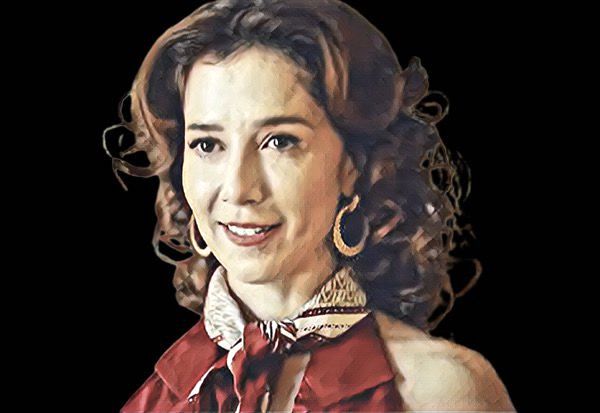
Then, in 2025, HBO Max premiered the miniseries Ângela Diniz: Assassinada e Condenada (Angela Diniz: Murdered and Convicted), starring Marjorie Estiano as Ângela and Emílio Dantas as Doca. The series adopts a hybrid tone — historical, emotional, political — and Estiano, one of Brazil’s most acclaimed actresses, brings complexity without sanctifying the character. The narrative moves between past and present, alternating between Ângela’s glamorous loneliness and the media circus surrounding her death.

At the time of writing, HBO had released only the first two episodes. The production suffers from overly theatrical dialogue and “overacting,” relying on flashbacks that only make full sense to those familiar with the case. Portraying Ângela as overly languid feels reductive (and sexist), even if she was indeed a woman of intense sensuality. Between the two screen versions, Ísis Valverde’s Angela feels more tangible and real — flawed, emotional, alive — while the HBO version, despite Estiano’s talent, is weighed down by uneven writing and a heavy-handed use of “music-video”-style montages that interrupt rather than enrich the narrative.
Still, both productions — along with the podcast — serve distinct purposes. Prata’s film is intimate, the podcast is investigative, and the HBO series aims to be reflective and symbolic. It doesn’t merely retell the crime; it questions the myth: the free woman judged, the complicit society, the blind justice. Marjorie Estiano’s casting is inspired — she moves between strength and fragility with rare authenticity — even if the script falters.
The Lasting Impact
Since 1976, the story of Ângela Diniz has been retold as a headline, as a cause, as a memory, and now as art. Each retelling — whether journalistic, cinematic, or televisual — reveals a Brazil still grappling with itself. Her murder propelled feminist mobilization, shaped the national conversation on gender violence, and decades later still echoes in the 2023 Supreme Court decision declaring the “defense of honor” unconstitutional — the very argument once used to justify her death.
To watch the series, to hear the podcast, to revisit the film is to retrace not only a personal tragedy but the trajectory of Brazilian womanhood itself. It is to recognize that the Brazil that judged Ângela Diniz in 1979 still survives between the lines of today’s headlines, where women continue to be blamed for their own suffering.
Remembering Ângela is an act of resistance. Above all, she was a woman who wanted to live — and was punished for it. It will be a sign of progress when we finally see her not as “The Panther of Minas,” but as what she truly was: a woman, a symbol, a warning.
Because, nearly fifty years later, the cry remains the same — and still urgent: Those who love do not kill.
Descubra mais sobre
Assine para receber nossas notícias mais recentes por e-mail.
 miscelana.com