
Emmerald Fennell is a director who, with only two films, already carries an Oscar, a devoted following, and a trail of controversies. Known for using art to provoke — and provoke deeply — she built her voice through sharp, original, unsettling narratives. Now, for the first time, she’s diving into a literary adaptation. And not just any book: she chose one of the most debated, misread, and viscerally disturbing works ever written — Wuthering Heights, by Emily Brontë.
The novel is, at its core, about obsessive love. Toxic love. Violent love. A love that defies time, logic, and matter. Heathcliff and Catherine Earnshaw are galaxies away from any traditional notion of romance: they are not empathetic, not likable, and certainly not tragic heroes. They are narcissistic, cruel, impulsive, and reckless — which is precisely why they are so fascinating. For Fennell, it is “the greatest love story of all time.” I never saw it that way — and maturity has only pushed me further from any romantic reading — but I recognize this: it is one of the most impactful narratives in the history of art.

The first trailer makes it clear: the film will be sexual, sensual, physical — and inevitably controversial. Among the early discussions circulating online, the casting choices stand out. Margot Robbie as Cathy is, of course, irresistible in talent, but the age shift raises questions: a significant part of the destructive, feverish bond between Cathy and Heathcliff comes from their youth. From that emotional intensity only teenagers wield. From the impulsive chaos, the emotional irresponsibility, the love that erupts before it even knows its own name. Aging them up risks erasing a core layer of the novel.
Still, Jacob Elordi is undeniably compelling. Although many scholars believe Brontë imagined Heathcliff as a Black man — strongly implied, though never explicit — cinema has always taken liberties. And Elordi, coming off the impact of Frankenstein, seems more than equipped for another one of those “Hamlet-like” literary roles: the dark, wounded, violent, magnetic outsider that every great actor attempts at least once. He has the physicality, the mystery, the volatility.
But something in the trailer struck me: a softness that has never belonged to this story. A Cathy who hesitates, who melts, who seems drawn to Heathcliff under his lead. In just a few seconds, the film suggests a dangerous simplification: a wealthy girl can’t marry a poor boy, so she chooses Linton and later suffers when Heathcliff returns as a rich man. Anyone who has read the book knows the truth is far more brutal — emotionally, morally, and literally.
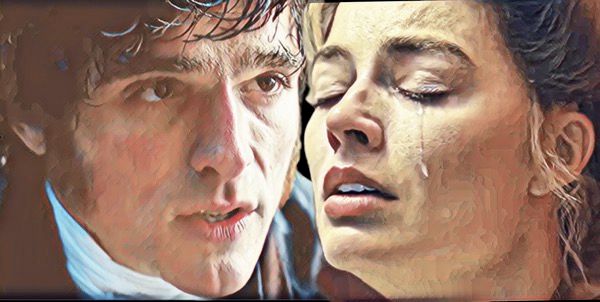
Another clue the trailer offers is that Fennell may follow the long cinematic tradition of adapting only the first half of the novel, as the 1939 classic did, and many remakes since. This “saves” Heathcliff from the part of the story where he becomes indefensible: cruel, vengeful, monstrous. It’s a loss. But understandable. Most people who believe they know Wuthering Heights only know this sanitized, romanticized, incomplete half. And it seems Fennell is choosing to remain in that camp — perhaps for aesthetic reasons, to keep the focus tight on the Cathy-Heathcliff combustion, perhaps because the second half requires another film entirely.
I confess: I dislike — viscerally — any portrayal of a submissive Cathy. She is one of literature’s most uncomfortable women precisely because she is Heathcliff’s mirror. They destroy each other because they are equals. He obeys her, worships her, disintegrates for her. She diminishes him, provokes him, challenges him. It is Cathy who coldly states that he is “not enough for her.” It is Cathy who chooses Linton for everything Heathcliff is not. That contradiction is the motor of the novel. Diluting Cathy’s agency turns the story into the very myth Brontë never intended: a tragic romance, instead of a generational cycle of emotional brutality.
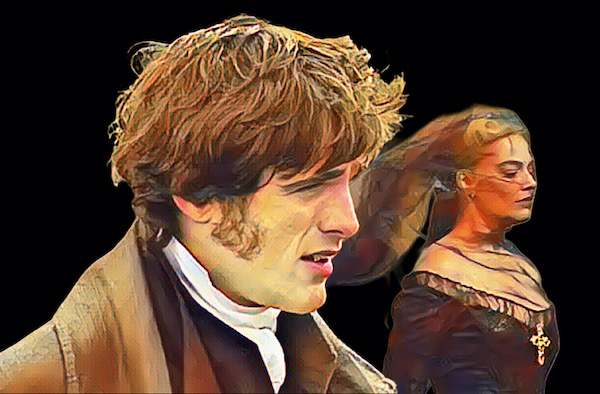
The soundtrack choice also deserves attention: “Chains of Love,” by Charli XCX, is beautiful, charged, feverish, and steeped in longing. Daring to replace Kate Bush is practically sacrilegious — Wuthering Heights is a monument — but the choice signals Fennell’s intention to build a film that speaks to the present rather than worship past references.
Now it’s a matter of waiting. February feels far away for those of us who know every shadow of the original novel and scrutinize each frame of the trailer with a blend of excitement and unease. But if there’s one certainty in an Emerald Fennell adaptation, it’s that she will not allow complacency. Her film will spark debate, irritation, passion — and, above all, discomfort. Perhaps that is precisely what Wuthering Heights has always demanded: a vision unafraid to strip it of the false romanticism that decades of cinema layered over it.
If Fennell truly sees this as “the greatest love story of all time,” then we are about to witness what one of today’s most provocative filmmakers makes of a love that has always been — since 1847 — far closer to destruction than romance.
And honestly, I cannot wait to see it unfold on screen.
Descubra mais sobre
Assine para receber nossas notícias mais recentes por e-mail.
 miscelana.com