
Watching Tom Cruise finally receive his long-awaited Oscar — even if honorary — adds a new layer to the release and tone of Netflix’s Being Eddie, an unprecedented, candid, intimate conversation with one of Hollywood’s greatest legends, comedian Eddie Murphy. Yes, another star unafraid to speak honestly about being snubbed by the Academy, and one who knows better than most what opens and closes in a career that spans forty years.
And that’s why something feels almost inevitable when Hollywood decides to revisit an icon: the sensation that we’re watching not just a documentary, but a deliberate construction of legacy. Being Eddie arrives with precisely that energy, which may explain why critics greeted it with a mix of affection, skepticism, and caution. It’s an elegant film, full of archival treasures and irresistible anecdotes, but one that also seems content to skim the surface of a figure far more complex than the industry ever wanted to fully acknowledge.

And here is where the omissions matter, the shadows the film avoids. The documentary steers clear of Murphy’s turbulent 1990s, when he was devoured by tabloid cruelty, particularly in the incident involving a trans woman, reduced here to a brief mention, without any exploration of its emotional fallout or the deeply transphobic climate of that era. It also glosses over the period when Hollywood effectively abandoned him: the loss of prestige, the string of critically mocked films, and the professional quiet that felt like an unofficial exile. Even his complicated relationship with the Academy, marked by his 1988 speech condemning racism, which many believe cost him industry goodwill for years, is portrayed with surprising softness.
His personal life is treated with the same careful distance: family tensions, the challenge of balancing fame and privacy, the emotional weight of having grown up inside the machinery of stardom, none of this is probed. The structural racism that shaped his opportunities, contracts, and expectations appears only in passing. And the bitter aftermath of losing the Oscar for Dreamgirls — a story soaked in backstage politics everyone in Hollywood remembers — is smoothed into a nostalgic footnote.
Still, when the film chooses to show, it shows beautifully. Murphy appears relaxed, reflective, threading the line from his precocious SNL years to the superstar who shattered box-office assumptions and carved out space for Black artists who came after him. Fans get exactly what they came for: charm, humor, carefully rationed vulnerability, and delicious behind-the-scenes stories. It’s deeply enjoyable — but incomplete.
Which leads to the inevitable question: why release this now?
Because 2025 is a symbolic year for Eddie Murphy, a moment of inventory and reinvention. After four decades, he has entered the phase where Hollywood loves turning artists into institutions. Streaming platforms are enthralled with legacy narratives; Murphy, always torn between brilliance and strategic silence, seems ready to reclaim his story — on his terms.
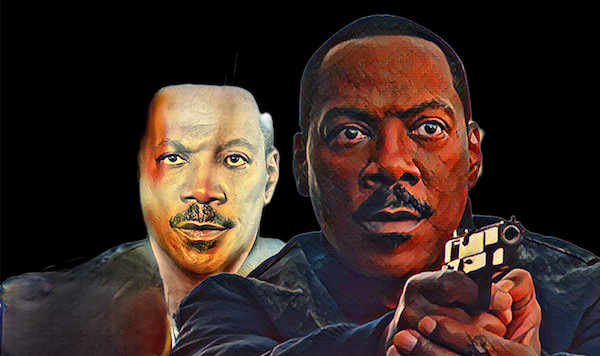
There’s also a cultural shift underway: a reevaluation of the trajectories of Black artists through a sharper, less paternalistic lens. Murphy is one of the pillars of that movement. Add to this the immense power of nostalgia — Murphy holds a singular emotional space in the collective imagination of the ’80s and ’90s. In other words, releasing a documentary about him now is the closest thing to a guaranteed cultural moment.
And then there’s the most obvious reason: Eddie Murphy is returning. New projects, renewed visibility, a carefully managed public reintroduction. Being Eddie plays like the prologue to a new chapter. It’s less a retrospective and more a strategic relaunch.
In the end, the film says a lot — including through what it chooses not to say. It reaffirms Eddie as a giant, but also reveals his lifelong instinct to control what he shares and what he protects. And maybe that’s the final irony: for someone who has always moved between brilliance and privacy, Being Eddie arrives exactly as he would design it — polished, charming, full of stories, and never revealing everything. Which is precisely why releasing it now makes perfect sense: at a moment when memory carries weight, legacy matters, and the future, once again, opens before him.
Descubra mais sobre
Assine para receber nossas notícias mais recentes por e-mail.
 miscelana.com