
Ben Stiller has always been an artist driven by humor, but also by a very particular kind of sensitivity — the kind that belongs to someone who grew up watching the world from backstage, between sets, dressing rooms, and the electric aura of show business. That’s why it’s no surprise that his documentary Stiller & Meara: Nothing Is Lost, a dive into the lives of his parents, Jerry Stiller and Anne Meara, touched critics on such an emotional level. The film has been received with mostly positive reviews, with many writers pointing to what makes this tribute different: it’s not just a son celebrating two icons of American comedy; it’s a man revisiting his own emotional formation while trying to understand his parents in order to understand himself.
There’s a beautiful consensus among major outlets: it’s a sweet, affectionate, and unexpectedly moving film. The Guardian called it “a tender, revealing portrait,” emphasizing that Stiller, perhaps without fully realizing it, also created a self-portrait — that of a son who grew up trying to decode the complexities of his parents’ artistic life. The Los Angeles Times described the film as “lovely and almost dreamlike,” filled with warm memories and small fragments of family intimacy that Stiller turns into narrative. Rolling Stone reflects a similar sentiment, noting that Nothing Is Lost moves fluidly between being a tribute and a therapy session, bringing to the surface the difficulty of balancing work and family, fame and presence.
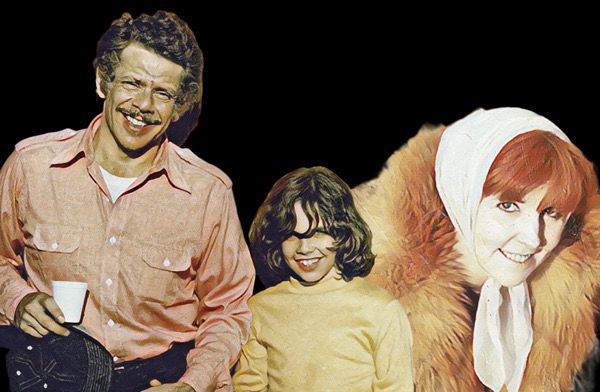
Critics also highlighted the historical importance of the duo. Jerry Stiller and Anne Meara weren’t just “Ben Stiller’s parents”; they were an institution of American comedy, part of an era when stage couples were still a novelty, and where Jewish and Catholic humor blended naturally in both life and work. In this sense, the documentary operates almost as a historical capsule — capturing how they shaped not just a comedic aesthetic, but a way of existing within the industry. It becomes a loving nod to a particular moment in entertainment while revealing the vulnerability beneath every artistic trajectory.
But it wasn’t unanimous praise. Some less enthusiastic reviews pointed out that the film’s structure can feel repetitive, especially in its use of archival montages, and that Stiller’s gaze — however honest — is still the gaze of a son, which at times prevents a more distant or critical analysis of his parents’ careers. A few critics even suggested that, ultimately, the documentary is as much about Ben as it is about Jerry and Anne. And there’s truth to that: there is something inevitably self-reflective about the film, as if the director were trying to stitch together a grief that can’t be organized by chronology or restored through old footage.
Even so, the prevailing impression among critics is that Stiller achieved something rare: he turned a family story into a meditation on love, work, absence, and legacy. The film speaks about the glory and the emotional cost of living for the stage — and, above all, about the impossibility of truly separating who we are from what we do, especially when one grows up at the center of a creative hurricane that also happens to be home.
It’s a documentary that embraces sentiment without slipping into sentimentality, offering itself as both a portrait of its era and a deeply personal gesture. For anyone who grew up feeling that their parents were always in motion, always between one performance and the next, Nothing Is Lost becomes a transparent way of saying: memory is what remains — and sometimes it’s through art that we finally find what was never said in life.
Descubra mais sobre
Assine para receber nossas notícias mais recentes por e-mail.
 miscelana.com