
Os Donos do Jogo (“Rulers of Fortune”) is one of those series that arrives on streaming already carrying a weight of expectation — and with Netflix, that always comes with an essential question: is Brazil about to deliver another title capable of speaking to the world, or are we looking at a phenomenon destined to remain mostly domestic? The truth is that Heitor Dhalia’s series lands somewhere in between — but in a very meaningful way. Beyond the plot about organized crime, the show becomes an elegant, bitter reading of the country itself. This social pulse, paired with bold aesthetics and confident performances, explains not only its immediate impact but also why Netflix quickly confirmed a second season.

What draws me in, from the beginning, is the quiet sophistication of the narrative — the way fiction intertwines with reality without waving obvious flags. For foreign viewers, it’s important to understand what the show’s central theme actually represents. The story revolves around the jogo do bicho, a century-old illegal gambling operation that exists in Brazil almost as a parallel institution. Created in the 1890s, it was originally a harmless lottery tied to zoo animals, but over time it evolved into a powerful, deeply rooted criminal network that operates openly despite being outlawed. More than gambling, it became a complex ecosystem of money, influence, corruption, violence, and political alliances — one of those Brazilian paradoxes that feel surreal to outsiders and painfully familiar to locals.
In Os Donos do Jogo, this world isn’t used for shock value or exoticism; it’s a metaphor. The Rio de Janeiro portrayed here is distorted, almost dystopian, yet entirely recognizable — a Brazil that lives in a constant state of betting everything: politically, emotionally, socially. The series doesn’t recreate the underworld of illegal gambling as a curiosity, but as a moral and urban chessboard that mirrors the country itself. And the ambition is immediately visible: the show is visually impeccable, with striking cinematography, sharp direction, and a bold color palette that often resembles high-budget international productions. It’s the type of series people — mistakenly — describe as “it doesn’t look Brazilian,” which says more about viewers’ biases than about the work.

The cast holds the narrative firmly. André Lamoglia brings layers of tension and vulnerability to the lead role, while Mel Maia and Giullia Buscacio avoid the stereotype of women orbiting violent men and instead emerge as true agents of the story. They carry ambition, desire, loyalty, and contradiction — qualities that give the show emotional weight. Of course, the genre comes with limitations. Crime dramas often repeat certain narrative structures, and Os Donos do Jogo occasionally steps into familiar patterns: the rise and fall arc, predictable betrayals, and a handful of secondary characters who feel underdeveloped or too reminiscent of figures from other series. But when the show leans into slow-burn tension, sharp dialogue, and its sociopolitical lens, it shines.
What’s fascinating is the contrast between critical reception and public reaction. The series exploded online, surpassing 600,000 social media mentions within weeks. It became a meme factory, a style reference, a moral debate. It resonated especially with younger audiences, which tells us why Netflix didn’t hesitate to greenlight a second season. The show didn’t simply perform well — it generated conversation, the most valuable currency in today’s streaming landscape.
Its international reach deserves nuance. Os Donos do Jogo didn’t become a worldwide phenomenon on the scale of Money Heist or Elite, but it did stand out beyond Brazil. It appeared in regional Top 10 lists across Latin America and parts of Europe, especially in markets where Latin crime dramas already have traction. Foreign viewers frequently point out the atmospheric cinematography and the unsettling portrayal of Rio as a city of neon, shadows, and moral ambiguity. It’s what I call a “global sleeper” — a series that doesn’t explode overnight but is gradually discovered, shared, and appreciated.
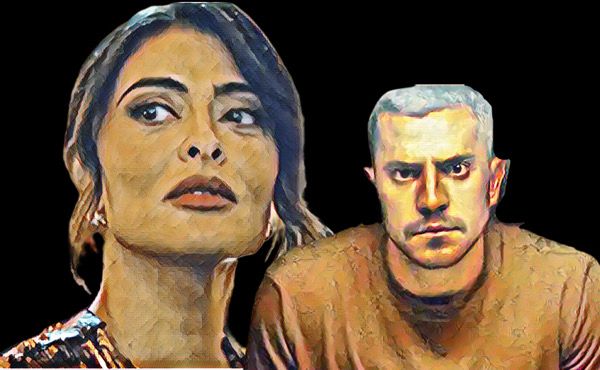
Of course, the show is not without flaws. Some critics point to its uneven pacing and to the eternal dilemma of crime narratives: the risk of glamorizing what they aim to condemn. At times, the aesthetic polish threatens to soften the brutality of the world it depicts. Yet this paradox is part of the genre — even in its most celebrated international iterations.
Ultimately, Os Donos do Jogo achieves a rare balance. It is popular without being shallow, stylish without being hollow, and unmistakably Brazilian without apologizing for it. And most importantly, it lays the groundwork for a second chapter that can take even bolder narrative leaps now that the series has proven its strength both inside and outside the country. Netflix’s confirmation of a second season isn’t just a marker of success; it’s a recognition that this story — with all its contradictions — has the momentum to keep raising the stakes.
Descubra mais sobre
Assine para receber nossas notícias mais recentes por e-mail.
 miscelana.com