
Every time Madama Butterfly returns to the stage, we are reminded that certain stories remain alive not only through music but through the emotional and cultural force they carry. The tragedy of Cio-Cio-San has crossed more than a century as an uncomfortable mirror between an idealized East and an imperialist West. Born from cultural clashes, rejected at its premiere, and later transformed into one of the most frequently staged operas in the world, it remains necessary precisely because it exposes wounds that still resonate. Now, after eleven years away, it returns to the Theatro Municipal do Rio de Janeiro with all the strength of a classic that has never stopped speaking to us.
Inspiration: the genealogy of a modern tragedy
The origins of the opera are fascinating in themselves. Before Puccini, Madame Butterfly existed as a short story published in 1898 by American writer John Luther Long, inspired both by Pierre Loti’s novel Madame Chrysanthème (1887) and by his sister’s accounts of her time living in Japan. In 1900, the story moved to the stage under David Belasco, whose one-act play impressed Puccini so deeply in London that he decided to turn it into an opera.
The tale seduced Puccini for being both intimate and expansive: a devoted young woman, a foreign man, promises that were never equal for both, and a collision of cultures permeated by desire, idealization, and vulnerability. It was a perfect match for Puccini’s cinematic, emotionally charged style.
The story: love, illusion, and imperialism
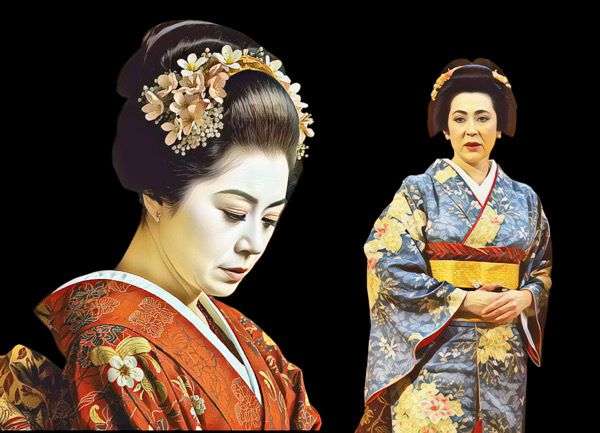
Set in early 20th-century Nagasaki, the opera follows Cio-Cio-San, a 15-year-old Japanese girl who abandons her culture to marry American naval officer Pinkerton. He sees the marriage as a temporary arrangement; she sees it as destiny. In that emotional abyss, Puccini builds his tragedy: when Pinkerton leaves, Butterfly remains in Japan, waiting for years. She raises their child alone, without his knowledge. And when Pinkerton finally returns — now accompanied by his American wife and determined to take the boy — the result is one of the most devastating scenes in the operatic repertoire. Butterfly takes her own life, preserving her honor after everything else has been stripped from her.
Musically, Madama Butterfly is as devastating as its storyline. “Un bel dì, vedremo” remains one of the most heartbreaking arias ever written — not simply because it expresses hope, but because it expresses blind hope, and we already know where it leads.
Behind the scenes: failure, revision, and consecration
The 1904 premiere at Teatro alla Scala was a historic disaster. The audience booed, the second act felt excessively long, and the xenophobic atmosphere of the time contributed to the fiasco. Humiliated but determined, Puccini rewrote the opera, adjusted its pacing, and deepened its emotional textures. Three months later, in Brescia, he presented the revised version. That was the moment the opera we know today was born.
From then on, Madama Butterfly became a phenomenon. It crossed oceans, conquered audiences, and became a symbol of the intimate, cinematic melodrama that only Puccini could craft.
Butterfly in cinema, on stage, and in cultural memory
The opera’s success inspired multiple adaptations — from direct cinematic versions (Madame Butterfly, 1954) to critical reinterpretations like M. Butterfly by David Henry Hwang, later adapted by David Cronenberg and starring Jeremy Irons. The most popular transformation, however, was the Broadway musical Miss Saigon, which transported the plot to Vietnam and became one of the biggest theatrical hits of the 1990s.
It remains a story that continues to fuel contemporary discussions about orientalism, female representation, and colonial power dynamics.
The great interpreters and the making of a myth
Few roles in the operatic canon are as demanding as Cio-Cio-San. It requires more than vocal mastery — it demands vulnerability, resilience, and an uninterrupted dramatic presence. Among the legendary sopranos who shaped the role, several left historic marks: Tamaki Miura, the first major international Butterfly in the 1910s; Renata Scotto, likely the most celebrated of the 20th century; and Renata Tebaldi, often considered the most perfect of all.
But there is no definitive Butterfly. Each soprano brings her own emotional truth to the role — and that is precisely why it remains one of the most coveted in opera.
Staging Madama Butterfly at the Theatro Municipal do Rio
Brazil has always embraced Puccini, and Madama Butterfly has held a long, cherished place in the country’s operatic repertoire. At the Theatro Municipal do Rio, the opera premiered in 1912 and, according to 2014 records, had been performed 133 times — making it the third most staged opera in the theater’s history.
Now, it returns with the weight of a long absence and the promise of an exceptional reunion. Starting November 21, Madama Butterfly takes the stage in a production set in the 1950s, with scenic design by Renato Theobaldo, costumes by Marcelo Marques, and lighting by Ángel Ancona. The stage direction is by Colombian director Pedro Salazar — a major name in Latin American opera — and the musical direction is by Italian conductor Alessandro Sangiorgi, whose international career includes performances in Israel, Japan, Bulgaria, Serbia, Russia, the Czech Republic, and multiple Brazilian orchestras.
The cast features powerful voices such as Eiko Senda and Daniela Tabernig in the title role. The Theatro Municipal Orchestra and Chorus complete a production that bridges tradition and renewed interpretation.
Why Madama Butterfly remains relevant
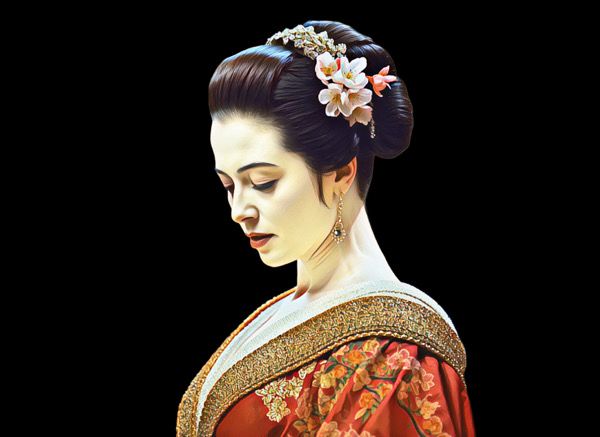
Each new production of the opera becomes a mirror of its own time. Some emphasize the imperialist tensions in the story; others confront the orientalism embedded in the work; many strive to restore Butterfly’s dignity without reducing her to a stereotype.
What remains constant is the emotional force. Madama Butterfly speaks of naïve faith, unequal love, broken promises, and the structures of power that shape human destinies. That is why, when the lights dim and the first notes emerge, no matter how many times we’ve seen the story, it hits us as if it were the first time.
Descubra mais sobre
Assine para receber nossas notícias mais recentes por e-mail.
 miscelana.com