
As Published in Bravo Magazine!
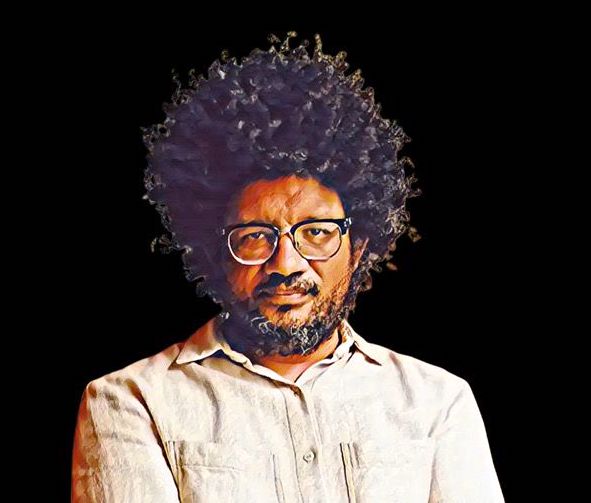
Some artists follow a straight line to prominence. And others arrive at the center of the industry carrying worlds within them — memories, chants, stories, and forms of knowledge that existed long before any camera or writers’ room. Igor Verde belongs to the latter. Before enrolling at PUC, before working at Globo, before debuting a series at the Berlinale, he learned how to listen and how to narrate inside a terreiro in Rio’s Complexo do Alemão. It was there that he understood storytelling as an act of alignment: between an individual and their destiny, between body and world, between the present and its ancestors.
Today, after working with Globo, Netflix, Prime Video, Disney, and MAX, with a Jabuti nomination and a series that cuts through debates on identity, necropolitics, and belonging, Igor occupies a rare position: a creator able to move through every major platform without abandoning the fundamental question that drives his work. Who are we — as individuals, as a nation, as a collective? And what do we do with the narratives we inherit?
In this conversation, Igor revisits his path — from the terreiro to the mainstream — and speaks about art, politics, affection, industry, responsibility, ancestry, and the Brazil we insist on imagining. More than answers, he offers ways of seeing.

Bravo! — You’ve said you learned to listen to stories in the terreiro long before cinema. What of the oriki — this tradition of memory and identity — still guides your choices as a director today?
Igor Verde: Oriki is a polysemic word, diverse in its functions within the language. In some ways, it describes Yoruba literature; in others, it refers to the verses and stories connected to ancestors and the Orixás. But above all, it’s a way of soothing a person’s Ori — helping that head remember its pact with Opiori, this greater essence. I think that’s what guides my choices the most: telling stories that reconnect the Ori with the Odú, the head with its destiny, aligning the human with the world. How do you do that in a capitalist environment? That has been my greatest challenge.
Bravo! — “Reencarne” begins with an essential question: Who am I? At what moment did you realize the series needed to exist now, in Brazil in 2025?
Igor Verde: I actually hoped the series would exist earlier, but various circumstances brought us to 2025. This is Brazil’s essential question: who are we? Identity is always surface — construction, not something given. Understanding this deep self — this Jungian Self — is crucial for understanding our identities and respecting diversity. Only through that respect can we build a national identity capable of embracing this country’s immense plurality. And we urgently need to shape that face.
Bravo! — Your trajectory spans Globo, Netflix, Prime Video, Disney, and HBO MAX. How did each platform shape you — and what did each allow you to tell?
Igor Verde: Globo taught me the dimension of Brazil. It’s still the screen where the country sees itself, and where we must fight to remain relevant. There I can tell the national drama or innovate deeply within Brazilian cultural codes. Netflix taught me the streaming method and the use — and abuse — of data. Working with data means reading your audience, but it can also be a way of deceiving yourself. Many times, you must disobey to surprise. Disney was a process full of conflict. The decision chain is foreign, and ensuring that Black bodies didn’t become products was essential. But it’s a screen that reaches an audience we rarely reach: young men, sports fans — a Brazil that is seldom heard. HBO MAX has in its DNA the pursuit of the “art series,” with greater creative freedom. But there is always the risk of forgetting that an artist serves the audience, not their own ego. This question made me realize I’d love to see Apple producing in Brazil one day. They balance audience and craft beautifully, and their focus on sci-fi speaks to me deeply. Who knows.
Bravo! — You come from a territory shaped by resistance and the absence of the State. How do you deal with the responsibility — and the weight — of representing that experience?
Igor Verde: Responsibility is the ability to respond to the situation. I try to stay attentive: to the world, to where I come from, to my ancestors. I don’t see it as a burden. I like where I was born — it shaped me. The market doesn’t want narratives; it wants spreadsheets. That’s part of it. Telling stories within an industry that demands massive capital requires negotiation. My role is to negotiate, understand, and create solutions that allow relevant stories and broaden access. My grandparents were enslaved in the 1940s in Minas Gerais. Their work and their blood are what brought me here, answering questions and being heard. It’s not a weight. It’s a historical process I’m proudly part of.
Bravo! — After more than a decade in the industry, you founded the Cata História collective. What is the importance of these networks of affection and creative autonomy?
Igor Verde: Creation blossoms with affection. Creating under oppression, harassment, or control is impossible. These networks are crucial for creating, sharing, and telling stories. Storytelling is an act of collective affection.
Bravo! — You directed the 9pm telenovela “Mania de Você” while launching a series about deep identity. What did these experiences teach you about audience and narrative?
Igor Verde: First, the audience is diverse and unpredictable. No one knows exactly what the audience wants. Narrating is always inviting people to dance in the dark. You invite them — whether they come, stay, enjoy… that is beyond our control. What many find anxiety-inducing, I find fun.
Bravo! — Representation is still treated as an end in itself. For you, who sees belonging as a political tool, what is the next step?
Igor Verde: The next step is transforming subjectivity. It’s not just being represented — it’s being heard, seen, having the power to transform. It’s thinking about structural change: that a minimum-wage worker can feed their family; that people have land to plant; that massacres are no longer romanticized. Representation as a totem has failed. What the silenced majorities deserve is real power: deciding where the country’s money goes, choosing policies of prosperity. It’s a long road — and I may not see it realized — but it must be built.
Bravo! — “Reencarne” critiques necropolitics. How do you carry that responsibility — especially coming from where you come from?
Igor Verde: Necropolitics is one of the most nefarious forces of our time. Mbembe names a terrible trap: elites choosing who lives and who dies. We can accept this cynically or confront it head-on. And this moves me deeply. My mother passed away weeks ago, after witnessing a massacre at her doorstep in the Alemão. Necropolitics knocks on our doors, fuels fear — and it’s that fear that allows exploitation. I also tell stories to build in myself — and in the workers of this country — the strength to overcome these fears and create an environment where the desire to live is stronger than the desire to kill or die.
Bravo! — Your work grows even without social media. How do you navigate this countercurrent in a market obsessed with public performance?
Igor Verde: By making time to write, read, observe, and live. We are obsessed with expressing ourselves, but we need to relearn how to be impressed. In the end, there is no prize, no credit, no work that matters more than life. All that exists is the exchange of affection and beauty between human beings. That is enough.
Bravo! — Looking back — from the terreiro to the Berlinale — what is the question that still moves you?
Igor Verde: Who is this that creates in me, and whom I see in you?
Descubra mais sobre
Assine para receber nossas notícias mais recentes por e-mail.
 miscelana.com