
Seventy years after its premiere, Rebel Without a Cause (1955) remains one of those films that did not simply endure time — it defied it. Nicholas Ray’s production, starring James Dean, Natalie Wood, and Sal Mineo, did far more than portray a generation in disarray: it crystallized the very notion of the teenager as an emotional, cultural, and social identity. Perhaps that is why, when we revisit the film seven decades later, the experience feels almost intimate — as if the narrative had anticipated the crises that still mark contemporary youth.
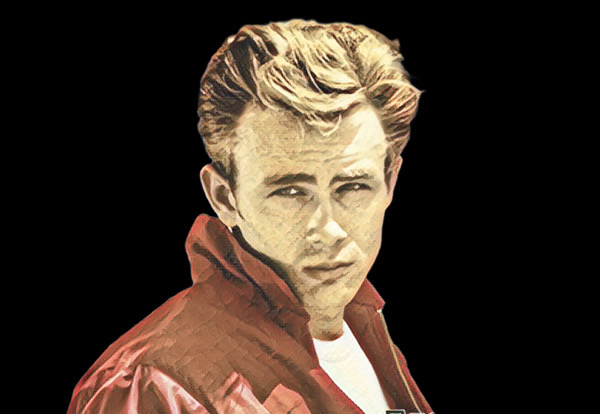
What is striking is that Rebel Without a Cause nearly remained a B-movie. Initially meant to be shot in black and white and budgeted modestly, it only gained a different dimension when Jack Warner recognized the magnitude of James Dean’s charisma and ordered a reshoot in CinemaScope, with saturated colors that transformed the psychological drama into a visual manifesto. The result is a film that appears larger than its original intentions and deeper than its script could have predicted.
The youth in crisis
At its core, the film reveals emotional abandonment within immaculate suburban homes. Jim Stark, Judy, and Plato are shaped not by the violence of the streets but by the violence of silence inside their own families. Ray inverts the logic of the juvenile-delinquency films of the period: here, the anguish is internal, domestic, and almost invisible. It is the adolescent who does not know where to stand in a world that expects maturity but offers no guidance.
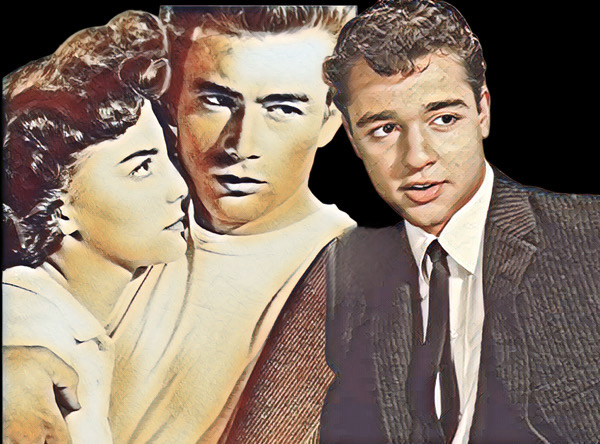
Ray’s extensive research — weeks spent interviewing police officers, welfare agencies, judges, counselors — created a psychological realism that was uncomfortable for 1950s sensibilities. The youth he intended to portray were not “deviants,” but ordinary American teenagers suffocated by emotional expectations they could not meet. The discomfort was so great that the film faced censorship in the United Kingdom, Spain, New Zealand, and other territories, as they were concerned that its narrative could “encourage rebellion.”
James Dean and the birth of a myth
It is impossible to separate the film from James Dean — and almost impossible to separate Dean from the tragedy that immortalized him. The film was released less than a month after his fatal car accident, and his performance, still pulsating with vulnerability and intensity, became inseparable from the legend he would become.
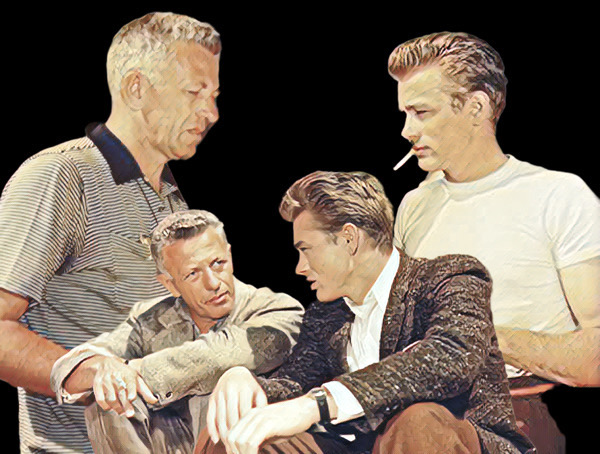
Dean’s Jim Stark is not a rebel in the conventional sense. He is a young man who wants desperately to belong, to communicate, to be heard, and to exist without fear of disappointing. His gestures, silences, half-words, and the way he carries tension in his body — all of this reshaped the American masculine archetype and influenced generations of actors, photographers, designers, and artists. His rebellion is not loud: it is wounded, melancholic, and painfully modern.
Aesthetic and fashion legacy
The red jacket, the white T-shirt, the jeans, the cigarette held with uncertain defiance — these elements, which could have been just wardrobe decisions, became symbols of an entire youth culture.
It is staggering how much the film shaped fashion and iconography. Elvis Presley absorbed the silhouette; fashion magazines reproduced the posture; cinema borrowed its grammar. Natalie Wood’s trembling tenderness and Sal Mineo’s sensitive loneliness also redefined how young femininity and masculinity could be portrayed on screen, allowing glimpses of emotional complexity that were rare for the decade.

A plot that became a cultural myth
The film’s narrative — the police station, the school, the planetarium, the abandoned mansion, the “chicken run,” the confrontation that ends in tragedy — could have been a simple sequence of dramatic events. Instead, they became mythic landmarks in global cinema.
The planetarium scene, in particular, stands as one of the most striking metaphors of the postwar era: faced with the collapse of the universe projected above them, these young people recognize the collapse within themselves.
Plato’s death, still devastating even after so many years, resonates with a disturbing contemporaneity. The police shooting of a frightened teenager, armed with an unloaded gun, is a jarring reminder of how society reacts to the fears it creates.
Influence on cinema: from Nicholas Ray to John Hughes
If Rebel Without a Cause invented the emotional landscape of the modern teenager, John Hughes translated it into another generation.
The DNA of Jim, Judy, and Plato is clearly present in The Breakfast Club, Pretty in Pink, Sixteen Candles, and Ferris Bueller’s Day Off. Hughes shifted cliffs to high-school corridors, knives to locker-room anxieties. Still, the emotional essence remained: the adolescent who feels everything too intensely and has nowhere to place those feelings.

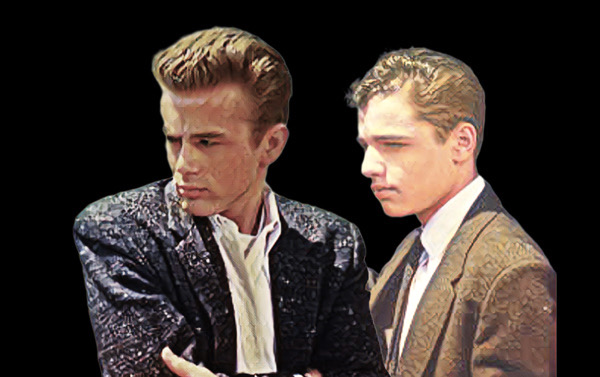
Francis Ford Coppola drew directly from the film in The Outsiders. Martin Scorsese frequently cites it as crucial to his early cinephilia. George Lucas made an explicit homage in American Graffiti.
Richard Linklater and Greta Gerwig continue to explore their gentler echoes in Boyhood, Dazed and Confused, and Lady Bird.
And the film continues to appear, explicitly or subtly, in La La Land, The Room, The Sopranos, The O.C., music videos, fashion editorials, theater productions, and countless reinterpretations.
Critical reception and historical status
Upon its release, critical opinion was divided. Some found the film melodramatic or excessive. Others believed Dean imitated Marlon Brando too closely. But audiences were captivated, and over time the film was elevated to canonical status.
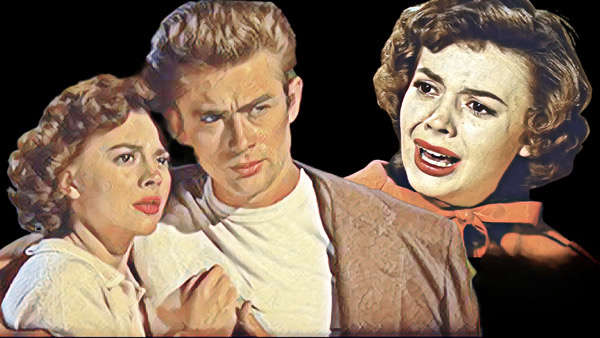
In 1990, it was inducted into the National Film Registry for being “culturally, historically, and aesthetically significant.” Its reputation only expanded, and today it remains one of the most discussed and studied films of the 20th century.
Seventy years later
To revisit Rebel Without a Cause today is to return to the origin of how we narrate adolescence.
Identity crises, emotional abandonment, the hunger for belonging, the performance of masculinity, the vulnerability hidden beneath rebellion — all these elements remain as relevant now as they were in 1955.
The imagery endures. The emotional architecture endures. The youth it portrays endures.

Seven decades later, Rebel Without a Cause stands not only as a classic but as the foundational text of cinematic adolescence: the moment when the young stopped being background characters and began to reveal the crises, desires, and contradictions that still define them.
Descubra mais sobre
Assine para receber nossas notícias mais recentes por e-mail.
 miscelana.com