
We’re just a little over eight weeks away from our official return to Westeros, with the premiere of A Knight of the Seven Kingdoms on January 18, 2026. For anyone who’s been fasting for 68 weeks (the last season of House of the Dragon aired in August 2024), that wait feels like nothing. And better yet, it comes wrapped in several very good pieces of news.

Fans of the Game of Thrones universe know that when the mantra of one of the saga’s great houses repeats ad nauseam that “winter is coming,” slipping into hibernation mode is part of the process. And just when everything seemed dormant, the wars in Westeros remind us that this is still one of the most vibrant, profitable, and expansive properties in contemporary pop culture. This week firmly proved the point.
On one side, HBO Max has formalized what it had already been signaling: a planned alternation between House of the Dragon and A Knight of the Seven Kingdoms over the next three years. HOTD is renewed through 2028, and A Knight has already secured a second season before even premiering. It’s a long-term strategy, executed with the calm of a company that understands the power of a well-designed calendar.
In January 2026, Dunk and Egg will open a more intimate window into George R.R. Martin’s world; a few months later, at the start of the Northern Hemisphere summer — June — HOTD’s third season will reignite the Targaryens with some of their most ambitious battles yet.

A Knight of the Seven Kingdoms, in turn, arrives with its own rhythm: short seasons, half-hour episodes, a more human scale that aligns with a different shade of medieval fantasy. It’s the fable next to the epic. And precisely because of that, HBO can move faster with it, filling the gaps between more robust seasons like HOTD.
But while the network fine-tunes the present, Martin — who always operates on Westeros’ deep timeline — shifted the tectonic plates of the future.
During the Iceland Noir festival in Reykjavik, the author confirmed, in a conversation with attendees, that there are indeed Game of Thrones sequels in development. Not just new prequels — which we already know about, spread across live-action and animation — but projects that take place after the events of the original series. It’s the first time in a long while that someone within the creative core has stated this so explicitly.
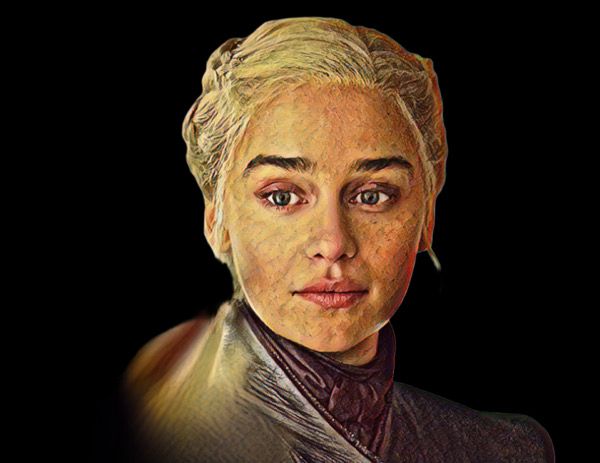

Martin was clear: there are “five or six” series in development, most of them prequels — but yes, there is a sequel. It isn’t approved yet, but it is being written. And for Westeros, that’s practically an earthquake. Could it be Snow, once shelved? Or something entirely new?
If HBO has always handled post-Game of Thrones territory with extreme caution — perhaps wary of reopening the controversies around the series finale — Martin’s comment opens the door to the most likely scenario, long whispered by fans and insiders alike: a story centered on Arya Stark. Her journey west of Westeros is the perfect gateway to expand the map without reopening narrative wounds. It’s adventure, discovery, freedom — everything Arya has always embodied.
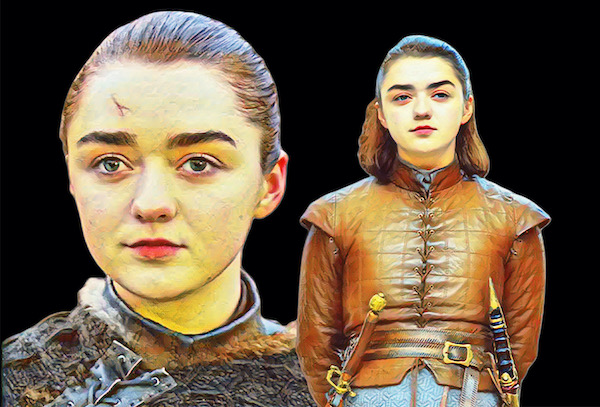
Together, the two pieces of news create a clear panorama: Westeros is no longer a franchise in “controlled maintenance” mode; it’s back to operating in full expansion. HBO Max secures stability through 2028; Martin confirms the map stretches even farther ahead. Between the fiery past of the Targaryens, the tenderness of Dunk and Egg, and the possibility of a future carried by Arya, the universe rearranges itself.
And for the first time in years, it finally seems to be looking forward.
Descubra mais sobre
Assine para receber nossas notícias mais recentes por e-mail.
 miscelana.com