
It’s nothing new: critics often confuse the weight of their words with the destiny of works, artists, or cultural phenomena. Sometimes they align, of course, but long before we blamed algorithms — the perfect contemporary villains — numbers already dictated what we watch, how much we watch, and where we watch it.
In the case of All’s Fair, Kim Kardashian’s haters were genuinely euphoric, convinced that the avalanche of negative comments would bury the series as an embarrassing mistake. There was always that lingering question: did the show actually want to be campy and absurd, or did it simply miss the mark?
But the irony is delicious: all that energy spent attacking the series only inflated it further. All’s Fair became one of those involuntary hits everyone pretends they didn’t watch — but absolutely watched. And now it’s official: today came the confirmation. A second season is happening.
And it wasn’t a “renewed just because.” It was the numbers that made the decision.
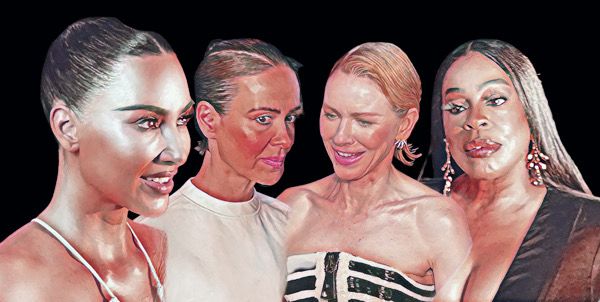
The data is unforgiving — and it’s entirely in All’s Fair’s favor
Despite being one of the worst-rated TV shows of all time (3% on Rotten Tomatoes, practically performance art), All’s Fair was renewed by Hulu after a record-breaking debut: 3.2 million global views in its first three days, making it the biggest scripted Hulu Original premiere in the last three years.
It also ranked among the Top 15 most-watched series in the U.S. during its debut week, according to Luminate, with 2.61 million hours viewed between October 31 and November 6. The following week, with Episode 4, it jumped to 3.85 million hours and 1.33 million views — the fourth most-watched show in the country, behind All Her Fault, Death by Lightning, and Pluribus.
Even in week three, the show still pulled 636,000 views and remained in the Top 15.
If that’s not a sign of a phenomenon, I don’t know what is.
This is without counting the power of its star-studded female cast (Kim Kardashian, Sarah Paulson, Glenn Close, Naomi Watts, Niecy Nash, Teyana Taylor, plus a parade of high-profile guest stars), the organic buzz driven by “hate-watching,” and the fact that Ryan Murphy is a seasoned expert at turning excess into a narrative method.
Murphy himself has said that All’s Fair was born from a dinner arranged by Dana Walden to introduce him to Kris Jenner and Kim Kardashian. The original idea? A reality pitch, which Kris and Kim did not like. From that meeting came her role in American Horror Story, and then the creation of this series.
And the rest is history — or at least, renewal.

About the “hate-watching”: I can’t even say I’m in that category
Given the amount of television garbage I watch out of professional obligation (or pure masochism), it would be unfair to dump All’s Fair in that pile. I don’t see in the series any ambition to reinvent drama, change the world, elevate the genre, or even irritate the audience. All’s Fair knows exactly what it is: an absurd, self-aware vehicle that loves its own source material and has zero shame about being superficial, campy, exaggerated, and delightfully incoherent.
And I like that.
I like it because, amid so many productions weighed down by intellectual, artistic, or sociological pretension, something is refreshing — almost honest — about a show that embraces melodrama without apology. It doesn’t promise depth. It delivers entertainment, chaos, questionable wardrobes, and Sarah Paulson chewing through every set piece with the kind of gleeful brilliance that only gets better each episode.
If that’s a television crime, go ahead and throw the first stone.
But the renewal brings a problem: All’s Fair’s universe is terrible at closing its own doors
And here lies the final irony.
Because it’s been renewed, All’s Fair likely won’t bother to resolve many of its own “important” internal mysteries — simply because it doesn’t have to. The show exists in a narrative space where coherence is optional, where characters vanish, reappear, and contradict themselves as easily as they swap wigs, and where fundamental questions (“What does Chase actually want?”, “What happens to Milan?”, “Who killed Lloyd Walton?”) might remain suspended forever, almost as part of the aesthetic.
And maybe they are.
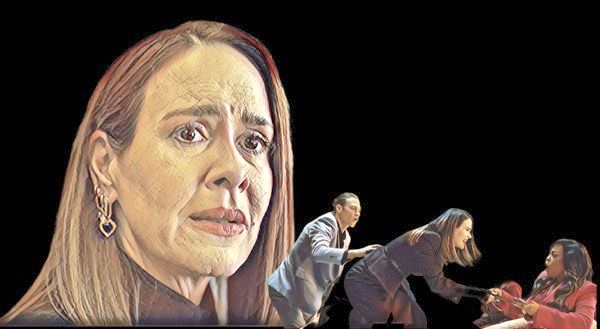
Season 2, set to begin production in Spring 2026, is born from this boiling mix of chaos, controversy, viewership, and collective guilty pleasure. Critics can keep hating it. Fans can keep pretending they’re not watching. And me? I’ll keep watching, because it’s rare to find a show so honest in its superficiality — and so accidentally fascinating.
In the end, All’s Fair won.
Not through quality, not through critical acclaim, but through that irresistible phenomenon that happens when mockery meets curiosity — and the numbers do the rest.
Descubra mais sobre
Assine para receber nossas notícias mais recentes por e-mail.
 miscelana.com