
Back in 2022, I wrote, only being honest: “Kate Bush is a genius.” And I meant it literally. I’d been living with her music long before algorithms, virality, and TikTok. “I’ve been an obsessed fan since I was little. ‘Running Up That Hill’ was my most played song on Spotify in 2019 — and, honestly, year after year.”
Then Stranger Things happened. And suddenly the world caught up.
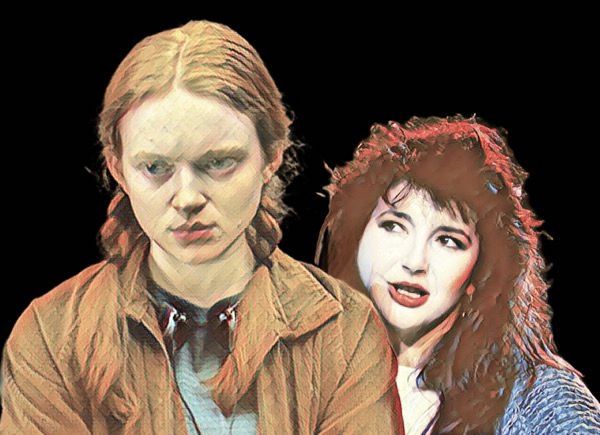
In 2022, Running Up That Hill didn’t just climb the charts again; it became emotional language. It entered the series’ soundtrack — already packed with expertly placed ’80s hits — at the moment when the beloved character Max Mayfield (Sadie Sink) was trying to cope not only with the pain the Upside Down had inflicted on her friends, but with the fact that Vecna had literally taken over her brother Billy’s body and killed him.
When the school year resumed, the song became a soundtrack to trauma, guilt, and grief. Above all, it helped Max’s desperate will to stay alive. It saved her on screen, embodying grief and the terror of growing up under supernatural and very human pressure. Streams exploded; the song passed one billion plays in 2023 and dominated charts and TikTok in a way nobody could have planned.
Now, in 2025, with the fifth and final season, something even rarer has happened: the song is having a second global peak. It has just passed 1.5 billion streams on Spotify, re-entered the global charts, and climbed up iTunes again, pulled directly by Hawkins’ farewell.
But this is not the first time Running Up That Hill has been “rescued” by another generation.
Before Hawkins: Placebo and the first 2000s “rescue”
Long before Vecna, there was Brian Molko.

In 2003, Placebo released their cover of Running Up That Hill on the album Covers, slower, darker, with guitars replacing the original’s synths, a minimalist and brooding arrangement, and Molko’s fragile falsetto stretching the melody almost to breaking point. For many listeners, that became the defining cover of the song in the 2000s; critics have even called it a “glistening ‘00s update” with a heartbeat-like bass line and a vocal that feels like someone on life support, bargaining with unseen forces.
Crucially, that version travelled through TV first. Placebo’s Running Up That Hill appeared in The O.C., The Vampire Diaries, Bones, CSI: Crime Scene Investigation, NCIS: Los Angeles, and other series, usually at big emotional peaks — break-ups, reveals, finales, those montage sequences drenched in longing. For a whole mid-2000s teen generation, Running Up That Hill was, first and foremost, “the Placebo song”.
Molko has spoken about how the band chose it because it was one of his great musical obsessions: they were already in the habit of covering ’80s favourites, he suggested Running Up That Hill, and they decided to slow the tempo as much as they could while keeping it electronic and very 2000s in texture. In the same interview, he recalls the key moment: meeting Kate Bush at a label event and hearing her say, “I like your cover of my song.” For him, that endorsement was more than enough.
So yes, before Stranger Things, there was already a kind of modern “rescue” of Running Up That Hill. Placebo helped keep the song alive in pop culture and quietly handed it over to a younger audience through TV drama.

What Stranger Things changes: from mood cue to narrative device
What Stranger Things does, however, is fundamentally different.
In the shows that used the Placebo version, the song is mostly a mood cue: a perfect track to underline heartbreak, loss, or a twist. It’s powerful, but it operates as emotional commentary layered on top of the story.
With Stranger Things, Running Up That Hill becomes part of the story’s internal machinery.
By choosing Kate Bush’s original version and tying it directly to Max’s inner world, the Duffer Brothers elevate the song from soundtrack to narrative device. It’s not just any ’80s track on a playlist: it’s Max’s favourite song, the one piece of sound that can still reach her when everything else is collapsing. That’s why, within the logic of the show, it becomes a literal lifeline.
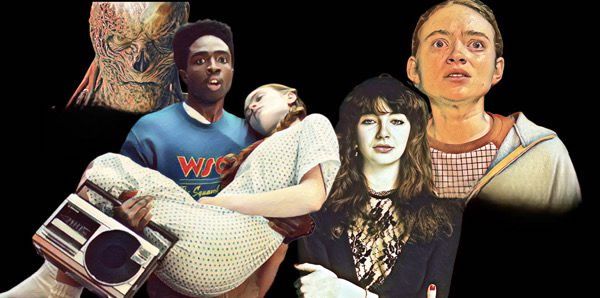
In season four, it’s the song that saves her from Vecna. In season five, as the final chapters unfold, it returns as the musical thread that might still pull her out of the coma, echoing that original sequence, but now loaded with memory and grief.
That’s the key distinction: Placebo’s cover helped keep the song in circulation, giving Running Up That Hill a 2000s alt-rock afterlife and installing it in TV culture long before Netflix, but Stranger Things takes it to another level by making the song a structural element of the plot — a symbol of survival, a character’s favourite track, and a repeated act of salvation.
From a 2022 fan confession to a 2025 legacy
In 2022, my focus was mostly on Kate Bush herself: the teenager who released The Kick Inside, the experimental artist who built her own studio for Hounds of Love, the woman who fought for creative control when it wasn’t fashionable or easy.
I also underlined the spiritual and emotional core of A Deal with God: a prayer about swapping places, dissolving gendered misunderstandings by literally inhabiting the other’s pain.
Today, that same story looks different because the arc is bigger.


Kate Bush is no longer just a cult genius, finally appreciated by streaming. She’s an artist whose work now forms a bridge across at least two distinct generations of TV storytelling:
- the 2000s, with Placebo’s haunted cover pulsing through teen dramas;
- the 2020s, with Stranger Things turning the original into a narrative heartbeat.
Back then, I wrote like a fan. Now, I write as someone watching a full cultural cycle close and open again.
Descubra mais sobre
Assine para receber nossas notícias mais recentes por e-mail.
 miscelana.com
1 comentário Adicione o seu