
Here at Miscelana, talking about House of the Dragon and Game of Thrones is more than common practice — it’s practically a religion. And after a painfully long wait — in truth, a delay of over a year — we are now less than twelve months away from returning to the heart of the Targaryen civil war. Not to mention that, as early as January, we head back to Westeros with A Knight of the Seven Kingdoms. It was about time.
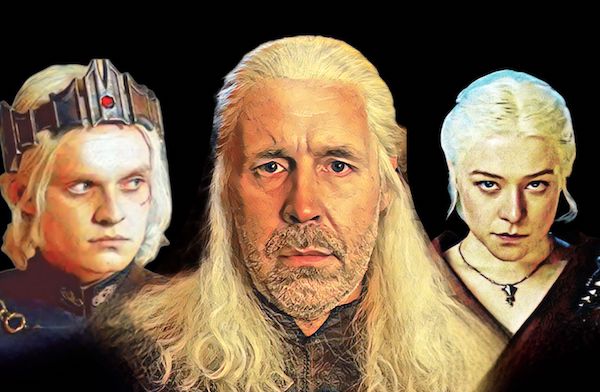
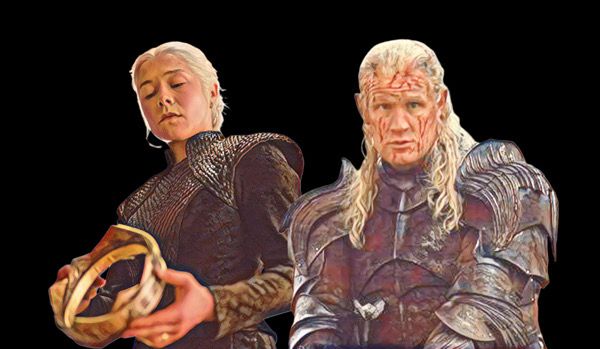
With the third season set to premiere in June 2026, the first official images have finally been released — and they speak volumes. In the first one, Rhaenyra Targaryen is seen contemplating the crown of Jaehaerys I on Dragonstone, dressed not as a queen holding court, but as a commander prepared for war. The costume is functional, austere, and almost militaristic. It recalls Daenerys’ final-season look in Game of Thrones, as attentive fans were quick to notice. Chronologically, Rhaenyra predates Daenerys, but the shadow of the Mother of Dragons is larger and legendary. Either way, the message is unmistakable: the symbolic phase is over. The war is now real.
In the second image, Daemon Targaryen appears in the Riverlands, leading an army, drenched in blood, flanked by Oscar Tully and the banners of houses now fully drawn into the conflict. This is not a heroic pose. It is the precise portrait of what the Dance of the Dragons becomes at this stage of the story: mud, exhaustion, and carnage.

These images already signal the series’ definitive shift into the bloodiest stretch of the Civil War. The expectation is that the season will adapt key battles such as Red Fork, the Fishfeed — the deadliest land battle of the entire conflict — and the Butcher’s Ball, taking the action out of council chambers and closed rooms at last. The war moves from calculation to slaughter.
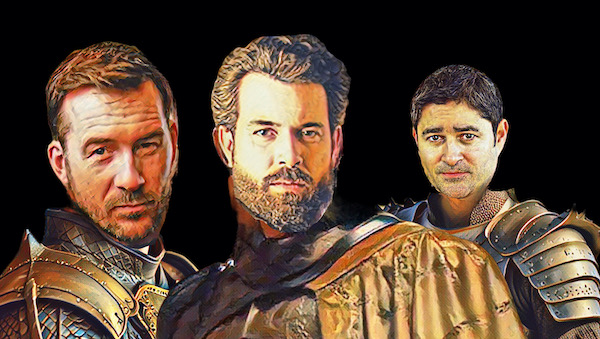
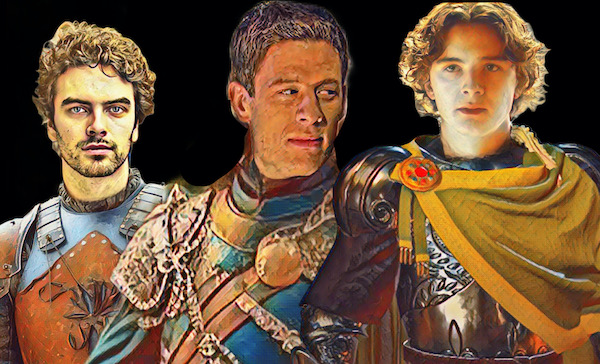
We will meet many new faces and characters who will lead battles, endure betrayals, and confront mortal danger. At this point in the story, we will also face significant losses on both sides. Among the Blacks, the opening episode is expected to hit hard with the death of Rhaenyra’s firstborn, her heir and dearest counselor, Prince Jacaerys. We will also ultimately say farewell to the reviled Ser Criston Cole and Ser Otto Hightower — the latter after uncovering who keeps him imprisoned in some cell, a storyline invented by the series and absent from George R. R. Martin’s Fire & Blood.

Speaking of changes, the promotional campaign makes it clear that Rhaenyra herself also shifts course. The queen now appears actively wielding a sword, not merely as a symbolic accessory. This was a request from actress Emma D’Arcy, and I openly side with those who disliked the choice — not because it is irrelevant to see a woman in battle (history offers many), but because in Fire & Blood, Rhaenyra never fights in open combat. She is a political and strategic figure, not a warrior. The series, however, embraces this deviation as a narrative choice. The sword ceases to be an allegory and becomes a dramatic gesture. This is not merely aesthetic — it reshapes the character.
The teaser shown exclusively to the Brazilian press reinforces this shift in focus. According to the description that circulated after the HBO event, the video centers on a fully divided Westeros: part of the realm backs Aemond, while the other stands with Rhaenyra. We glimpse Aegon severely scarred after the events of Rook’s Rest, Alicent beside Aemond, and flashes of Otto Hightower, Criston Cole, and once again Daemon preparing for a major battle. The conflict is no longer only dynastic — it is military and ideological.

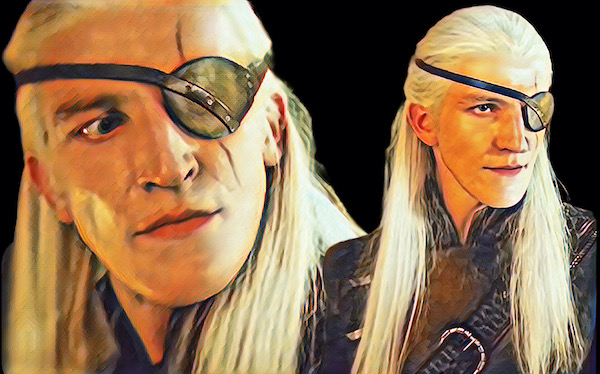
It is also striking that the series chooses to frame the core confrontation as Aemond versus Rhaenyra, rather than Aegon. In the book, Aegon spends a long stretch away from power after fleeing King’s Landing, but all signs point to the show refusing to sideline him for so long. Even so, the season’s thesis is clear: the realm will be forced to choose between the de facto regent and the legitimate queen, while Westeros bleeds on every front.
And frankly, reimagining Aemond as a near-usurper and direct antagonist to his own brother’s crown is not something the book presents with this perspective — but here the merit belongs to actors Ewan Mitchell and Tom Glynn-Carney, whose performances added decisive layers to this rivalry. The story became murkier, more tragic, and far more compelling. I loved it.

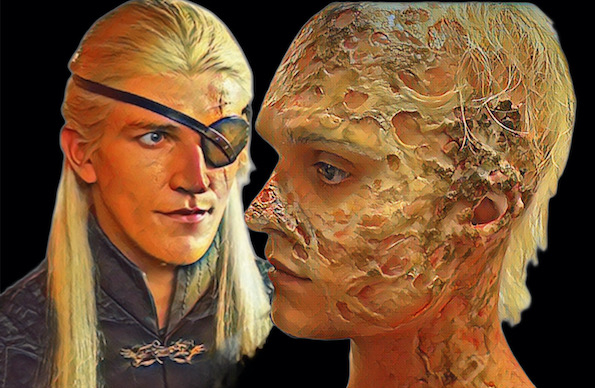
All signs point to this material finally being shown to the public at CCXP in December — less than a week from now. The timing is perfect: HBO already has a finished teaser, the season arrives in just a few months, and the Brazilian convention continues to solidify itself as a global stage for major Westeros announcements.
Amid all this, the series carries additional weight: it has already been renewed for a fourth season, giving the creators freedom to shape this third chapter as the true emotional and narrative core of the war. This is no longer a buildup. This is a collapse.
The promise, then, is blunt and unsentimental: the third season of House of the Dragon will feature less political maneuvering behind closed doors and far more devastation in the open. Less palace intrigue, more torn banners. Fewer symbols, more consequence. The Dance of the Dragons enters its cruelest stretch — and, judging by the images and the teaser, there will be no room for neutrality, nor for comforting myths.
Descubra mais sobre
Assine para receber nossas notícias mais recentes por e-mail.
 miscelana.com