
All About Eve is one of those rare cases in which the word “classic” is simply not enough. It is a perfect film. Not perfect because it is untouchable, but because it dares to be painfully human: venomous, elegant, funny, cruel, vulnerable, and immortal. In 2025, at 75 years old, it remains relevant, moving, and devastating as if it had premiered yesterday. The industry has changed. The stages have changed. The cameras have changed. Glamour itself has changed. But the emotional machinery of power, fear, and desire that drives All About Eve has not.
Written and directed by Joseph L. Mankiewicz and inspired by The Wisdom of Eve, the short story by Mary Orr, the film appears, on the surface, to be a backstage drama about the theater world. In truth, it is a masterful study of ambition, aging, insecurity, performance, and emotional survival. At its core are two women who became universal archetypes: Margo Channing, the star confronting the advance of time; and Eve Harrington, the perfect admirer who learns far too quickly how the game is played.
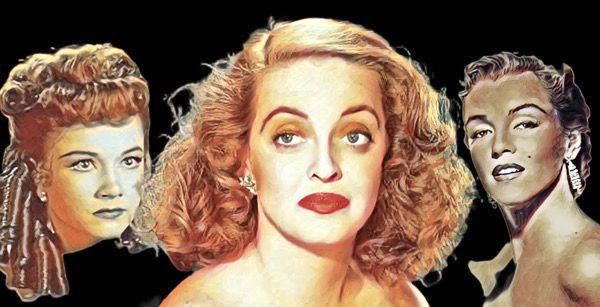
The cast is a lesson in precision. Bette Davis builds a Margo at once monumental and fragile; Anne Baxter wraps Eve in sweetness and poison in equal measure; George Sanders turns Addison DeWitt into the most cynical and mesmerizing narrator in film history; Celeste Holm, Thelma Ritter, Gary Merrill, and a young, luminous Marilyn Monroe complete a chessboard where no one is innocent — and everyone is in danger.
It is impossible to speak of the film’s perfection without speaking of the costume and of the famous party. The wardrobe designed by Edith Head is not decoration; it is pure dramaturgy. Margo dresses like someone who has built armor over the years — structured silhouettes, firm lines, commanding fabrics. Eve begins almost invisible, muted, neutral and slowly gains shape, shine, and intention. Before we realize it, she occupies space as someone who no longer intends to ask life for permission.
And then there is the birthday party — one of the most merciless sequences in cinema. It is not merely a social event; it is a public collapse, an unspoken rite of dethronement. The alcohol flows, laughter turns uneasy, glances measure and assess, waiting for the fall. It is there that the immortal line is spoken — “Fasten your seatbelts, it’s going to be a bumpy night” — a sentence that becomes not just about that evening, but about the rest of Margo’s life. The camera does not protect her. The party exposes her. Eve watches everything in silence. In All About Eve, no weakness goes unnoticed.
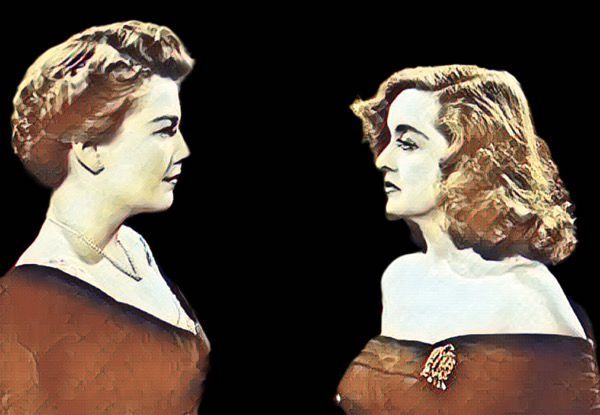
Even the behind-the-scenes history mirrors the film’s themes. Claudette Colbert was the original choice for Margo Channing, until a serious back injury during the filming of Three Came Home forced her out of the role. That is how Bette Davis stepped in — she herself was considered “box-office poison” by 1949. Offscreen, a star fell so another could rise. Anne Baxter was chosen in part because of her resemblance to Colbert, with the early idea that Eve would gradually visually mirror Margo, embodying substitution not only narratively but physically. Years later, Baxter revealed that she based Eve on a real-life understudy from her teenage years who had once threatened to “finish her off” to take her place. In All About Eve, even fiction is born from reality.
The film’s recognition was immediate. It received 14 Academy Award nominations — a record later tied but never surpassed — and won six Oscars, including Best Picture, Director, Screenplay, and Supporting Actor. In a historic moment, the Best Picture Oscar was presented by Dr. Ralph Bunche, a Nobel Peace Prize winner and the first Black person to present that category. Decades later, the film would be preserved in the U.S. National Film Registry as “culturally, historically, and aesthetically significant.” Not because of nostalgia — but because of endurance.
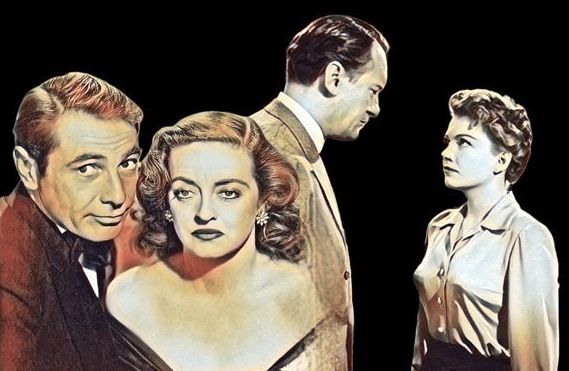
And perhaps endurance comes from the fact that, with time, the film stops being only about Eve… and becomes about us. There is a moment when the viewer ceases to identify with the hungry young admirer and begins to see themselves in the threatened star. As one critic once wrote: “Margo Channing, that’s me.” The terror of realizing that your sharpness is not what it once was. That someone younger is watching. Waiting. Ready.
The most frightening thing is that All About Eve understands this without sentimentality. No one is purely villain or purely victim. Margo is proud, wounded, brilliant, and difficult. Eve is ambitious, false, and talented. Addison is cruel, yet devastatingly honest in his cruelty. Karen is complicit through cowardice. Birdie, the only one who sees everything clearly, simply disappears from the story — and to this day, many believe Eve metaphorically (or not so metaphorically) “eliminated” her. In the backstage world, those who see too much rarely survive.
The final image, with young Phoebe draping herself in Eve’s cloak before the mirror, completes the cycle with terrifying elegance. There is not one Eve. There are infinite Eves. Someone will always be rehearsing your gestures, your poses, your prize, your place. The spectacle has no commitment to permanence — only to replacement.

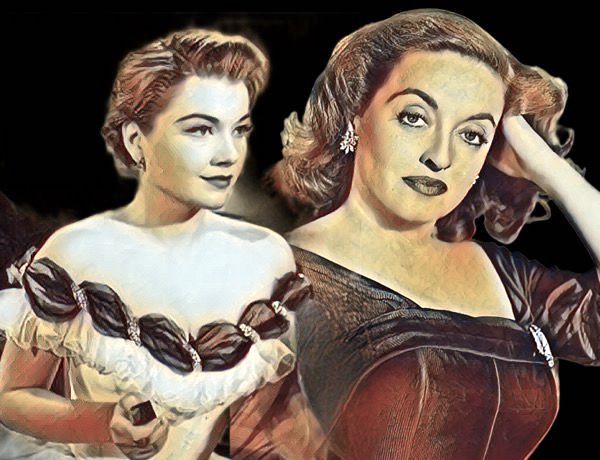
That may be why All About Eve is so deeply loved by those who age. Because it is not merely about theater. It is about time. About who we become when the light begins to waver. About the fear — or the courage — of realizing that we were once the promise. And now we are in a room already occupied.
Seventy-five years later, All About Eve still hurts, still dazzles, still embarrasses, still enlightens. It looks us straight in the eyes and asks, with its cruelest and most honest voice:
Who are you when the applause begins to fade?
And that is precisely why, generation after generation, it remains what it has always been:
An absolutely perfect film.
Descubra mais sobre
Assine para receber nossas notícias mais recentes por e-mail.
 miscelana.com
1 comentário Adicione o seu