
Look, I like to remind people that I’m not the target audience for I Love LA, so when I “dislike” something, I tend to see it as a sign of a generational gap. After all, plenty of viewers genuinely love the show. That said, I’m tired of the formula of the self-centered, neurotic heroine who keeps banging her head against life in completely unnecessary ways. I’ve seen this many times before; it’s a narrative I would dearly love to see dismantled in contemporary drama. I’m not even talking about Carrie Bradshaw in Sex and the City, I’m thinking much more of that Los Angeles-set series that was also one of my favorites while it was on the air: Insecure.


In Insecure, created by Issa Rae, Issa is in a stable relationship with Lawrence, but deeply frustrated with her own career and life, placing the “blame” on her partner, who is indeed paralyzed and stuck beside her. She has to go through countless emotional detours to finally realize that without her, Lawrence ends up finding himself, succeeding, and only then does she begin to miss him. Their happy ending is carefully constructed, but it is still 1000% a cliché. In I Love LA, Dylan’s patience with Maia carries very similar vibrations: he is grounded but modest; she is young and ambitious — so far, ambitions not exactly based on talent, but still… With those caveats out of the way, here’s this week’s recap.
I Love LA thrives on futile excess, vanity, and emptiness, but now that it has a second season and is approaching the end of its first, it begins to question what its characters actually want from life. “They Can’t All Be Jeremys” presents a succession of simultaneous existential crises in which no one seems truly capable of achieving — or sustaining — what they desire.
What becomes clear is that I Love LA is heading toward rupture. The closer these characters believe they are to success, the more they realize how vast the distance still is. And that distance is no longer merely professional. It is emotional, ethical, and affective.
Maia accelerates her own career — and Tallulah’s — while everyone else in the cast, in their own crooked way, simply tries to survive their inner chaos.

Tallulah, Alani, and the invisible hierarchy of success
Tallulah barely appears. She continues her romance with Tessa, the chef, and only reemerges during a brief attempt at a driving lesson with Alani after Maia secures for her a US$30,000 partnership with Kia. But her heart isn’t there. Not behind the wheel. Not in her own career.
The cruel detail is that Tallulah still hasn’t realized she doesn’t begin from the same starting line as Alani. Alani was born into the game. She is a nepo baby surrounded by privileges as old as they are strange, and with every new revelation about her personal life, things grow more disturbing — including the fact that her “perfectly lit” collection of nudes was shot by her father’s former director of photography.
While Maia pushes contracts and the future forward, Tallulah remains trapped in a logic of immediate desire. The imbalance between them is no longer subtle. No one simply wants to name it out loud.
Charlie: When affection doesn’t come in the form of mockery
Charlie, curiously, is the one who experiences the most transformative arc of the episode. Still caught in the orbit of Lukas, the Catholic musician introduced in the previous episode, he not only lands a styling job but also something completely unexpected: a genuine support network.
He enters a world that feels almost alien to him — that of the “accountability bros,” men who morally police themselves, protect one another, and offer emotional support without using sarcasm as a shield. At first, Charlie reacts as he always does: irony, attack, mockery. He expects to be ridiculed. He provokes rejection. But none of that comes. What comes instead is acceptance.
And this acceptance slowly begins to reconfigure the way he exists in the world. He becomes more mature, more open, less defensive. The group supports him. The group listens to him. For the first time, Charlie is no longer just a performed persona — he is someone truly seen. Then comes the final blow: Lukas dies in an ATV accident.
The narrative of self-control, discipline, and care collides violently with the randomness of life. Charlie’s transformation happens, but the emotional cost arrives in the form of grief. The lesson comes hand in hand with loss.
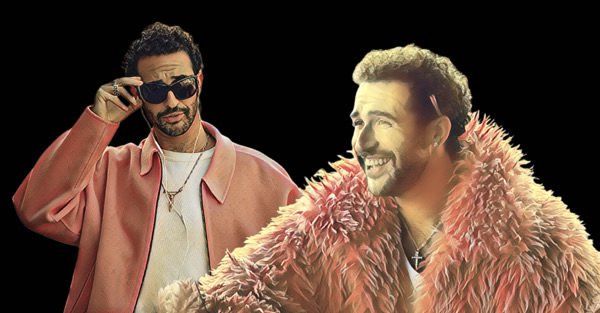
Maia, Alyssa, Jeremy — the horror behind the “perfect” life
But as I warned before, it is the irritating Maia who plants the seed of rupture. Ambitious, strategic, hungry for ascent, she decides she must cross the boundaries of professional life and invade the intimate territory of her boss, Alyssa. To do this, she recruits Dylan for dinner with the “perfect” couple: Alyssa and Jeremy.
The emptiness of social media becomes real: nothing is perfect outside of selfies and curated posts. Jeremy is unbearable and rude. He blames Maia’s perfume and her voice for his migraines and flees his own home under the pretense of physical pain. I was with him up until the next scene (I would probably flee from Maia, too). Then we see Alyssa filling the void with liters of wine, endlessly searching for validation.
The great mistake comes from Dylan, who, as always, tries to save the evening with simple, affectionate, solid gestures. That seals his fate.
When she goes to the bathroom, Maia catches Jeremy masturbating alone. If she still needed proof that she already has more than the boss she idolizes, the effect is the opposite. She still wants what she believes is real and perfect, refusing to recognize the collapse of a supposedly perfect life that is pure fabrication. She wants everything they have: status, house, belongings.
She is so blind and deaf that she fails to notice Alyssa’s envy, which plants the most poisonous doubt of all: Dylan is not good enough for Maia. Bitch! Leighton Meester — who already holds a doctorate in playing broken and malicious characters (how could anyone forget Gossip Girl?) — is absolutely perfect in this role.
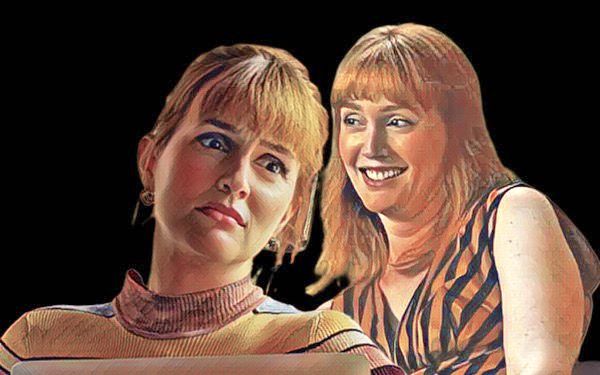
Maia and Dylan: two irreconcilable ways of existing
When they return home, the relationship talk between Dylan and Maia is inevitable, and the clash of worldviews could not be clearer. Dylan believes in “working to live.” Maia lives to work. He talks about purpose, limits, and everyday life. She talks about projection, growth, and image. The gap is so vast that they don’t even argue or raise their voices. They simply reveal themselves to be incompatible.
To make matters worse, just like Issa in Insecure, Maia begins to see precisely what was always Dylan’s greatest strength — his stability, simplicity, and care — as a possible obstacle to the future she imagines for herself.
The breakup hasn’t happened yet because the shocking news of Lukas’s death arrives, postponing the separation to the end of the season.

The subtext that screams
“They Can’t All Be Jeremys” is the episode in which I Love LA stops flirting with the surface and plunges headfirst into its own tragedy disguised as comedy. The series begins to say, without detours, that this universe of hyperconnected, cynical, ambitious young people built its identity on exchanges, images, and performances — but not on real bonds.
It becomes clear that not everyone can be a Jeremy. But the true danger lies in wanting to become precisely what one has already seen collapse from within.
Descubra mais sobre
Assine para receber nossas notícias mais recentes por e-mail.
 miscelana.com