
For those who have been following Maia’s trajectory since the beginning of I Love LA, “Game Night” makes one thing unmistakably clear: she wants to win the game. She always has. But this particular round places, perhaps for the first time, a real and definitive risk on her relationship with Dylan. Still, or precisely because of that, rolling the dice becomes irresistible.
The episode opens on seemingly safe ground: a Ritz Crackers commercial shoot. Maia lands a well-paid job for Tallulah, one that doesn’t offer prestige but solidifies her position. It’s money, visibility, and proof of efficiency, exactly the kind of intermediate win that sustains a rising career. In the middle of the conversation, Maia casually mentions that Tallulah is dating a woman. The response is immediate, rehearsed, corporate to the core: “Don’t worry, we love that she’s a lesbian.” It’s marketing progressivism at its most caricatured, and as always, hollow enough to be weaponized.

Next, Maia accompanies Alyssa to a Forbes photo shoot and once again proves why she’s so valuable within Alyssa 180. When the interview threatens to drift into Alyssa’s troubled professional past, that slippery territory where empty, high-impact statements packed with keywords like “community” and “empowerment” tend to surface, Maia delivers the perfect line, the exact framing, the acceptable narrative. Everything seems under control until a bouquet and a note arrive. It’s a lunch invitation from someone from her past, signed in a far-from-innocent way as “Lewinsky.” We already know what that implies, even if it’s politically incorrect.
Meanwhile, Charlie, Tallulah, and Alani head to Landry’s funeral. More than a farewell, the event becomes a faithful portrait of Los Angeles: crowded, performative, complete with a VIP section and overflow areas. Charlie is relegated to the second zone, and there he receives a blow more painful than any social exclusion. Andrew, the ex he kept at an emotional distance, shows up with a new boyfriend and announces, with almost cruel kindness, that he’s moving to New York. Charlie tries to play it cool, but the wound is unmistakable.
Maia’s lunch with her former boss, Ben, is the moral axis of the episode. The power imbalance is evident in every gesture. Maia shrinks, laughs too much, and drinks too much. He flirts, provokes, tests boundaries, and suggests that empathy is a luxury reserved for losers. He talks about Alyssa, about the hostile environment she endured in the past, and slowly steers Maia toward a dangerous idea: hurting people is part of playing in the major leagues. There’s not just unresolved erotic tension here, but something even more intoxicating: the validation of her ambition without moral restraints. And by calling her Lewinsky, a direct reference to Monica, it becomes clear that Maia has always operated in morally dubious terrain. According to Bill Clinton, oral sex is not sex. According to the real world, of course it is. For Maia, this only makes things worse.
The line that defines her character arrives in this moment. Maia says she would run toward the hurricane, as long as she didn’t have to get wet. It’s the perfect summary of her generation and of contemporary culture as a whole: total desire, zero consequences. The lingering question is unavoidable: how long can that possibly last?
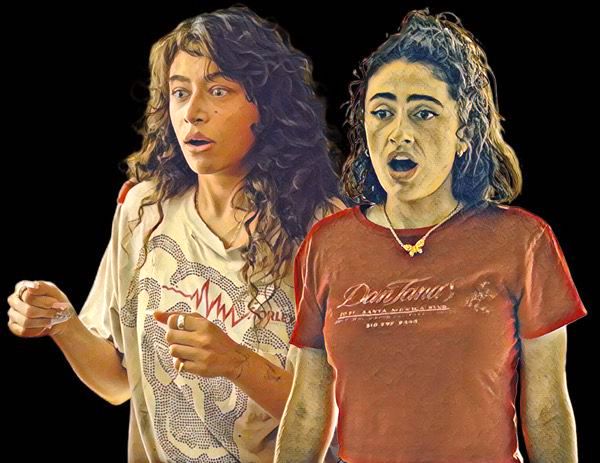
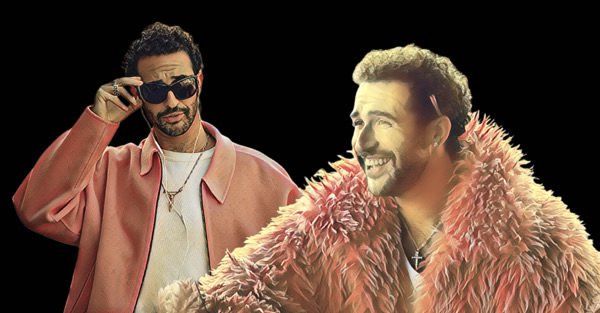
The collision between fantasy and reality comes swiftly. As they leave the funeral, Tallulah and her friends are confronted with a massive Ritz mural. Tallulah is now the face of LGBTQ+ pride. The hollow phrase suddenly takes on literal scale. Not only does her body become a campaign, but her identity becomes a brand asset. The shame is public, unavoidable. She wants to kill Maia and disappear from the world.
Elsewhere in the city, consumed by the guilt of a betrayal that is still “only” mental but already painfully real, Maia arrives drunk at the game night Dylan is hosting with his school colleagues. It’s the least compatible environment imaginable for her emotional state, and that only accelerates the disaster. Meeting Claire, a young and attractive colleague of Dylan’s, triggers paranoia, jealousy, desire, and provocation. Maia projects her own guilt onto both of them and becomes increasingly inappropriate. She sexualizes the room, embarrasses the guests, and tightens the tension with every comment. Rachel Sennott masters this comedy of discomfort like few actors can. Everything is exaggerated, yet deeply recognizable.
Meanwhile, Tallulah is on the verge of a breakdown and finds, in Tessa, the most honest speech of the episode. Tessa shows her an old, painfully embarrassing clip of herself rapping brunch recipes inspired by Hamilton on a morning show. The lesson is simple and brutal: everyone has done something deeply cringe for money. The trick is paying the rent and moving on. Armed with that crooked sense of solidarity, the two decide to act, attacking the Ritz mural with white paint. Protest, catharsis, contradiction. All at once.
Charlie, encouraged by Alani, finally decides to get rid of the sex tape with Andrew. But while checking to see if it’s the right tape, he watches it and breaks down. Not out of desire, but grief. Landry was one of the few truly judgment-free presences in his life, and that absence weighs heavily.

Back at the apartment, Maia returns to the living room wearing a calculatedly provocative outfit. The atmosphere is already unbearable. The guests leave in a hurry, mentioning a supposed hate crime in the area, a bitter irony considering Tallulah’s vandalism, still unknown to them.
Alone, Maia pushes Dylan until she gets what she wants. Sex is driven by anger, tension, projection, and fantasy. She gets it. But as soon as it’s over, she withdraws. Dylan remains motionless, naked, with the face of someone who has just understood something he would rather not see.
That final image says it all, not least because Josh Hutcherson is excellent. For the first time, Dylan seems to realize that Maia isn’t just moving at a different pace. She’s playing a different game altogether. Maia, meanwhile, had already left mentally, projecting onto her boyfriend’s body a desire that comes from somewhere else, another time, another logic. And worse still, from Ben.
Charlie reveals a rare vulnerability. Tallulah pays the price of becoming an unwilling symbol. And Maia crosses a line the series had only been hinting at.
“Game Night” is the episode where I Love LA truly comes of age. The comedy remains sharp, but now it’s anchored in genuine discomfort. Because in this world, winning isn’t just about leveling up. It’s about deciding what you’re willing to lose to keep playing.
Descubra mais sobre
Assine para receber nossas notícias mais recentes por e-mail.
 miscelana.com