
As published on Blog do Amaury Jr./Splash UOL
Created in 1892 for the Imperial Theatres of Russia, The Nutcracker was born in a curious context. Commissioned from Pyotr Ilyich Tchaikovsky, with a libretto by Marius Petipa inspired by Alexandre Dumas’s adaptation of E.T.A. Hoffmann’s tale, the ballet premiered at the Mariinsky Theatre in St. Petersburg to little critical enthusiasm. At the time, it was seen as overly fragmented and childish. What won audiences over immediately was the music: The Nutcracker Suite, presented in concert earlier that same year. Only over the course of the 20th century would the full ballet be reassessed, remounted, and finally consecrated as one of the pillars of the classical repertoire.
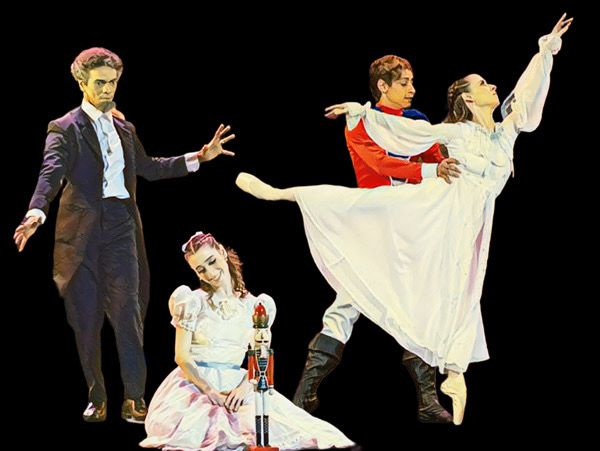
More than a century later, it is precisely this work—so late to be fully recognized—that now sits at the center of artistic life at Rio de Janeiro’s Theatro Municipal. Since 2024, the company has presented a new conception of The Nutcracker, created by Hélio Bejani and Jorge Teixeira based on Petipa, with direction by Bejani. The classical structure remains, but the dramatic axis shifts. The narrative becomes clearer and more emotionally engaged: an orphanage is introduced, along with the character Klaus and a broken relationship between him and Drosselmeyer. Clara is no longer merely the child who observes the dream; she acts, intervenes, helps the Nutcracker defeat the Mouse King, and becomes the true agent of transformation.

The production runs throughout December—the work’s traditional season—with performances on the 13th, 14th, 17th, 18th, 19th, 20th, 21st, 23rd, 26th, 27th, and 28th, as well as an open dress rehearsal on the 12th and an educational performance on the 16th for the Petrobras Art Education School Project.
Bejani’s reading prioritizes communication and a sense of belonging without sacrificing technical rigor. The first act builds toward the Snow Scene as a sensitive climax, suspending the narrative in an almost oneiric state. In the second act, the Land of Sweets concentrates the visual and choreographic splendor, culminating in the traditional Grand Pas de Deux of the Sugar Plum Fairy and her Prince—the highlight of the evening, where technique, musicality, and romance elicit an immediate response from the audience.
The Snow Scene at the end of the first act is supported by costumes by Tania Agra, sets by Manoel Pucci and C. Galdino, and lighting design by Paulo Ornellas, forming one of the most poetic moments of the staging.
Onstage, the production brings together the Ballet, the Women’s Chorus, and the Theatro Municipal Symphony Orchestra. The principal cast rotates throughout the season. The Sugar Plum Fairy is danced by Juliana Valadão, Márcia Jaqueline, Manuela Roçado, Marcela Borges, and Tabata Salles; the Prince by Maynard Miranda, Cícero Gomes, Alyson Trindade, Rodrigo Hermesmeyer, and Michael Willian. Drosselmeyer is performed by Edifranc Alves, Romilton Santana, and Rodolfo Saraiva, while Clara is danced by Diovana Piredda, Katarina Santos, and Pietra Rêgo. In the Snow Kingdom, the Queen and King are portrayed, respectively, by Isa Mattos, Manuela Roçado, Marcela Borges, and Tabata Salles, and by Alyson Trindade, Owdrin Kaew, Michael Willian, and Rodrigo Hermesmeyer.
The impact of this version became unmistakably clear back in 2024. That season entered the Municipal’s recent history when all 4,500 tickets sold out in just seven minutes and a few seconds. Faced with pent-up demand, the theater decided to try something new: a live, free broadcast of the ballet on a large outdoor screen set up on Avenida Treze de Maio, in the city center, between December 19 and 21. With access limited to 300 viewers per session, the initiative marked a symbolic shift—classical ballet also occupying urban space and reaching audiences beyond the traditional theater hall.
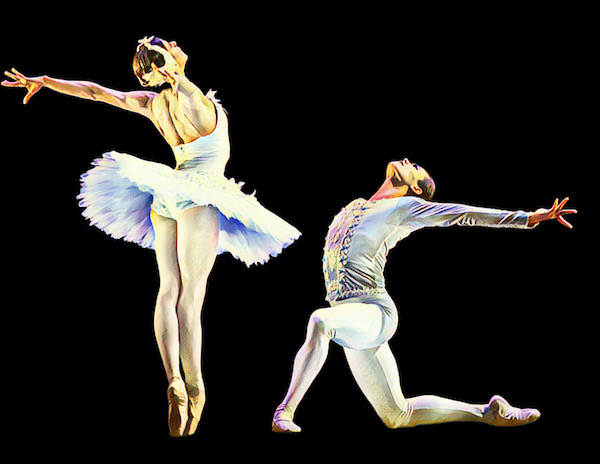
The success went beyond that singular episode. It began to directly influence the Theatro Municipal’s planning. For 2025, management acknowledged that two new ballets had initially been scheduled, but one was ultimately dropped to ensure the return of proven crowd-pleasers such as Swan Lake—and, naturally, The Nutcracker. The decision underscores the artistic and financial weight the classic once again carries within the institution.
This contemporary centrality converses with a solid past. The Municipal’s relationship with The Nutcracker was shaped for decades by the version created by Dalal Achcar in 1974. From the mid-1970s through the early 2010s—with recurring performances through 2013—Achcar’s staging defined the theater’s Christmas imagery. More faithful to the traditional canon, her reading emphasized classical enchantment, the bourgeois party narrative, and the showcasing of major stars from the company and guests.
Today, between the memory built by Dalal Achcar and Hélio Bejani’s contemporary reinterpretation, The Nutcracker reaffirms its singularity. Few works traverse more than a century while maintaining such adaptability: functioning as a financial engine, a training ground, an emotional tradition, and, at the same time, a mirror of each era’s artistic choices. At the Theatro Municipal, the ballet makes clear that it is not merely the past—it is an active present and a strategy for the future.
Descubra mais sobre
Assine para receber nossas notícias mais recentes por e-mail.
 miscelana.com